
After the Houthi militia started attacking container ships in the Red Sea last year, the cost of shipping goods from Asia soared by over 300 percent, prompting fears that supply chain disruptions might once again roil the global economy.
The Houthis, who are backed by Iran and control northern Yemen, continue to threaten ships, forcing many to take a much longer route around Africa’s southern tip. But there are signs that the world will probably avoid a drawn-out shipping crisis.
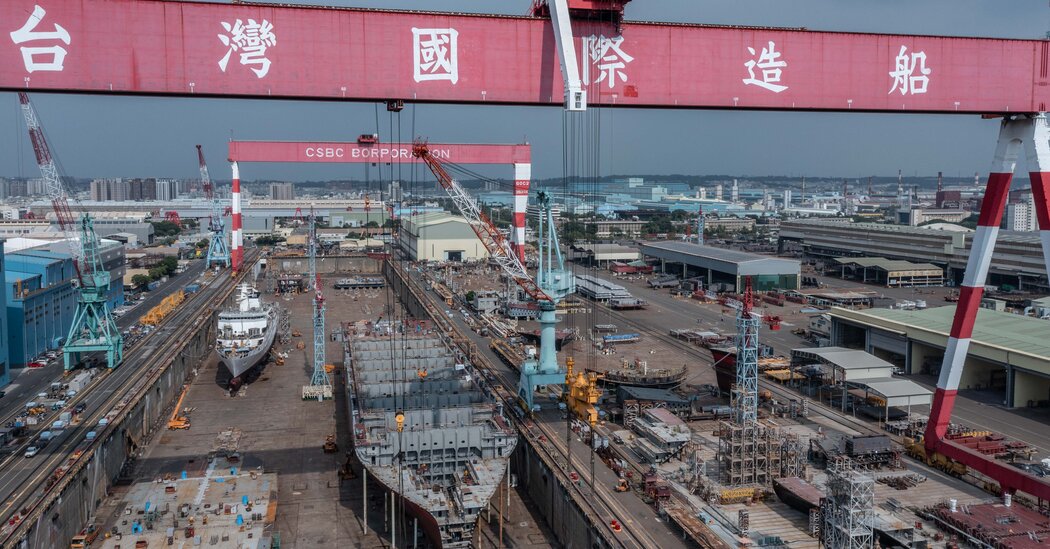
One reason for the optimism is that a huge number of container ships, ordered two to three years ago, are entering service. Those extra vessels are expected to help shipping companies maintain regular service as their ships travel longer distances. The companies ordered the ships when the extraordinary surge in world trade that occurred during the pandemic created enormous demand for their services.
“There’s a lot of available capacity out there, in ports and ships and containers,” said Brian Whitlock, a senior director and analyst at Gartner, a research firm.
Shipping costs remain elevated, but some analysts expect the robust supply of new ships to push down rates later this year.
Before the attacks, ships from Asia would traverse the Red Sea and the Suez Canal, which typically handles an estimated 30 percent of global container traffic, to reach European ports. Now, most go around the Cape of Good Hope, making those trips 20 to 30 percent longer, increasing fuel use and crew costs.
The Houthis say they are attacking ships in retaliation for Israel’s invasion of Gaza. The United States, Britain and their allies have been striking back against Houthi positions.
Some analysts have worried that the longer journeys could push up costs for consumers. But shipping executives now say they expect their operations to adapt to the Red Sea disruption before the third quarter — their busiest season, when many retailers in Europe and the United States are stocking up for the winter holidays.
The new ships account for over a third of the industry’s capacity before the order boom began, Mr. Whitlock said, and most will be delivered by the end of this year.
New vessels will increase the shipping capacity of the Danish shipping giant Maersk by 9 percent, according to Gartner, and some of its competitors are planning much bigger additions. MSC, the largest ocean carrier, is adding 132 ships, bolstering its fleet’s capacity by 39 percent. And CMA CGM of France, the world’s third-largest shipping company, will raise its capacity by 24 percent, according to Mr. Whitlock.
“It is, therefore, just a matter of time,” Vincent Clerc, Maersk’s chief executive, told investors this month, “until the capacity issue is fully resolved.”
That relatively quick adjustment reflects the fact that the global supply chains are in much better shape than they were in 2021 and 2022. Back then, the supply of goods like appliances and gardening equipment was constrained while demand from stuck-at-home consumers was strong. Ports, shipping companies and others were also struggling with shortages of workers, containers and ships.
Shipping analysts and executives also note that not every ship is taking the long route around Africa to avoid the Red Sea and the Suez Canal. So far this year, an average of 30 cargo ships a day have gone through the canal, compared with 48 in 2023, according to data collected by the International Monetary Fund and Oxford University.
That said, the spike in shipping rates is causing real pain for smaller businesses that lack long-term contracts with shipping companies, leaving them more vulnerable to a sudden surge in rates for transporting containers.

They rely on what is called the spot market, where rates are well above where they were for most of last year. In 2023, shipping rates had fallen to prepandemic levels.
LSM Consumer & Office Products, a company based in central England, imports office supplies from China and India. Marcel Landau, its managing director, said his cost of shipping one container had jumped to $3,000 from about $1,000 before the Red Sea attacks. He can’t easily pass on the costs to his customers, he said, because his prices are set in contracts. As a result, he expects the higher shipping costs to eat up around half his profits.
“Last year, it was wonderful. It was just like business ought to be,” he said. “And then it began to go wrong when the Middle East situation began to blow up.”
Lyndsay Hogg, a director at Hogg Global Logistics, a business in Hartlepool on the northeastern coast of England that arranges shipping for small and midsize companies, said that many of her customers were unnerved by the surge in shipping costs and that some were delaying shipments.
“We do feel like people are nervous,” she said. “We have seen a downturn in bookings.”
Shipping a 40-foot container from Asia to Northern Europe, one of the routes hit hardest by the Red Sea attacks, cost $4,587 per container last week, 350 percent more than at the end of September, according to spot market data from Freightos, a digital shipping marketplace. (The average for 2021, when shipping lines were extremely strained, was $11,322.)
The stress in the Middle East has helped raise the cost of shipping even on faraway routes. The cost of going from Asia to West Coast ports in the United States is up 190 percent since September, according to Freightos.
The Red Sea disruption comes as far fewer vessels have been able to pass through the Panama Canal, which has been suffering from low water levels. That canal’s problems have also caused delays and detours.
Maritime experts say the detour around Africa is the main cause of the spike in shipping costs.
Container ships traveling from Asia to Europe are at sea around 20 to 30 percent longer than they would be if they went through the Suez Canal. This has in effect reduced shipping capacity. And with less capacity trying to meet stable demand, prices rose, analysts say.
Regulators are watching the situation.
They want shipping companies to make enough money to keep supply chains running smoothly. But regulators also say they want to protect the customers of shipping companies from price gouging.
Daniel Maffei, chairman of the United States Federal Maritime Commission, said he was concerned about fees and surcharges that shipping companies had added because of the Red Sea attacks and the drop in overall shipping capacity right now. But he added, “In the medium run, I’m less worried because of all these ships that are going to come online that will then increase the capacity.”