
When Korina Ramharrack needed to buy school supplies this summer, she thought she could get a deal at her local CVS pharmacy. But the New York City-based master’s student was not prepared for how much sticker shock she would experience at the register.
The cashier “told me my total and I froze,” Ramharrack said.
Her two notebooks, a pack of pens, planner and highlighters added up to more than $66. One notebook alone cost $13.19.
“I was shocked because I have not paid that much, even for twice the amount of stuff that I bought when I was younger for school,” Ramharrack said.
As a student with an upcoming semester of courses, Ramharrack still ended up purchasing the items, but she later returned the notebooks. “It’s definitely making me more money-conscious,” Ramharrack said. “Especially living in New York, like I feel like everything has gone up in price.”
The 23-year-old student is one of many feeling the pinch with school supplies. A new report from Groundwork Collaborative and The Century Foundation is highlighting just how much more American families are paying for everyday school items and kid lunch foods this year ― and it’s pretty shocking.
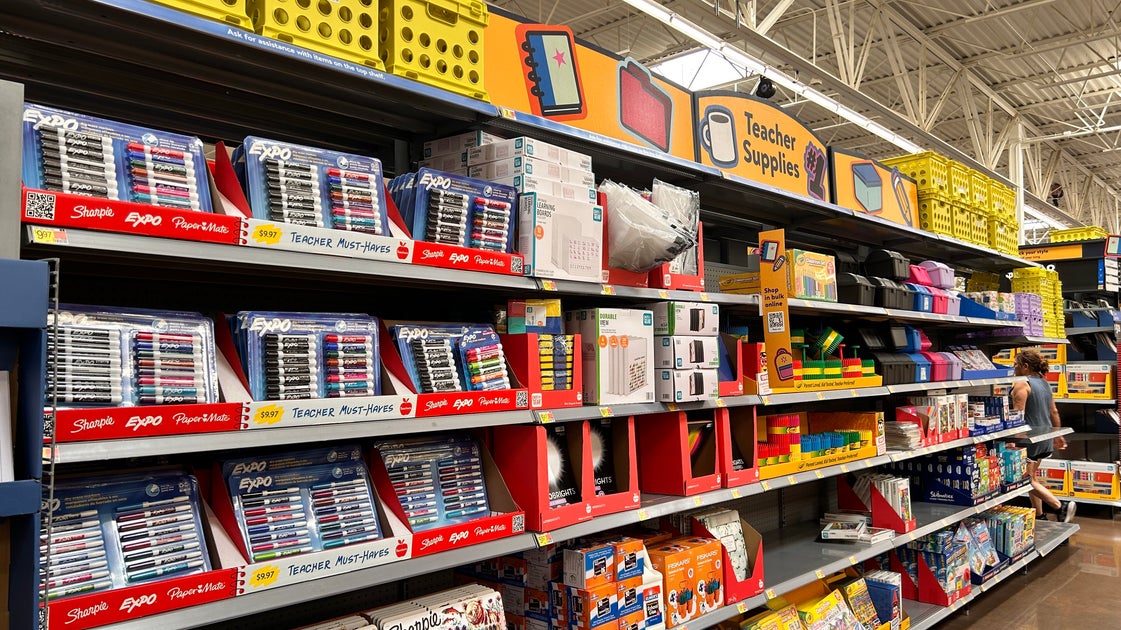
According to big-box retail scan comparisons between this summer and last, everyday school supplies have climbed nearly 8% since last year, totaling almost $175. The dataset included all 50 states and Washington, D.C.
The report noted that the companies behind Sharpie, Mead notebooks and Logitech headphones have all said they raised their prices due to President Donald Trump’s tariffs on imported goods.
“This back-to-school season, families are paying the price for the Trump administration’s reckless economic policies,” the report stated, citing Trump’s chaotic tariffs, the war against Iran, and cuts to nutrition and health care assistance.
“American families are feeling pressures not just for the fun stuff –– the concert tickets, the trip to Disneyland, the baseball game –– but for the most basic essentials: blueberries for a lunchbox, a turkey sandwich, and a No. 2 pencil,” said Elizabeth Pancotti, vice president of policy for Groundwork Collaborative and one of the report authors.
Lunchboxes, Notebooks and Paper Products Spiked The Most

The report was a snapshot of retail scanner data from the same week in July 2025 compared to July 2026. The 10 items that have seen the biggest price spikes were:
1. Lunchboxes: $14.91 in 2025, now $18.91
2. One-Subject Notebook: $4 in 2025, now $4.92

3. Index Cards: $3.16 in 2025, now $3.86
4. Notebook Paper: $0.90 in 2025, now $1.08
5. Tissues: $2.50 in 2025, now $3
6. Scissors:$3.58 in 2025, now $4.08
7. Dry-Erase Markers: $4.59 in 2025, now $4.98
8. Glue Sticks: $7.14 in 2025, now $7.68
9. Headphones: $27.50 in 2025, now $29.30
10. No. 2 Pencils: $11.16 in 2025, now $11.84
According to the report, lunchboxes increased the most, by more than 26%, and that’s because they are imported, said Chris Tang, a University of California, Los Angeles professor who studies global supply chain management.
“This product is highly vulnerable to compounded global supply chain issues. First, because they are primarily made of plastic, their base material cost is directly tied to petroleum,” Tang said. “The current oil crisis — driven by the war in Iran — has caused raw plastic production costs to skyrocket.”
Beyond Iran war fuel surcharges, tariffs and higher ocean freight costs are also causing everyday school supplies to go up, said Sanne Manders, president of Flexport, a company that brokers customs clearance and logistics for importers and exporters.
Don’t be surprised if your favorite colored backpack or particular lunchbox is missing from shelves, too. “Because ships are taking the much longer Cape of Good Hope route, inventory replenishment takes significantly longer. If a retailer sells out of a specific imported item, it will take weeks longer than usual to restock it,” Tang noted.
What makes matters worse is that the school supplies are one annual purchase, but shopping for school lunches is an inescapable weekly cost. The report also ran retail comparisons on typical school lunch items and found that they will cost about $3,800 this year, up $400 from last year.
Fresh blueberries almost doubled in price compared to last year, while deli staples for lunches like sliced ham and turkey have increased by about 12%.
If you “get through school supply season, it’s 175 bucks you scrape together,” Pancotti said. “And then every single week, you are getting hammered at the grocery store.”