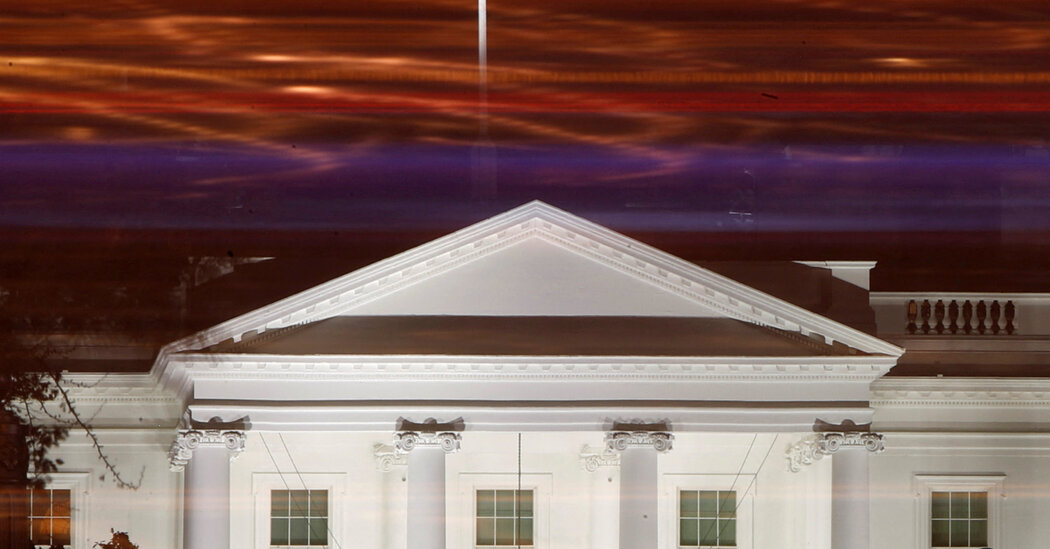

Basic research conducted by America’s universities is crucial to our world-class entrepreneurial culture. How do we know this? Let’s take a short tour through the White House.
The venture capitalist David Sacks of Craft Ventures runs the White House’s Council of Advisers on Science and Technology. Scott Kupor of Andreessen Horowitz is the nominee to run the Office of Personnel Management, and Sriram Krishnan, from the same firm, is a policy adviser on artificial intelligence. They have all successfully financed companies in the digital economy. The infrastructure beneath those businesses — the foundational internet protocols known as TCP/IP — was developed in part by the computer scientist Vint Cerf (Stanford University).
Andreessen Horowitz has been active in biotechnology, as has Vice President JD Vance’s former firms, Mithril Capital and Narya. The field owes much of its success to the decoding of the human genome, which has transformed modern medicine in areas such as prenatal diagnostics and cancer treatment. Who do we have to thank? On the long list: Marshall Nirenberg (of the National Institutes of Health), Har Gobind Khorana (University of Wisconsin, Madison) and Robert Holley (Cornell University), who were recognized by the 1968 Nobel Prize in Physiology or Medicine, and later Paul Berg (Stanford), Walter Gilbert (Harvard) and Frederick Sanger (Cambridge), honored with the Nobel Prize in Chemistry in 1980. More recently, Jennifer Doudna (University of California, Berkeley) shared the 2020 Nobel Prize in Chemistry for developing CRISPR, the gene editing technology.
Few of Elon Musk’s companies would have been possible without the energy density and stability of lithium-ion batteries. In 2019, John B. Goodenough (University of Texas, Austin) shared the Nobel Prize in Chemistry with two others for the work that helped develop them.
And what about the president himself? President Trump’s recent physical exam revealed elevated cholesterol. It’s a reasonable bet he’s taking a statin, as are more than 90 million Americans. Few drug classes have done more to improve public health. Discoveries about how the body metabolizes cholesterol — which would lead to the invention of statins — earned Michael Brown and Joseph Goldstein (University of Texas, Southwestern) the 1985 Nobel Prize in Physiology or Medicine.
One would think that venture capitalists, especially those with ties to the Trump administration, would be the most forceful champions of America’s research universities, given how much these institutions have fueled our careers and fortunes. Instead, many of us are scratching our heads as to why officials from the industry have turned their backs while the government chaotically terminates funding for this work. Harvard and Columbia have been in the headlines, but the hatchet has also fallen on Michigan State in the Midwest and the University of Hawaii farther west. It is as if the V.C.s in Washington had just enjoyed a fine meal in Silicon Valley and decided to skip out on the check.
Breakthroughs in technology are grounded in a fundamental truth: that transformative innovation often begins with a new understanding of the natural world at its most basic level. And this understanding almost always emerges from challenging accepted wisdom. That requires space for free inquiry and a culture that protects it, something that Vannevar Bush understood in his landmark 1945 report “Science, the Endless Frontier,” where he argued that basic research generates “scientific capital” — the foundation for practical applications, new products and new processes. Even patent law reflects this principle, requiring that an invention be “nonobvious to one skilled in the art.” This is the crux of the matter.
Drawing a causal link between federal investment in basic science research and the rise of the venture capital industry is about as difficult as reading a map. The geographic centers of venture capital and the industries it has spawned overlap precisely with the locations of our great research universities. Think of Cambridge and Route 128 in Massachusetts (Massachusetts Institute of Technology and Harvard), or the stretch from San Jose to San Francisco (Stanford and University of California, San Francisco and Berkeley). This is no accident. It’s why world leaders visit these places to understand how we do it. It is also why Mr. Vance left Ohio for Yale and then high-tailed it to Silicon Valley for a job.
I’ve been fortunate to spend my career in the venture capital ecosystem — first as a biotechnology entrepreneur, then as an investor. The only thing more damaging than the recent attacks on our research universities is the silence from my colleagues in the venture capital world, especially from those who have the ear of the president. Given the very real consequences for our competitiveness, our standard of living and, yes, also our bottom lines, we all ought to be making the case for aggressively funding basic science.
Universities are far from perfect, and that imperfection also creates a convenient dodge for those in the administration who are complicit in the annihilation of the very seed corn of our industry and the magic of the American economy. The half-life of this administration is two years; the half-life of the damage to American competitiveness is probably measured in decades.
Our research universities have long been magnets for the world’s most exceptional talent. The energy and ingenuity that talent brings have enriched this country in ways that are hard to quantify. Mr. Musk and Mr. Sacks need only remember what persuaded them and their families to emigrate from South Africa, enabling them to study at the University of Pennsylvania and Stanford.
Barbara Tuchman’s “The March of Folly” chronicled moments when great powers knowingly acted against their own interests and paid the price. The citizens of Troy dragged the Greek-stuffed horse inside the gates; King George III taxed the colonies. The results were predictable. And yet those governments pressed ahead, unable to get out of their own way. They paid with lasting decline. We may be headed down a similar path.
If the administration’s campaign against American universities continues unchecked, we will become a chapter in the sequel to “The March of Folly.” To borrow from Adam Smith: This is not an appeal to anyone’s benevolence. It is a matter of self-interest.
