
Van O’Neill started taking testosterone 20 years ago, after struggling with chronic fatigue and undergoing tests that revealed that he had low levels of the hormone in his blood. While testosterone therapy gave him an immediate boost in energy and drive, he said, “it came at a cost.”
“I felt like I had a coiled spring in my body that was wound real tight,” Mr. O’Neill, 67, said.
It didn’t take much to make him snap. Mr. O’Neill, who is in recovery for alcoholism, recalled an incident at a 12-step meeting where a member jokingly rubbed his shaved head. Mr. O’Neill jumped up and yelled, “Don’t ever put your hands on me!” He didn’t hit the man but was shocked at how close he came.
Since then, Mr. O’Neill has gone off and on the medication, trying to balance its benefits with the fact that testosterone seems to increase his reactivity to even the slightest aggravations. He worries that his bipolar disorder and generally impulsive personality may make him more sensitive to the hormone’s effects.
His takeaway: “You’ve got to be careful with this stuff.”
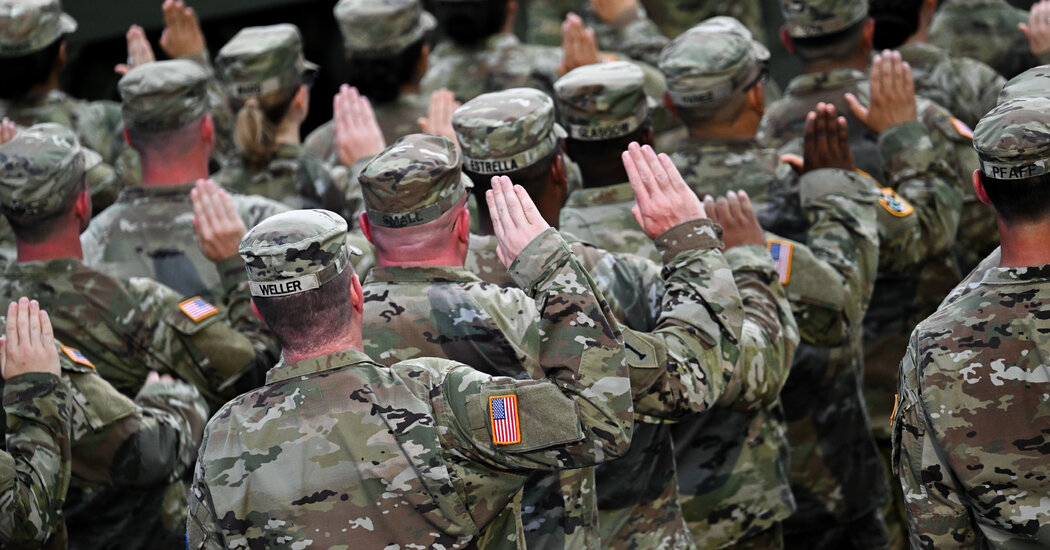
In July, Defense Secretary Pete Hegseth announced a new policy mandating that all military service members over the age of 30 have their testosterone levels screened as part of an effort to create what he called a “High-T Department of War.”
“Warfighters” who qualify for treatment, he said, would be given the option to undergo testosterone replacement therapy, or T.R.T., to keep them “on the leading edge of lethality.”
Experts are divided on the new policy. Though rigorous studies have shown that T.R.T. can benefit men with testosterone deficiency, no medical groups recommend universal screening, which experts fear could lead to overtreatment and negative outcomes. (Though the military’s screening policy will also apply to women, it’s unclear what treatment might be offered. In women, small doses of testosterone are typically used to treat menopause.)
Studies are clear on T.R.T.’s risks. Testosterone can cause a dangerous thickening of the blood, a side effect that needs to be closely monitored, even on the battlefield. And the hormone shuts down sperm production, which could harm fertility in men of reproductive age.
But few studies have examined one of the treatment’s hardest to define and most contentious effects: its impact on aggression.
Many doctors argue that testosterone, when medically needed and prescribed at an appropriate dose, can positively affect mood. Much of the cultural association between testosterone and aggression is a holdover from publicized incidents of “roid rage” in bodybuilders, Dr. Abraham Morgentaler, a urologist at Harvard Medical School, argued.
“The data that we have do not support that there is a general trend toward aggressiveness on testosterone,” Dr. Morgentaler said. “That’s a stereotype that I think is incorrect.”
Studies confirm that T.R.T. does not increase hostile behavior on average across men. However, researchers say that the hormone does seem to drive increased aggression in a smaller subset — those who are already prone to aggression, or who have a lower threshold for irritability or perceived threats — in response to provocation. Interviews with nine men who have taken T.R.T. and their family members also suggest that, as testosterone has grown more popular, more people have struggled with these behavioral consequences.
“People who are already aggressive are likely to become more aggressive,” said Robert Sapolsky, a neuroscientist and primatologist at Stanford University. “It’s not going to make someone more likely to fight ferociously and defend their band of brothers in the middle of battle. I think it’s just as likely that they’ll get into a fist fight with someone in their barracks.”

Given the threatening situations military service members routinely face on the job, some clinicians are calling for more research on T.R.T.’s behavioral effects before the hormone is prescribed so broadly.
“If I were a general, or if I were in some version of command where I knew the people underneath me had been altering their testosterone levels, I would want to know: How does that affect their decision making?” said Dr. Tom Hildebrandt, a psychiatrist at Mount Sinai in New York. “We should understand what it is we’re doing.”
A spokesman for the Department of Defense declined to comment on the possible behavioral impacts that increased use of T.R.T. might have on troops.
The new testosterone screening policy comes as T.R.T. use is surging in the United States, growing to nearly 12 million prescriptions in 2025, from fewer than one million in 2000. Testosterone deficiency most often affects older men whose hormone levels have declined with age. Even so, T.R.T. use is rising most quickly among younger men, fueled by online platforms selling the hormone and a growing obsession with testosterone among influencers in the so-called manosphere.
Under Health Secretary Robert F. Kennedy Jr., who has spoken publicly about his own use of T.R.T., the Food and Drug Administration has changed the hormone’s warning labels and made the treatment available to many more men. Mr. Kennedy has pointed to studies finding that testosterone levels are lower among younger generations than historical averages, calling declining testosterone an “existential” threat. Researchers have argued that the trend is driven by rising obesity and increasingly sedentary lifestyles.
Military doctors have started to identify a condition called “operator syndrome,” in which troops who have served long stretches in special operations units — where they experience chronic stress, irregular sleep and poor diet — are more likely to report medical problems, including decreased testosterone.
Many direct-to-consumer testosterone clinics explicitly market T.R.T. to military servicemen and police officers, promising improved physical performance and endurance. A growing number of servicemen are seeking out T.R.T. from such clinics or illicit sources instead of from their military doctors, Dr. Theodore Crisostomo-Wynne, a urologist at the Madigan Army Medical Center, said at an F.D.A. panel in December.
But even those who see increased aggression as a potential military advantage may not fully understand the nuances of the relationship between testosterone and behavior, researchers say.
Studies in animals clearly point to testosterone’s role in aggression. Male rats that are given the hormone will mark a much larger territory with their urine. Male birds given testosterone will stop tending to their nests, spending more time singing to attract mates, sometimes abandoning their chicks to die.
But the hormone’s behavioral effects in humans are far more complex.
Early studies comparing testosterone in violent and nonviolent criminals found that, on average, violent criminals had higher levels of the hormone. Other studies found that the hormone naturally fluctuates within individuals in response to their environment, spiking during sports competitions, for example, and falling after having a baby. But it’s more likely that those behaviors and social settings cause testosterone levels to fluctuate, not the other way around, said Dr. Sapolsky, the Stanford neuroscientist.
Knowing that a man has significantly higher testosterone than another, Dr. Sapolsky said, “gives you zero predictability that they’re going to be more aggressive.”
Only about a dozen studies have tried to examine what happens when you give men testosterone, an approach that can more clearly point to cause and effect. While some studies administering high doses of testosterone — many times higher than what men get on T.R.T. — show a resulting increase in aggression, the hormone does not broadly appear to have that effect at standard medical doses. But a link emerges when you look at the individual differences between men.
“When you look at T with someone’s predisposition to engage in aggression, that’s where it becomes more clear,” said Justin Carré, a psychologist at Nipissing University in North Bay, Ontario.
In blinded studies conducted by his research group, hundreds of men were randomly given testosterone — equivalent to a single dose of T.R.T. — or a placebo, and then instructed to play a computer game against a fictitious opponent. In the game, they could either hit a button to score points or push a button to attack their opponent.
If their opponent provoked them by stealing a point, men with underlying dominant or impulsive personality types who had been given testosterone were more likely to become preoccupied with attacking them back instead of scoring. (This aggressive response was not seen in non-dominant men given testosterone or in dominant men given the placebo.) Dr. Carré said that while more research was needed to understand the effects of ongoing T.R.T. use, the studies raise questions for the military.
“Testosterone makes aggression more rewarding, whether or not it’s productive,” Dr. Carré said. “If aggression is the main outcome that you’re trying to impact, then maybe that’s a good thing. But if it creates tunnel vision, that can be negative.”
Though many men who undergo testosterone treatment may not experience behavioral changes, interviews with men who have used T.R.T. and their family members show that some have struggled with heightened aggression. Many said they had struggled with volatility even before starting on testosterone, which seemed to both amplify their outbursts and lower the threshold for what would set them off.
Others, like Richard, a physician in New York who asked to be identified by his first name to protect his privacy, seemed sensitive to dosages that were even slightly too high.
Richard has been on testosterone therapy for 17 years. The treatment “changed my life,” he said, helping to address the erectile dysfunction, depression and obesity he experienced after testicular cancer destroyed his body’s ability to make the hormone on its own.
But when he first started on T.R.T., his wife pointed out that he was snapping at her more than usual. He began to notice that he was more reactive in ways that often felt out of his control.
“I wasn’t in the ‘roid rage’ category,” he said. “I just had a shorter trigger.”
Over the years, Richard has learned to calibrate his dosage with his doctor to better manage his irritability. But he questioned how the military would be able to monitor such behavioral changes, especially if the treatment is rolled out to thousands of men facing frequent threats, real or perceived.
“Subtle effects, on that kind of scale, can be really serious,” he said.