
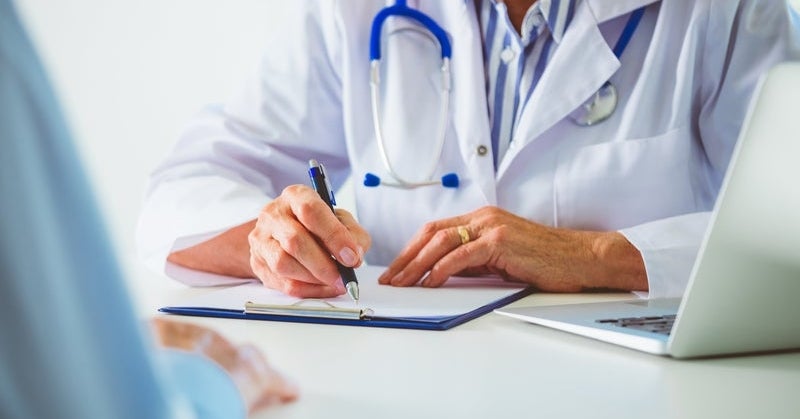

Later that day I researched New York state’s bill of rights for hospital patients. Item No. 9 states that patients should receive “all the information that you need to give informed consent for any proposed procedure or treatment.” I would have loved to hear the doctor’s explanation as to why he felt it medically necessary to examine my breasts.
Item No. 11 states that patients may refuse treatment “and be told what effect this may have on your health.” I wish I had said: “No, I will not consent to you examining my breasts. You are a hematologist, and I’m here because I had a stroke. My breasts were not involved.” I wonder what his explanation would be for how this procedural refusal would affect my health.
In the future, I’ll try to speak up when I don’t have all of the information I need to give informed consent for a procedure or treatment, and I’ll try to remember that I can refuse any procedure or treatment that I am not comfortable with. I’ll even try to remind the doctor of the four pillars of medical ethics and the patients bill of rights.
However, the process of healing weakens not only the body, but the mind and spirit. Being both a vulnerable patient and one’s own health advocate is a split in consciousness that’s hard to manage. After having a mysterious stroke, I was exhausted and terrified — not exactly in warrior mode.
Maybe that’s why I didn’t report him directly after my experience. A friend who works in the medical field told me that if I did, the doctor would likely lie and say that it was medically necessary to physically examine the lymph nodes around my breasts. I imagined being pulled into a medical malpractice suit while trying to heal, and decided against it at the time.
No one should have to prepare for a doctor’s appointment as if they were going into battle. But the medical system is full of people who have tremendous power and very little oversight, with many visits involving only the patient and the doctor in an exam room. In the future I’ll try to invite someone who truly loves me to join me at every important doctor’s appointment. I shouldn’t have to go to these lengths to feel safe with a doctor, but being both a vulnerable patient and a health care warrior is the position that too many of us are put in.
I can’t help but wonder, if I had brought my mother to the first visit, would I have needed her at the second one? I’ll never know, but I’m proud to say that she recently sat with me while I filed a complaint against that hematologist.
This article originally appeared on HuffPost.
Note: Some details have been changed to protect the identity of individuals mentioned in this essay.
K.Page Stuart Valdes is an award-winning filmmaker, writer and educator. She is currently working on a feature film and a collection of essays titled “Cryptogenic: How I Survived a Stroke No One Understood During a Pandemic No One Understood.”
Do you have a compelling personal story you’d like to see published on HuffPost? Find out what we’re looking for here and send us a pitch at [email protected].