
Early one morning, the stench of feces woke me. I put my hand down my hospital pants and moaned as it came up covered in a yellow-brown sludge. I retched. I pulled back the blankets and saw that the mess was smeared across the sheets. How could I ask my husband Chris to clean the bed and me?
Years of chronic pain following a spine injury had narrowed my world, but this was a new low. I called out to Chris, who was working out in the next room.
“Can you come in here?” I croaked. “I’m sick.”
He walked briskly into the room, and there I was, standing in my own shit. I struggled to look him in the eye.
Chris was calm and measured. His face was neutral. He just took it all in and said, “Let’s get you in the shower.”
We had once been partners who traveled the world and built ambitious careers in Silicon Valley. Now, the year I turned 45, he was bathing me.
We often talk about chronic illness as something that happens to a patient, but far less about what it does to a marriage. Yet every lasting marriage eventually encounters illness, loss or a crisis that changes both partners in ways neither expected. The challenge is not simply surviving the event itself. It’s grieving the identities and dreams that disappear along with it.
As pain consumed my days, my husband became my caregiver, and I, his patient. This is the story of what happens when life changes two people so completely that they wonder if they can love the people they have become.

Before my injury, I was a whirlwind of spontaneous fun: picnics in Golden Gate Park, impromptu dance parties in our living room, and romantic weekends in Sonoma. Chris was the planner, carefully mapping our around-the-world adventures between jobs and dreaming up our future together, while I filled our ordinary days with unexpected joys. We worked side by side, often solving each other’s toughest work problems over dinner before setting off on our next big trip. He was the yin to my yang, and together we built a life that felt equal, adventurous, and full of promise.
Sixteen years into our marriage, I broke my back climbing Mount Kilimanjaro, a climb meant as redemption after the failure of my startup. At 16,000 feet, pain exploded through my lower back as if a steel rod had been driven into my spine. I collapsed, unable to move my legs. With no helicopter evacuation possible, I was carried down the mountain on a porter’s back and into a life of chronic pain that forced me to live lying down with a pile of opioids on the bedside table.
When multiple surgeries failed to ease the pain, I began to believe I was living with a forever disease. The injury changed my body and rewrote the roles Chris and I played in each other’s lives.
Illness dismantled our marriage piece by piece. First our equality. Then our intimacy. Finally, our partnership. Only later did I realize it was dismantling our identities, too.
Five years into my illness, our marriage had settled into the routines of caregiving. On weekends, Chris would help me into the shower, steadying me as I lifted each shaky leg over the tub. He washed my hair and body while I sat limp as a rag doll, dried me with a warm towel, dressed me when I was too weak to pull on my own clothes, and coaxed me to drink when I had no appetite. Our routines became our marriage.
At the time, I saw Chris’ care as purely selfless, and I was humbled to the point of shame. Looking back, I understand that it was also how he survived. Chris always coped by doing. Caring for me gave him something he could still fix. I needed Chris for everything, and the weight of that dependence hollowed me out. I was no longer his equal.

Losing our equality meant losing something else: the physical and emotional connection that made us strong partners. But by the end of each long, painful day, I had nothing left to give. The most intimate act — sex — was off the table. I was terrified that I would be crushed under Chris’s body, and terrified that I would scream out in pain. According to Chris, we only made two attempts and they both failed: once my fear and anxiety spoiled the mood, and another time, I fell asleep with Chris on top of me, mid-act.
The sicker I became, the more determined Chris was to solve what he called “the Nancy problem.” He built a spreadsheet to track everything — my pain, steps, hours of sleep, minutes sitting, standing, even the temperature and humidity — searching for patterns that might explain my setbacks. It was classic Chris: orderly, analytical, turning uncertainty into something measurable. He wasn’t trying to solve my pain as much as his helplessness. But watching our lives reduced to rows and columns made me realize how desperately we both needed certainty.
One evening, Chris gently shook me awake after work.
“Wake up, Nanc. I’m home.” He kissed my forehead.
“Mmmmm … how was your day?”
After 21 years of marriage in nearly identical careers, that single word told me everything. Chris was struggling with the founder of his company, and I knew he needed to talk. He needed his teammate. But my world had narrowed to surviving the next wave of pain and counting the minutes until my next fentanyl patch. I could no longer be the partner who shared his burdens. I had become the one carrying all of my own.
Neither of us ever said the word divorce out loud, but there were years when I wondered whether anyone could stay in a marriage that had become so one-sided, and years when Chris feared the woman he married was gone for good. After one hospitalization when I was at my most incapacitated, he considered putting me in a nursing home because caring for me had become too much to manage. He brought me home instead.
“You didn’t belong there,” Chris told me later, his voice certain. “You weren’t done yet. That place would have unmade you.”
Through it all, we never stopped loving each other. We just didn’t know if love would be enough.
For years, I assumed chronic pain was what threatened our marriage. Looking back, I think the real danger was our refusal to stop longing for the people we’d been before my illness. We kept searching for “fun-loving Nancy” and the version of Chris who wasn’t exhausted by caregiving, as if we could somehow recover the life pain had interrupted. But marriages don’t last because two people remain the same. Over a lifetime, illness, loss, aging and other disruptions ensure they won’t. The question is whether you can keep loving each other after life changes you.
Ever so slowly, we found our way back to each other. Chris’s dry wit reappeared in our conversations. Early one morning, I told him my pillowcase was soiled with sweat. “I’ll tell the maid,” Chris said. We’d linger over coffee as the sun rose over the East Bay hills. When I could finally manage longer walks, we’d celebrate making it a little farther on the Tennessee Valley trail, until one day we saw the Pacific Ocean crashing against the rocky beach.
Today, I’m mostly pain-free. There was no silver bullet. The path back was marked by hundreds of small acts of rejoining the world: attending graduate school lying on an army cot, traveling across three coach seats on planes, returning to work on a lie-down recliner, and years rebuilding my body with a trainer. It happened so gradually that I almost didn’t notice.

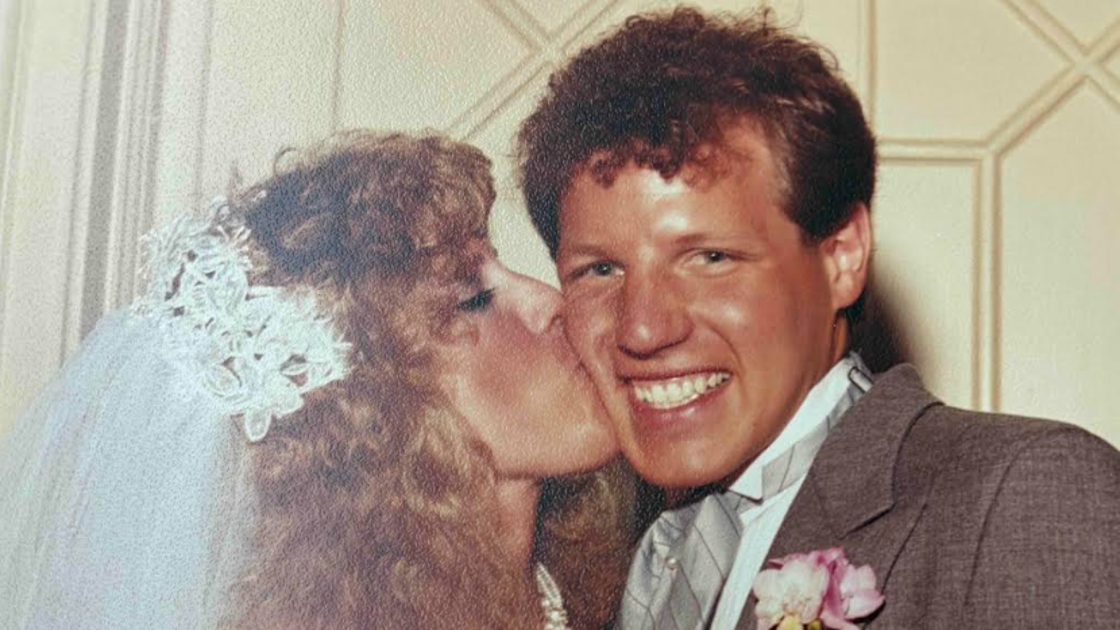
Chris is no longer my caregiver, and we recently celebrated our 41st wedding anniversary. I’m grateful that my body recovered, because most people living with chronic illness never get that ending. I often think about the couples who sustain their marriages through illness, finding new ways to love, care for one another, and remain partners despite losses that never resolve.
Looking back, I realize our marriage had already begun to heal long before my body did. We never became the people we were before chronic pain. We discovered that we didn’t have to.

Nancy Deyo is a freelance writer and former Silicon Valley CEO whose work explores how chronic pain reshapes identity, relationships, and resilience. Her writing has appeared in BioStories, Visible Magazine, and Smoky Blue Literary Arts Magazine. She writes the Substack Life Inside Pain. Learn more at nancydeyo.com.
Do you have a compelling personal story you’d like to see published on HuffPost? Find out what we’re looking for here and send us a pitch at [email protected].