
From using smart thermostats to turning off the air conditioning before leaving, there are many things people do to try to save money on their energy bills. But according to HVAC professionals, not all of these strategies have the intended result. And one habit, in particular, can actually backfire.
“The number one item we deal with — and I’m sure a lot of companies deal with — is homeowners that go around and close off or cover up vents because they don’t want to cool a certain area or a certain room and they think they are saving money by closing off the vent,” Randy Huckstadt, a licensed HVAC contractor and expert with JustAnswer, told HuffPost. “Closing their vent will cause them bigger issues, and they are not saving any money.”
In fact, closing air vents in your home might end up costing you more money in service calls, damaged equipment and higher utility bills. That’s because HVAC systems are designed to distribute a specific volume of air across all the vents in a home. When you close one, that air doesn’t disappear — it has nowhere to go, so pressure builds up in the system.
This can lead to more energy consumption, damage to the ductwork, and air getting redirected away from your living areas.
Huckstadt urged homeowners to consider “the amount of money that has to be charged for a service call when all we do is show up and talk to the homeowner and explain to them that closing their vent will cause them bigger issues and that they are not saving any money, especially now that they have to pay for a service call.”
In other words, this habit people adopt to save money can end up costing them significantly more in repairs and energy costs down the line.
“Other mistakes include not changing air filters on a regular basis, not having regular maintenance performed on their units and treating the outside piece like a picnic table or a workbench,” Huckstadt said. “Again, a lot of it boils down to value perceived for the money paid, and when we show up and have to do housekeeping work before we can ever get to the mechanical aspect or explanation as to why the system’s not working.”

Grace Cary via Getty Images
Much of this boils down to a broader mistake people make with their air conditioning: Many assume that when the house feels too warm, something must be wrong with the equipment.
“The AC is only one part of the equation,” said Anthony Ferrara, owner of the South Florida air conditioning company Dang It’s Hot! “Attic insulation and ventilation, windows and doors, sun exposure, ductwork, air leakage, ceiling height and even keeping blinds or curtains open during the hottest part of the day can all affect the cooling load of the home.”
Ferrara said this comes up regularly during periods of extreme heat. A homeowner sets the thermostat to 72 degrees, the house sits at 74 or 75, and they assume the system is malfunctioning or the equipment is broken.
“During extreme weather, a system may run much longer and the indoor temperature may rise a few degrees even when the equipment itself is operating properly,” he explained.
His advice: Ask whether something has changed.
“If your home normally maintains 72 degrees under similar outdoor conditions and suddenly can’t, that’s worth investigating,” Ferrara said. “But during unusually extreme weather, you have to look at the entire home and the conditions the AC is working against, not just the number on the thermostat.”

You can save money on energy bills and HVAC service calls by simply evaluating your home environment.
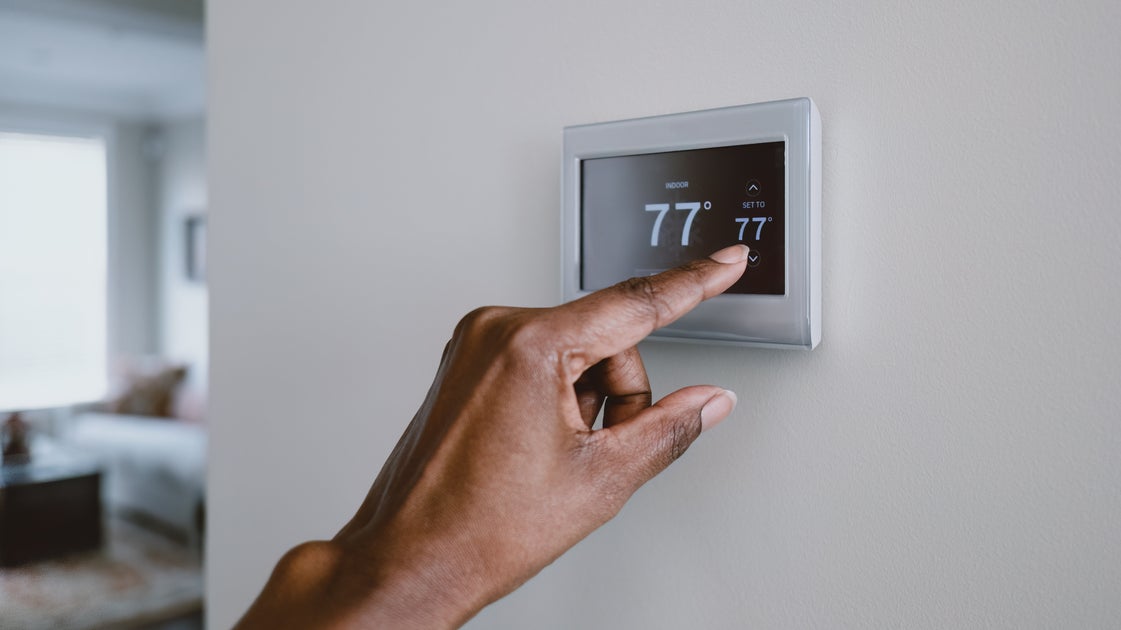
“Don’t ignore nearby heat sources, for example placing a lamp, TV or laptop computer right beneath the thermostat, or letting direct sunlight hit it,” Huckstadt said. “All this does is create a localized ‘fake zone’ of heat. The thermostat registers a temperature much hotter than the rest of the house, tricking the AC into running extended cycles to cool a room that is already perfectly comfortable.”