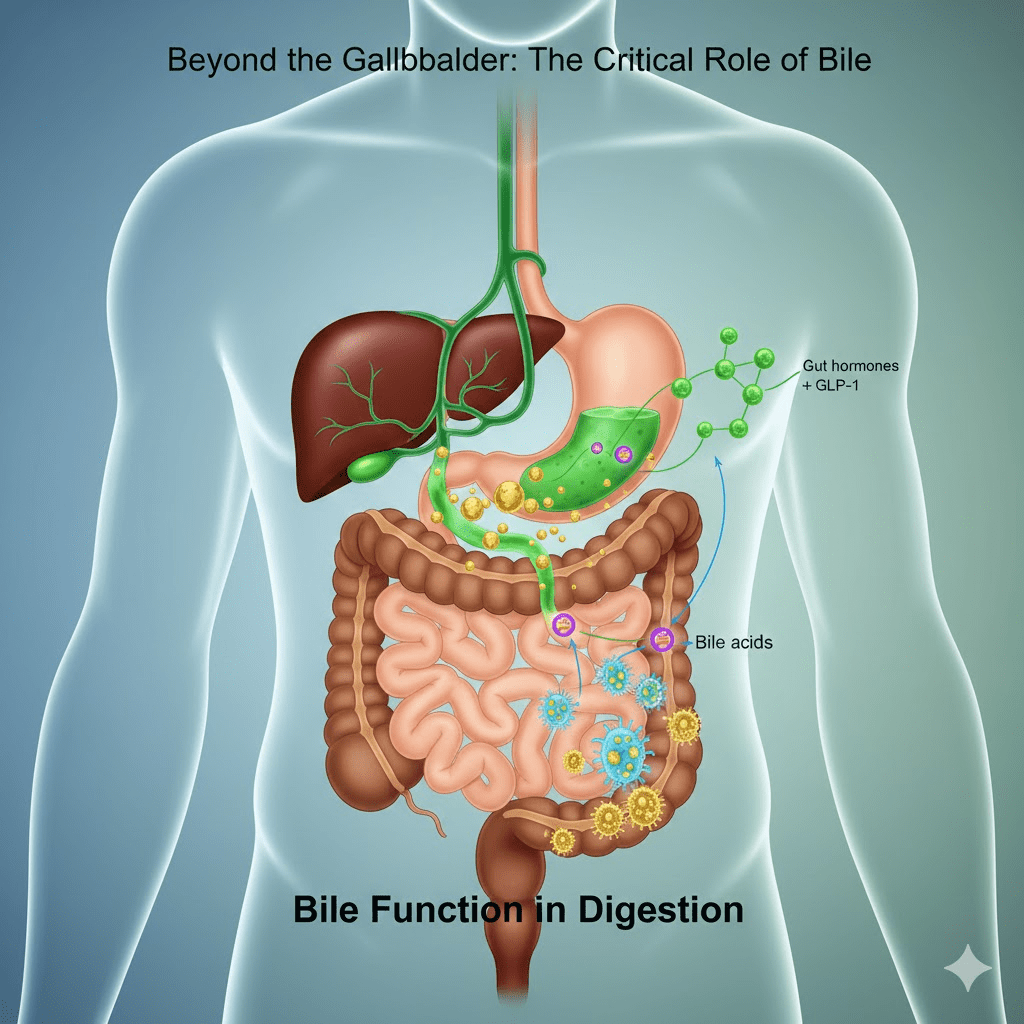

If digestion had a public relations team, the gallbladder would get the headlines. People talk about gallstones, surgery, and the pain that sends you to the ER. Bile, meanwhile, stays invisible, even though it is doing the daily work of turning a meal into usable energy and signaling information to the rest of the body.
That is starting to change. In the last decade, bile has quietly been reframed from a simple digestive fluid into something closer to a messenger system. Researchers keep finding ways that bile acids act like signaling molecules that talk to receptors in the gut, liver, and beyond. That shift matters because modern health problems often sit at the intersection of digestion and hormones, like appetite regulation, blood sugar swings, and inflammation patterns that track with the gut.
This is where the keyword bile function in digestion becomes more than a textbook phrase. It becomes a way to understand how the body coordinates food, hormones, and metabolism through a shared set of signals.
Bile is made by the liver, but it behaves like a schedule
Bile starts in the liver. It is produced continuously as part of normal physiology, and it travels through the bile ducts. Some of it goes straight to the small intestine. Some of it is stored and concentrated in the gallbladder between meals. When you eat, the gallbladder contracts and pushes bile into the small intestine to meet food at the right time.
That timing is not random. One of the key hormonal cues is cholecystokinin, a gut hormone released when fat and protein enter the small intestine. It tells the gallbladder to squeeze and tells the pancreas to release enzymes, so fats can be digested efficiently. This is a classic example of the “hormonal” theme in digestion. Food arrives, hormones signal, organs respond, and bile becomes the delivery vehicle that makes the whole process work.
What bile actually does during a meal
Most people learn one line in school and stop there
Bile helps digest fat
That line is true, but incomplete.
Bile contains bile salts, phospholipids, cholesterol, bilirubin breakdown products, electrolytes, and water. This mixture is designed to do a very specific job in a watery environment.
Dietary fat does not mix well with water. The inside of your intestines is mostly water. Bile salts act like detergents that emulsify fat, meaning they break large fat droplets into smaller ones. That increases surface area so pancreatic enzymes can do their work. When this step is weak, fat digestion becomes inefficient, and fat-soluble vitamin absorption can suffer. The NIDDK notes that bile helps digest fats and some vitamins, which is a simple way of describing a surprisingly important role.
A practical example helps
Think of washing a greasy pan. Hot water alone struggles. Add soap, and the grease breaks into small particles that rinse away. Bile is the soap, and pancreatic enzymes are the scrub brush. Without bile doing its part, enzymes work harder, and absorption becomes less reliable.
The modern shift is that bile is not only digestive, it is also hormonal
Here is the trend that changes the story.
Bile acids are not only “tools” that break down fat. They also bind to receptors that influence metabolism and gut function. Two receptors often discussed are FXR and TGR5. In research reviews, bile acids are described as endocrine signaling molecules that affect physiology through these receptors.
This matters because the gut is not just a pipe. It is a hormone-producing organ. It releases signals that shape appetite, glucose handling, and energy use.
Bile acids are part of that signaling system.

One of the most cited examples is GLP-1, a hormone released by certain gut cells that helps regulate insulin secretion and appetite. Research has shown that bile acids can promote GLP-1 secretion through activation of TGR5 in enteroendocrine cells.
If you have followed the rise of GLP-1-based medications, this connection makes bile feel suddenly relevant. Even when medication is not part of the conversation, it highlights a broader theme: Digestion and hormones are integrated, and bile sits at a crossroads.
Why “bile function in digestion” can show up as symptoms far from the gut
When bile flow or bile timing is off, people often notice it through digestion first. Heavier meals feel harder. Fatty foods may trigger urgency. Stool patterns change. Bloating and discomfort become more common.
But the signaling side helps explain why the ripple effects can feel wider than digestion.
If bile acids influence gut hormone release, gut motility, and microbial metabolism, then changes in bile patterns can shape how someone experiences hunger, satiety, and post-meal energy. This is not a claim that bile “causes” every symptom people feel. It is a recognition that the same system that helps absorb fat also communicates with hormone pathways.
That perspective is one reason bile is getting more attention in research tied to obesity, diabetes, and fatty liver disease pathways, where FXR and TGR5 signaling are repeatedly discussed.
The gallbladder is a storage organ, not the whole story
A common misconception is that the gallbladder “makes” bile.
It does not.
The liver makes bile. The gallbladder stores and concentrates it between meals, then releases it when you eat.
This distinction matters for understanding life after gallbladder removal. Many people do fine without a gallbladder because the liver still makes bile. The difference is in delivery style.
Instead of a stored, concentrated bolus released with meals, bile can trickle more continuously into the intestine. Some bodies adapt smoothly. Others notice changes, especially when meals are very high in fat or very large.
That does not mean fat is “bad.” It means timing and dose matter. A big, greasy meal can demand a surge of bile and enzyme coordination. If delivery is more constant than burst-based, that coordination can feel different.
Bile and the microbiome are negotiating every day
Another reason bile is being reframed is the microbiome. Gut bacteria interact with bile acids, and those interactions can influence inflammation and gut environment.
The NIDDK has highlighted research showing that certain gut bacteria can modify bile acids in ways that may help keep gastrointestinal inflammation in check.
This is part of a broader pattern in modern biology
The body makes a chemical, microbes modify it, and the modified version changes signaling in the host
In bile’s case, that means digestion and hormones are not just a two-way conversation between organs. There is a third party at the table, your gut microbes.
A simple example
Two people can eat similar meals. Their bile production and gallbladder function may look similar on paper. But differences in gut microbes can change how bile acids are transformed, which can shift downstream signaling and gut comfort.
This is still an evolving science. But it is one reason bile is now discussed in the same breath as inflammation and metabolic regulation rather than only gallstones.
The practical takeaway is not hype; it is pattern awareness
Bile is still doing its classic job. Emulsifying fats and supporting the absorption of certain vitamins.
At the same time, bile acids are increasingly understood as signaling molecules that influence receptors tied to metabolic regulation and gut hormone release.
This helps explain why digestion conversations are shifting away from single-organ thinking and toward systems thinking. It is not just gallbladder health. It is liver production, gallbladder timing, intestinal receptors, gut hormones, and microbiome transformation working as a unit.
That system thinking also reduces confusion around diet debates. People can argue endlessly about fat, carbs, and meal frequency. The bile-centered lens asks a more practical question
How does your body handle the meals you actually eat, in the environment you actually live in
If you follow health educators like Dr. Berg, it can be useful to treat bile as part of that broader metabolic coordination story rather than a narrow gallbladder topic. Here is a starting point on his site that remains within that wider context of digestion and metabolism.
A grounded way to think about supporting bile-related digestion
This is not medical advice, and it is not a list of miracle claims. It is a realistic way to connect science to daily life.
Meal size and fat load matter
If a person routinely eats very large, very fatty meals, their system needs strong coordination between bile release and enzyme release. Smaller portions or spreading fat across meals can change how digestion feels.
Fiber matters in the bile story
Bile acids are reabsorbed in the gut and recycled in a loop called enterohepatic circulation. Changes in gut transit and binding can affect that recycling. This is one reason dietary patterns can change bile dynamics over time.
Gut health matters because bile is part of signaling
If bile acids are also signaling molecules, then gut lining health, microbial balance, and inflammation patterns can shape how that signaling is experienced.
If symptoms are persistent, the right move is evaluation
Bile issues can overlap with reflux, ulcers, gallstones, and other conditions that need proper assessment. For example, bile reflux is a recognized condition where bile backs up into the stomach and sometimes the esophagus.
Closing perspective
The most important update is not a new supplement trend or a new fear about gallbladders.
It is a conceptual shift.
Bile is not just a digestive helper stored in a small organ. It is a liver-made fluid that coordinates fat digestion, supports absorption, and participates in hormone-like signaling through bile acid receptors that influence gut hormones such as GLP-1.
When you understand that, the keyword bile function in digestion stops being a quiz item and becomes a map. A map of how food becomes fuel, how the gut talks to hormones, and why digestion is one of the most “hormonal” processes in the body, even when nobody calls it that.