
Ecuador’s military was sent in to seize control of the country’s prisons last month after two major gang leaders escaped and criminal groups quickly set off a nationwide revolt that paralyzed the country.
In Brazil last week, two inmates with connections to a major gang became the first to escape from one of the nation’s five maximum-security federal prisons, officials said.
Officials in Colombia have declared an emergency in its prisons after two guards were killed and several more targeted in what the government said was retaliation for its crackdown on major criminal groups.
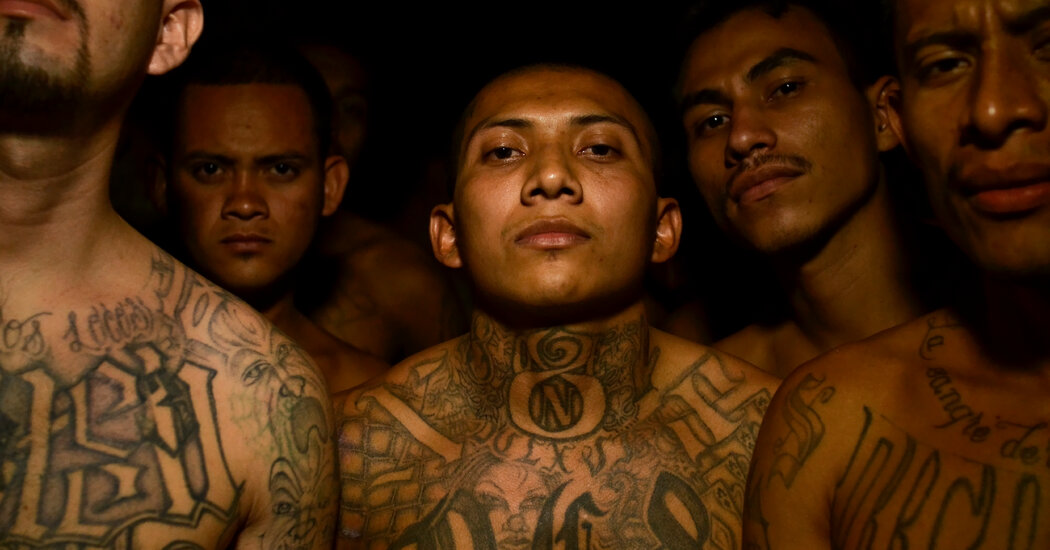
Inside prisons across Latin America, criminal groups exercise unchallenged authority over prisoners, extracting money from them to buy protection or basic necessities, like food.
The prisons also act as a safe haven of sorts for incarcerated criminal leaders to remotely run their criminal enterprises on the outside, ordering killings, orchestrating the smuggling of drugs to the United States and Europe and directing kidnappings and extortion of local businesses.
When officials attempt to curtail the power criminal groups exercise from behind bars, their leaders often deploy members on the outside to push back.
“The principal center of gravity, the nexus of control of organized crime, lies within the prison compounds,” said Mario Pazmiño, a retired colonel and former director of intelligence for Ecuador’s Army, and an analyst on security matters.
“That’s where let’s say the management positions are, the command positions,” he added. “It is where they give the orders and dispensations for gangs to terrorize the country.”
Latin America’s prison population has exploded over the last two decades, driven by stricter crime measures like pretrial detentions, but governments across the region have not spent enough to handle the surge and instead have often relinquished control to inmates, experts on penal systems say.
Those sent to prison are often left with one choice: join a gang or face their wrath.
As a result, prisons have become crucial recruitment centers for Latin America’s largest and most violent cartels and gangs, strengthening their grip on society instead of weakening it.
Prison officials, who are underfunded, outnumbered, overwhelmed and frequently paid off, have largely given in to gang leaders in many prisons in exchange for a fragile peace.
Criminal groups fully or partly control well over half of Mexico’s 285 prisons, according to experts, while in Brazil the government often divides up penitentiaries based on gang affiliation in a bid to avoid unrest. In Ecuador, experts say most of the country’s 36 prisons are under some degree of gang control.
“The gang is solving a problem for the government,’’ said Benjamin Lessing, a University of Chicago political science professor who studies Latin American gangs and prisons. “This gives the gang a kind of power that’s really hard to measure, but is also hard to overestimate.”

Latin America’s prison population surged by 76 percent from 2010 to 2020, according to the Inter-American Development Bank, far exceeding the region’s 10 percent population increase during the same period.
Many countries have imposed tougher law and order policies, including longer sentences and more convictions for low-level drug offenses, pushing most of the region’s penitentiaries beyond maximum capacity.
At the same time, governments have prioritized investing in their security forces as a way to clamp down on crime and flex their muscles to the public, rather than spend on prisons, which are less visible.
Brazil and Mexico, Latin America’s largest countries with the region’s biggest inmate populations, invest little on prisons: Brazil’s government spends roughly $14 per prisoner per day, while Mexico spends about $20. The United States spent about $117 per prisoner per day in 2022. Prison guards in Latin America also earn meager salaries, making them susceptible to bribes from gangs to smuggle in contraband or help high-profile detainees escape.
Federal officials in Brazil and Ecuador did not respond to requests for comment, while federal officials in Mexico declined. In general, Mexico and Brazil’s federal prisons have better financing and conditions than their state prisons.
The state of Rio de Janeiro, which runs some of Brazil’s most notorious prisons, said in a statement that it has separated inmates by their gang affiliation for decades “to ensure their physical safety,” and that the practice is allowed under Brazilian law.
Underscoring the power of prison gangs, some leaders of criminal groups live relatively comfortably behind bars, running supermarkets, cockfighting rings and nightclubs, and sometimes smuggling their families inside to live with them.
Ecuador’s prisons are a textbook example, experts say, of the problems afflicting penal systems in Latin America and how difficult they can be to address.
The riots in January erupted after Ecuador’s recently-elected president moved to tighten security in the prisons after an investigation by the attorney general showed how an imprisoned gang leader, enriched by cocaine trafficking, had corrupted judges, police officers, prison guards and even the former head of the prison system.
The president, Daniel Noboa, planned to transfer several gang leaders to a maximum-security facility, making it harder for them to operate their illicit businesses.
But those plans were leaked to gang leaders and one of them went missing from a sprawling prison compound.
A search for the leader inside the prison set off riots across the country’s jails, with dozens of inmates escaping, including the head of another powerful gang.
Gangs also ordered members to attack on the outside, experts said. They kidnapped police officers, burned cars, set off explosives and briefly seized a major television station.
Mr. Noboa responded by declaring an internal armed conflict, authorizing the military to target gangs on the streets and storm prisons. Inmates in at least one prison were stripped to their underwear and had their possessions confiscated and burned, according to the military and videos on social media.
The scenes were reminiscent of some in El Salvador, where President Nayib Bukele declared a state of emergency in 2022 to tackle gang violence. About 75,000 people have been jailed, many without due process, according to human rights groups.
Two percent of Salvadorans are incarcerated, the highest proportion of any country in the world, according to the World Prison Brief, a database compiled by Birkbeck, University of London.
Mr. Bukele’s tactics have decimated the Central American country’s street gangs, reversed years of horrific violence and helped propel him to a second term.
But experts say thousands of innocent people have been incarcerated.
“What consequences does this have?” said Carlos Ponce, an expert on El Salvador and an assistant professor at the University of the Fraser Valley in Canada. “This will scar them and their families for life.”
The frequent use of pretrial detentions across the region to combat crime has left many people languishing in jail for months and even years waiting to be tried, human rights groups say. The practice has fallen particularly hard on the poorest, who cannot afford lawyers and face a tortoise-like judicial system with cases backed up for years.
In the first seven months of El Salvador’s state of emergency, 84 percent of all those arrested were in pretrial detention and nearly half of Mexico’s prison population is still waiting trial.
“Prisons can be defined as exploitation centers for poor people,” said Elena Azaola, a scholar in Mexico who has studied the country’s prison system for 30 years.
“Some have been imprisoned for 10 or 20 years without trial,’’ she added. “Many go out worse than when they came in.”
In fact, prisons in some Latin American countries are to some extent a revolving door.
About 40 percent of prisoners in Brazil, Argentina, Mexico, and Chile are released only to be incarcerated again. While the recidivism rate is much higher in the United States, in Latin America many people locked up for minor, sometimes nonviolent offenses go on to commit more serious crimes, experts say, largely because petty criminals share prison cells with more serious offenders.
Both of Brazil’s largest gangs — the Red Command and the First Capital Command — actually began in prisons, which remain their centers of power.
Jefferson Quirino, a former gang member who completed five separate detentions in Rio’s prisons, said gangs controlled every prison he was in. In some, inmates often focused on running gang business outside the prison using the numerous cellphones they sneaked in, often with the help of guards who were bought off.
The gangs have such sway in Brazil’s prisons, where the authorities themselves often divide prisons by gang affiliation, that officials force new prisoners to pick a side, to limit violence.
“The first question they ask you is: ‘What gang do you belong to?’” said Mr. Quirino, who runs a program that helps keep poor children out of gangs. “In other words, they need to understand where to place you within the system, because otherwise you’ll die.”
That has helped criminal groups grow their ranks.
“Jail functions as a space for labor recruitment,” said Jacqueline Muniz, a former security chief for Rio de Janeiro.
“And for building loyalty among your criminal work force.”
Reporting was contributed by Emiliano Rodríguez Mega from Mexico City; José María León Cabrera from Quito, Ecuador; Thalíe Ponce from Guayaquil, Ecuador; Genevieve Glatsky from Bogotá, Colombia; and Laurence Blair from Asunción, Paraguay.