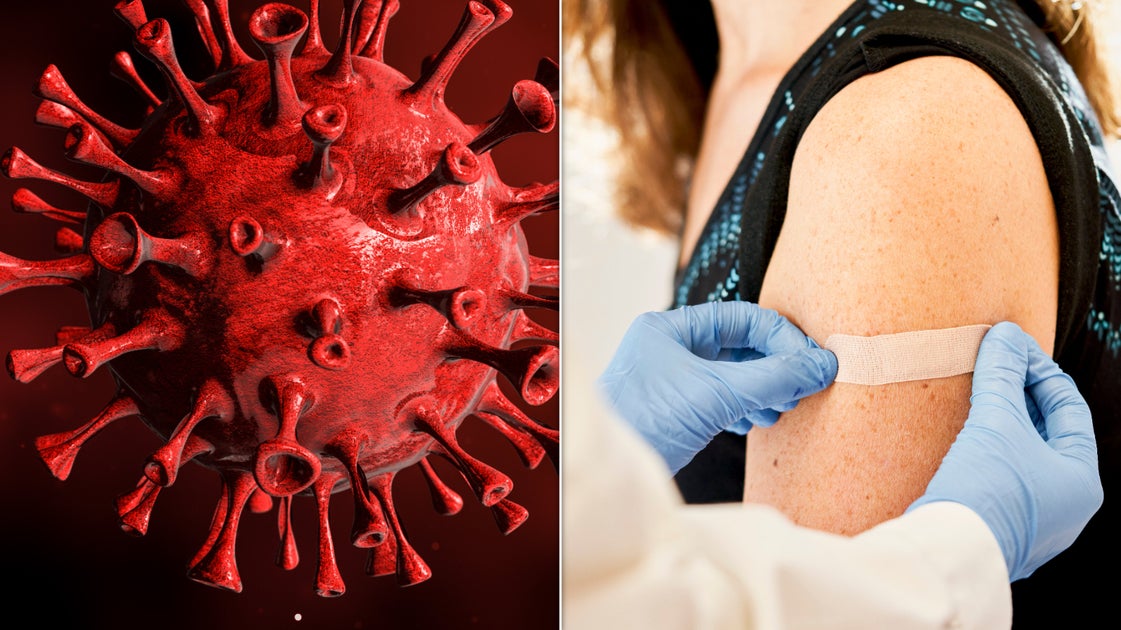

The Food and Drug Administration just approved new COVID shots, as cases of the virus start to creep up across the country. Pharmaceutical companies Moderna, Pfizer and Novavax all announced late this week that they will be releasing updated vaccines for the 2026-2027 season.
Cases of COVID-19 are increasing in most states after a relatively quiet summer, according to data from the Centers for Disease Control and Prevention. The test positivity rate for the week ending Aug. 15 is currently close to 5% — the highest it’s been since February, per CDC numbers.
A few things have changed about the vaccines from previous seasons, including some potential logistical complications. Infectious disease doctors break it down.
What are the updated COVID shots?
The FDA has approved these updated COVID shots:
- Spikevax. Moderna’s mRNA vaccine is approved for people aged 6 months through 64 who have an underlying health condition, the company announced in a press release Thursday. Anyone aged 65 and up also qualifies.
- mNexspike. Another mRNA vaccine from Moderna, mNexspike is a lower-dose option. It’s approved for people aged 12 through 64 with an underlying condition, as well as those aged 65 and older.
- Comirnaty. Pfizer’s mRNA vaccine has been approved for all adults aged 65 and older, per a company press release. Anyone aged 5 through 64 with an underlying condition that raises their risk of severe illness also qualifies.
- Nuvaxovid. Produced by drugmakers Novavax and Sanofi, this is the only protein-based COVID vaccine in the United States. “This is a traditional-style vaccine, like the flu vaccine,” said Dr. Thomas Russo, a professor and chief of infectious diseases at the University at Buffalo in New York.
What has changed from previous years?
The vaccines are similar to previous seasons. However, they have a different target.
“Every vaccine this cycle targets the JN.1-lineage XFG variant, the same way flu shots get re-targeted every year based on what’s circulating,” said Dr. Amesh A. Adalja, a senior scholar at the Johns Hopkins Center for Health Security.
What’s different from many previous years is that the FDA narrowed eligibility last season to people aged 65 and older or with a high-risk condition, Adalja explains. “This season’s approvals keep that line,” he said.

Who is eligible to get the shot?
This gets slightly complicated. The FDA’s recommendations heavily favor older adults, along with those who have underlying health conditions, known as comorbidities, that make them more likely to develop severe illness from COVID-19.
“There remains some uncertainty about eligibility if you don’t fall into those groups, but the comorbidities are broad,” Russo said. The list includes things like pregnancy and chronic lung disease, along with less obvious conditions like depression and obesity.
Still, doctors say you should be able to get vaccinated if you want the shot. “Anyone who wants a COVID vaccine will be able to get one,” Russo said. Adalja agreed. “Vaccines are available off-label outside the label indication,” he said.
When and where can you get the updated COVID vaccine?

These vaccines are typically shipped out “immediately” after they receive FDA approval, Adalja said. “If you’re high-risk, get it now as COVID activity is increasing nationally,” he explained. (It’s a good idea to contact your provider in advance to make sure they’re giving the most up-to-date vaccine.)
But there’s some uncertainty about where you’ll be able to get the vaccine. While many doctors’ offices will stock it, some states need vaccines to be signed off by the CDC before they can be given in pharmacies ― a common place where adults get vaccinated, Russo points out.
It’s unclear if the CDC’s Advisory Committee on Immunization Practices (ACIP), which was dismantled by Health and Human Services Secretary Robert F. Kennedy Jr. in 2025 and replaced with handpicked appointees, will weigh in on the vaccines.
While mRNA vaccines have been controversial in the past, doctors stress their value.
“The mRNA platform’s advantage is speed,” Adalja said. “When a variant like this season’s XFG becomes dominant, manufacturers can redesign and produce a matched shot in weeks rather than the months conventional manufacturing requires.”
The benefits of getting vaccinated with any COVID vaccine vary by risk, Russo said. “The greatest benefit is in high-risk groups,” he explained. “But for individuals that don’t fall into those groups and are healthy, it still has benefits.” Among other things, the vaccine lowers the risk of developing severe disease and long COVID.
“I still recommend that everyone gets vaccinated,” Russo said. Adalja echoed this. “What these vaccines were built to do — and what trial and real-world data still show they do — is prevent severe disease, hospitalization, and death,” he noted.