
Close Menu

    Subscribe to Updates

    Get the latest creative news from FooBar about art, design and business.

    What's Hot

    How The Economy Is Affecting People’s Everyday Spending Habits

    November 5, 2026

    Does Vegetable Broth Need to Be Refrigerated? Full Guide

    November 5, 2026

    How To Report SEO Performance When Analytics Data Is Incomplete

    November 5, 2026
    Facebook X (Twitter) Instagram
    Trending
    • How The Economy Is Affecting People’s Everyday Spending Habits
    • Does Vegetable Broth Need to Be Refrigerated? Full Guide
    • How To Report SEO Performance When Analytics Data Is Incomplete
    • Waymo confirms it will split with Uber in January 2028
    • How Are U.S. Household Finances Doing?
    • Sweet Potato Pie Season in Louisiana and the Law Behind Home Bakers
    • 18 Cold And Flu Hacks That Actually Work
    • Claude integrations worth adding to your GTM stack
    Facebook X (Twitter)
    SBM Global News
    Demo
    • Home
    • Top Stories
      • Politics
    • Business
      • Small Business
      • Marketing
    • Finance
      • Investment
    • Technology

      Waymo confirms it will split with Uber in January 2028

      November 5, 2026
      Read More

      Google takes Dreambeans to India in bid to bring AI-generated personal stories to the masses

      November 3, 2026
      Read More

      TechCrunch Mobility: A new, bigger AV boom is here

      November 2, 2026
      Read More

      Connecta Satellite Solutions LLC – Company Profile

      November 1, 2026
      Read More

      Pile-ins, payouts, and pacing pressure: the investors behind the VCs open up

      October 31, 2026
      Read More
    • Lifestyle
      • Travel
    • Feel Good
    • Get In Touch
    SBM Global News
    Demo
    Home»Finance»Trump to Impose Tariffs Against Countries That Buy Venezuelan Oil
    Finance

    Trump to Impose Tariffs Against Countries That Buy Venezuelan Oil

    By Staff WriterMarch 25, 20254 Mins Read
    Facebook Twitter LinkedIn Reddit Email
    #image_title
    Share
    Facebook Twitter LinkedIn Pinterest Email

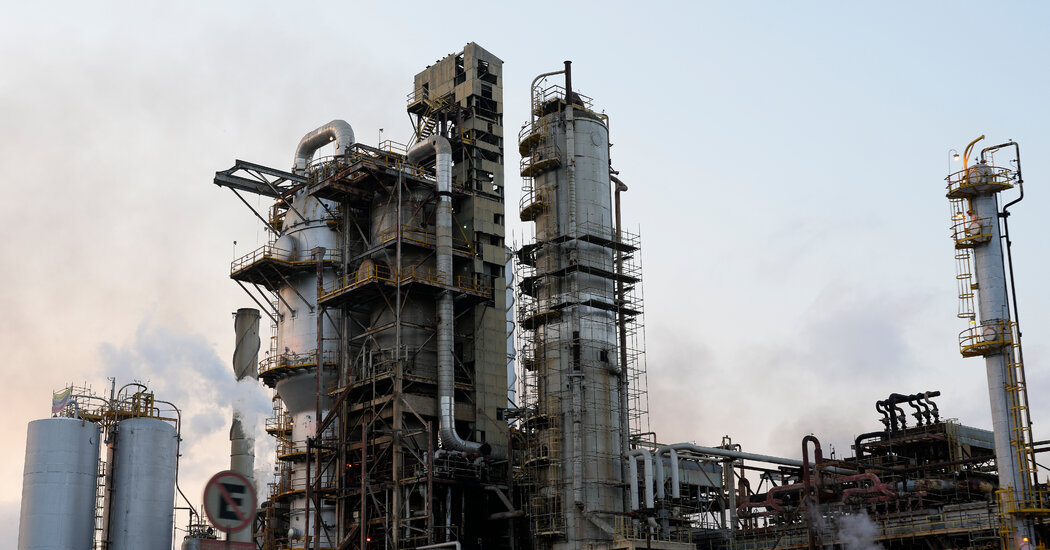
    President Trump issued an executive order on Monday to crack down on countries that buy Venezuelan oil by imposing tariffs on the goods those nations send into the United States, claiming that Venezuela has “purposefully and deceitfully” sent criminals and murderers into America.

    In the order, the president said the government of Nicolás Maduro, the Venezuelan leader, and the Tren de Aragua gang, a transnational criminal organization, posed a threat to the national security and foreign policy of the United States.

    On or after April 2, a tariff of 25 percent may be imposed on all goods imported into the United States from any country that imports Venezuelan oil, either directly or indirectly through third parties, the order said.

    The order said the secretaries of state, Treasury, commerce and homeland security, as well as the trade representative, would determine at their discretion what tariffs to impose. The tariffs would expire one year after the last date the Venezuelan oil was imported, or earlier if Trump officials so chose, it said.

    This unconventional use of tariffs could further disrupt the global oil trade as buyers of Venezuelan oil seek alternatives. The United States and China have been the top buyers of Venezuelan oil in recent months, according to Rystad Energy, a research and consulting firm. India and Spain also buy a small amount of crude from the South American country.

    But in the case of China, Venezuela’s oil makes up such a small portion of the country’s imports that the threat of higher tariffs will probably cause China to look elsewhere for oil, said Jorge León, a Rystad Energy analyst.

    American purchases of Venezuelan oil are poised to wind down after the Trump administration said it would revoke a license that allowed Chevron to produce oil there.

    The Trump administration on Monday gave Chevron, the second largest U.S. oil company, another two months to produce oil in Venezuela and sell it to the United States. The administration had earlier ordered Chevron to wind down its operations by April 3.

    The U.S. and Venezuelan governments have been sparring over Mr. Trump’s plans to deport migrants from the United States. Venezuela announced on Saturday that it had reached an agreement with the Trump administration to resume accepting deportation flights of migrants who were in the United States illegally.

    “Venezuela has been very hostile to the United States and the Freedoms which we espouse,” the president wrote.

    Mr. Trump is planning to impose other new tariffs globally on April 2, when he will introduce what he is calling “reciprocal tariffs.” He has said the United States will raise the tariffs it charges on other countries to match their levies, while also taking into consideration other behaviors that affect trade, like taxes and currency manipulation. The president has taken to calling this “liberation day,” a term he repeated on Monday.

    Mr. Trump called the new levies he threatened on buyers of Venezuelan oil “secondary tariffs,” a label that echoed “secondary sanctions,” which are penalties imposed on other countries or parties that trade with nations under sanctions.

    Some trade and sanctions experts said existing secondary sanctions associated with countries such as Russia and Iran already were not well enforced, and questioned whether the United States would have the capacity to pull off new tariff-based penalties.

    “Given the limited enforcement of existing secondary sanctions, where we have a precedent, I’m not sure how realistic effective deployment of this strategy is,” said Daniel Tannebaum, a partner at the consulting firm Oliver Wyman and senior fellow at the Atlantic Council, a Washington think tank.

    Demo

    But other experts said the strategy could help the United States to avoid the type of financial sanctions on foreign banks that could threaten financial stability. Using tariffs could help the United States to be seen as taking tough action without incurring those risks, they said.

    With typical secondary sanctions, individuals or companies cannot buy oil or other products under sanctions from a blacklisted country. Otherwise, businesses could be subjected to U.S. sanctions themselves, facing fines or being cut off from the U.S. financial system.

    But Mr. Trump and his advisers have said they think such sanctions can threaten the pre-eminence of the dollar if they are overused, by encouraging other countries to find alternative currencies. They have talked about using tariffs instead.

    In his confirmation hearing in January, Treasury Secretary Scott Bessent said tariffs, in addition to raising revenue and rerouting supply chains, could provide an alternative to traditional financial sanctions.

    Mr. Trump “believes that we’ve probably gotten over our skis a bit on sanctions and that sanctions may be driving countries out of the use of the U.S. dollar,” Mr. Bessent said. Tariffs could be used instead, he said.

    View original article here

    Share. Facebook Twitter LinkedIn Email Reddit
    Previous ArticleTalk Your Book: A Better Money Market Fund
    Next Article OpenAI says its AI voice assistant is now better to chat with

    Related Posts

    How The Economy Is Affecting People’s Everyday Spending Habits

    November 5, 2026
    Read More

    Secondhand Shopping Could Be A Sign Of A Struggling U.S. Economy

    November 2, 2026
    Read More

    New Report Reveals Major Halloween Candy Price Hikes

    October 30, 2026
    Read More
    Add A Comment

    Leave A Reply Cancel Reply

    Demo
    Top Posts

    Former FBI, CIA Head Has ‘Serious Concerns’ With Trump Cabinet Picks

    December 28, 2024435

    Emirates to operate next-gen A350 on the third daily service to Cape Town

    January 14, 2026256

    AAVE Price Prediction: Target $215-225 by Mid-January 2025 as Technical Indicators Signal Bullish Momentum

    December 15, 2025240

    Wall Street Slumps As Alphabet, Qualcomm And Other Tech Stocks Fall

    February 7, 2026212
    Don't Miss
    Finance

    How The Economy Is Affecting People’s Everyday Spending Habits

    By Staff WriterNovember 5, 20266 Mins Read

    For years, Emmy Byers, founder of Texas-based event company Poppy Planning, came home from the…

    Read More

    Does Vegetable Broth Need to Be Refrigerated? Full Guide

    November 5, 2026

    How To Report SEO Performance When Analytics Data Is Incomplete

    November 5, 2026

    Waymo confirms it will split with Uber in January 2028

    November 5, 2026
    Stay In Touch
    • Facebook
    • Twitter
    Demo
    Find More
    Trending News
    • How The Economy Is Affecting People’s Everyday Spending Habits
    • Does Vegetable Broth Need to Be Refrigerated? Full Guide
    • How To Report SEO Performance When Analytics Data Is Incomplete
    • Waymo confirms it will split with Uber in January 2028
    • How Are U.S. Household Finances Doing?
    • Sweet Potato Pie Season in Louisiana and the Law Behind Home Bakers
    • 18 Cold And Flu Hacks That Actually Work
    • Claude integrations worth adding to your GTM stack
    • Ripple CTO Emeritus Clarifies Current Role at Ripple – BitRss
    • Six Fitness ‘Rules’ That Don’t Actually Matter
    Other News
    • Business
    • Feel Good
    • Finance
    • Fitness
    • Health
    • Investment
    • Lifestyle
    • Marketing
    • Politics
    • Small Business
    • Technology
    • Top Stories
    • Travel
    About Us

    Small Business Minder brings together business and related news from around the world in one place. Follow us for all the business news you'll need.

    Facebook X (Twitter)
    Our Picks

    How The Economy Is Affecting People’s Everyday Spending Habits

    November 5, 2026

    Does Vegetable Broth Need to Be Refrigerated? Full Guide

    November 5, 2026
    Most Popular

    Former FBI, CIA Head Has ‘Serious Concerns’ With Trump Cabinet Picks

    December 28, 2024435

    Emirates to operate next-gen A350 on the third daily service to Cape Town

    January 14, 2026256
    Categories
    © 2026 Small Business Minder
    • Home
    • Get In Touch

    Type above and press Enter to search. Press Esc to cancel.

    Ad Blocker Enabled!
    Ad Blocker Enabled!
    Our website is made possible by displaying online advertisements to our visitors. To get the most from our site, please disable your Ad Blocker.