
Close Menu

    Subscribe to Updates

    Get the latest creative news from FooBar about art, design and business.

    What's Hot

    How The Economy Is Affecting People’s Everyday Spending Habits

    November 5, 2026

    Does Vegetable Broth Need to Be Refrigerated? Full Guide

    November 5, 2026

    How To Report SEO Performance When Analytics Data Is Incomplete

    November 5, 2026
    Facebook X (Twitter) Instagram
    Trending
    • How The Economy Is Affecting People’s Everyday Spending Habits
    • Does Vegetable Broth Need to Be Refrigerated? Full Guide
    • How To Report SEO Performance When Analytics Data Is Incomplete
    • Waymo confirms it will split with Uber in January 2028
    • How Are U.S. Household Finances Doing?
    • Sweet Potato Pie Season in Louisiana and the Law Behind Home Bakers
    • 18 Cold And Flu Hacks That Actually Work
    • Claude integrations worth adding to your GTM stack
    Facebook X (Twitter)
    SBM Global News
    Demo
    • Home
    • Top Stories
      • Politics
    • Business
      • Small Business
      • Marketing
    • Finance
      • Investment
    • Technology

      Waymo confirms it will split with Uber in January 2028

      November 5, 2026
      Read More

      Google takes Dreambeans to India in bid to bring AI-generated personal stories to the masses

      November 3, 2026
      Read More

      TechCrunch Mobility: A new, bigger AV boom is here

      November 2, 2026
      Read More

      Connecta Satellite Solutions LLC – Company Profile

      November 1, 2026
      Read More

      Pile-ins, payouts, and pacing pressure: the investors behind the VCs open up

      October 31, 2026
      Read More
    • Lifestyle
      • Travel
    • Feel Good
    • Get In Touch
    SBM Global News
    Demo
    Home»Finance»The High-Class Problem That Comes With Home Equity
    Finance

    The High-Class Problem That Comes With Home Equity

    By Staff WriterMay 19, 20245 Mins Read
    Facebook Twitter LinkedIn Reddit Email
    #image_title
    Share
    Facebook Twitter LinkedIn Pinterest Email

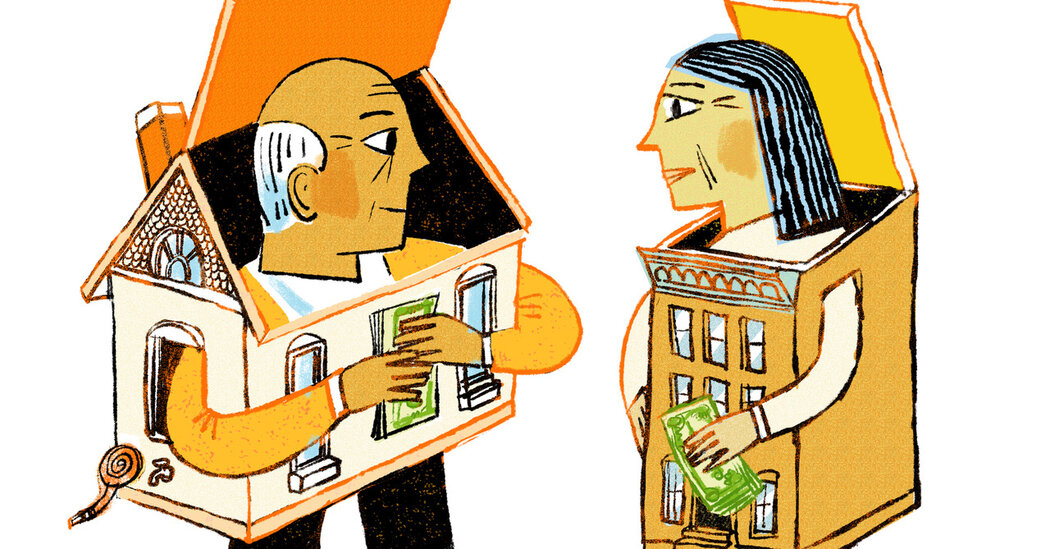
    A lot of money is tied up in people’s homes. Those who need to tap it most, however, may have the hardest time doing so.

    Paying a mortgage is a form of forced savings. If you want to stay in your home, you have no choice but to make each payment. That money — plus appreciation in the home’s value — now equals $31.8 trillion for all households, according to the Federal Reserve, more than three times what it was in 2012.

    Saving for retirement, on the other hand, is not mandatory. As a result, some homeowners end up with a lot of home equity but low retirement savings.

    Here’s the problem with that situation. A retirement account is relatively easy to tap, and you can do it quickly. Home equity? Not so much.

    The most obvious way to get to this equity is to sell your residence. But for some older homeowners, that may be out of the question.

    Your home may be just the way you like it, because you built it that way or spent decades fixing it up. If you’re attached to local doctors or a house of worship, it is difficult to cut ties and move away. Clearing out years of belongings is a total pain. And an appropriate and affordable new place — no steps, minimal maintenance — may simply not exist wherever you want to be.

    And there’s the money. If you have a mortgage and will need to borrow to buy your next place, today’s interest rates may be double your current one. There may be capital gains taxes on the sale, too.

    Then there is the matter of your heirs, if any. In a Fannie Mae survey of older Americans last year, 62 percent said their goal was to leave their home to somebody else. If you have pride in the equity you’ve built — especially if you come from a historically disadvantaged group — the home is a testament to perseverance and a kind of legacy.

    So, next! Want to refinance your mortgage and take cash out, or get a home-equity loan or line of credit, and you don’t mind high interest rates? Good luck, because you’ll need a high enough income and credit score to qualify.

    That brings us to reverse mortgages. With this product, eligible people 62 and older can extract equity in a variety of ways, say through a lump sum. Interest accrues in the background, and the balance of the reverse mortgage goes up instead of down, the way a normal mortgage would. You generally pay off the mortgage when the home is no longer your principal residence.

    Most people reject reverse mortgages. Lenders have rarely underwritten more than 100,000 federally insured ones in any fiscal year, and that hasn’t happened since 2009.

    Why is that? Many older people remember scandals involving the products, when borrowers felt misled and surviving spouses or heirs could not keep the homes. New federal protections helped clean things up.

    Still, reverse mortgages or something like them seem inevitable in a nation where individuals are entirely responsible for their own retirement savings. One good test for their utility is this: Do any financial advisers who pledge to act only in the best interest of their clients help members of their own family borrow in this way?

    Jeremy Eppley, a financial planner in Owings Mills, Md., is one who does. His aunt lives in a house she owns outright. Inflation, however, has eaten away at her limited retirement income, and a reverse mortgage allows her to live better now.

    Demo

    “I’d never heard of her going on vacation,” Mr. Eppley said. “She could live a little.”

    His aunt has no children, and potential heirs have no particular expectations about an inheritance. If need be, Medicaid could pay for her long-term care. This is a crucial point, since many people don’t tap into home equity because they want plenty left over to pay for a caregiver or nursing home themselves.

    There is, of course, entrepreneurial ingenuity at work. A fair bit of it is focused on getting people (of any age) to hand over some of the future gains in their home’s value to a start-up in exchange for cash now.

    Companies like HomePace, Hometap, Point, Unison and Unlock are already at it. Their calculators may take your breath away when you see how big of a cut they could get in a decade.

    The ever increasing financialization of the linchpins of our future — 401(k)s and the loans against them, the degrees that can get people ahead and the $1.6 trillion of student debt they require — is alarming. But workplace savings and the drive for higher education reflect good instincts: Save for later, better yourself.

    With home equity, we may have tipped too far into seeing homes as totems of a financial life well and conservatively lived.

    Homes are trophies, sure. But their equity is also a tool. Absent any radically improved government safety net, people without much savings are going to need more ways to extract it.

    View original article here

    Share. Facebook Twitter LinkedIn Email Reddit
    Previous ArticleGambler’s Fallacy in the Stock Market
    Next Article How to Create a Strong Financial Plan When You’re Renting Forever

    Related Posts

    How The Economy Is Affecting People’s Everyday Spending Habits

    November 5, 2026
    Read More

    Secondhand Shopping Could Be A Sign Of A Struggling U.S. Economy

    November 2, 2026
    Read More

    New Report Reveals Major Halloween Candy Price Hikes

    October 30, 2026
    Read More
    Add A Comment

    Leave A Reply Cancel Reply

    Demo
    Top Posts

    Former FBI, CIA Head Has ‘Serious Concerns’ With Trump Cabinet Picks

    December 28, 2024435

    Emirates to operate next-gen A350 on the third daily service to Cape Town

    January 14, 2026256

    AAVE Price Prediction: Target $215-225 by Mid-January 2025 as Technical Indicators Signal Bullish Momentum

    December 15, 2025240

    Wall Street Slumps As Alphabet, Qualcomm And Other Tech Stocks Fall

    February 7, 2026212
    Don't Miss
    Finance

    How The Economy Is Affecting People’s Everyday Spending Habits

    By Staff WriterNovember 5, 20266 Mins Read

    For years, Emmy Byers, founder of Texas-based event company Poppy Planning, came home from the…

    Read More

    Does Vegetable Broth Need to Be Refrigerated? Full Guide

    November 5, 2026

    How To Report SEO Performance When Analytics Data Is Incomplete

    November 5, 2026

    Waymo confirms it will split with Uber in January 2028

    November 5, 2026
    Stay In Touch
    • Facebook
    • Twitter
    Demo
    Find More
    Trending News
    • How The Economy Is Affecting People’s Everyday Spending Habits
    • Does Vegetable Broth Need to Be Refrigerated? Full Guide
    • How To Report SEO Performance When Analytics Data Is Incomplete
    • Waymo confirms it will split with Uber in January 2028
    • How Are U.S. Household Finances Doing?
    • Sweet Potato Pie Season in Louisiana and the Law Behind Home Bakers
    • 18 Cold And Flu Hacks That Actually Work
    • Claude integrations worth adding to your GTM stack
    • Ripple CTO Emeritus Clarifies Current Role at Ripple – BitRss
    • Six Fitness ‘Rules’ That Don’t Actually Matter
    Other News
    • Business
    • Feel Good
    • Finance
    • Fitness
    • Health
    • Investment
    • Lifestyle
    • Marketing
    • Politics
    • Small Business
    • Technology
    • Top Stories
    • Travel
    About Us

    Small Business Minder brings together business and related news from around the world in one place. Follow us for all the business news you'll need.

    Facebook X (Twitter)
    Our Picks

    How The Economy Is Affecting People’s Everyday Spending Habits

    November 5, 2026

    Does Vegetable Broth Need to Be Refrigerated? Full Guide

    November 5, 2026
    Most Popular

    Former FBI, CIA Head Has ‘Serious Concerns’ With Trump Cabinet Picks

    December 28, 2024435

    Emirates to operate next-gen A350 on the third daily service to Cape Town

    January 14, 2026256
    Categories
    © 2026 Small Business Minder
    • Home
    • Get In Touch

    Type above and press Enter to search. Press Esc to cancel.

    Ad Blocker Enabled!
    Ad Blocker Enabled!
    Our website is made possible by displaying online advertisements to our visitors. To get the most from our site, please disable your Ad Blocker.