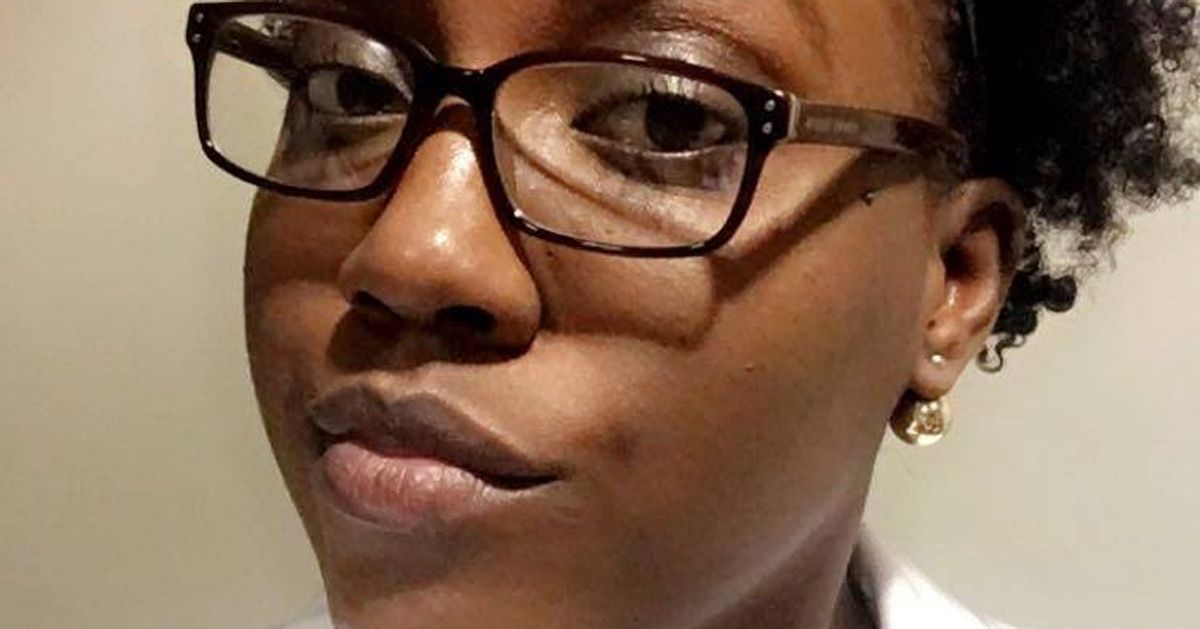

I recently suffered from what doctors believe was encephalitis, a brain infection, likely contracted while traveling internationally. For the first time outside of pregnancy, I — an emergency doctor — experienced what it feels like to be a patient.
It was not, to put it mildly, a pleasant experience.
I sought treatment when I was plagued by recurrent bouts of diarrhea and vomiting, while simultaneously becoming convinced that my husband of nine years was plotting to kill me for my insurance policy (don’t worry; we’ve since reconciled). My heart was racing, my skin was hot and I was spouting off ramblings that were, thanks to my medical training, just coherent enough to fool some into thinking I was OK. But my family knew something was terribly wrong.
My treatment began at a publicly funded “safety net” hospital, a health care facility that primarily serves patients who are uninsured or covered by Medicaid. In my altered state, I thought this would be the best place to uncover why I was acting so strangely. As a child of Medicaid raised well below the poverty line, I grew up in a family that largely depended on the public hospital system to receive care. Due to Medicaid’s low reimbursement rate, most general physicians did not accept our insurance, and those who did were already swamped. If something was “wrong” — whether a constellation of worrying symptoms or a broken limb — we would go directly to the emergency room for evaluation. There, the doctors, who I at a young age envisioned as superheroes, made sure that no stone was left unturned and that my family would be provided equal care as those society considered “better.”
Today, I am an attending physician and no longer in need of Medicaid’s support. Yet in my ill state, my mind resurrected my family’s pervasive concerns over finances and worried about my ability to pay. So I turned to a public hospital expecting the care of my past. Instead, the experience was a blur of overwhelming confusion and fear. The public hospital system I once knew no longer existed. In its place was a system that was overburdened, chronically underfunded, and neglected. I left understanding why patients often distrust the medical system or leave hospitals against medical advice.
When I arrived at the hospital, I was evaluated by an emergency medicine physician. Even though labs were drawn, I was sent for a psychiatric evaluation before completing a medical workup. Only once I was cleared by psychiatry did they send me for brain imaging and an ultrasound. Everything felt slow — not just because of my temporarily shattered mind, but also due to a palpable lack of urgency among the health care workers. The overworked physicians and staff were stretched thin, their burnout evident. Just a year postpartum, I wondered if I’d become another statistic, another Black woman who’d slipped through the cracks.
Even now, I’m confused: Why was psychiatry the starting point? Was my altered mental state dismissed as a psychiatric problem because it was easier to label me a “crazy” person?
I don’t believe the clinicians consciously thought this way, but exhaustion and systemic pressures breed shortcuts. It’s a slippery slope to anchoring bias, the mental process in which we rely on assumptions instead of evaluation. When coupled with cultural gaps, ED overcrowding, socioeconomic disparities and unconscious bias, it’s no surprise that women and minorities are 20-30% more likely to face medical and psychiatric misdiagnosis.
I was reminded of morbidity and mortality cases we reviewed during my medical training. Two young, healthy Black women were both misdiagnosed as psychiatric. One died of bacterial meningitis, the other of a severe stroke. Both were avoidable deaths. During my own ordeal, I wondered what would have happened if my husband, also a physician, hadn’t advocated for me — pushing for tests, demanding imaging and ultimately forcing me to leave against medical advice. Would I have suffered a similar fate?
At the private hospital where I sought further care, diagnostics were faster and more thorough. I was evaluated for diseases I had not even considered since medical school. I underwent a lumbar puncture, MRI scan and specialized labs in record time. This hospital seemed to run more like a well-oiled machine, and as I looked around the emergency room, I could see why. In comparison to its public counterpart, the doctors had an ample supply of support from nurses, physician assistants, emergency department technicians and transporters. This allowed them to center the patient and expedite their care.
I also couldn’t help but notice that at the private hospital, the patients around me seemed different. Many appeared to be white-collar professionals, likely with adequate health insurance. They appeared to worry less about an inability to pay and were just focused on getting better, a luxury that is not possible for a majority of Americans. As I rested in my room waiting for an EEG, I felt a lump in my throat as I realized that I was one of “them” now — someone with good insurance.
I wondered how many of my Medicaid and Medicare counterparts, how many of my family and friends, would be able to receive such an extensive workup without facing a hefty, perhaps life-altering medical bill. How many would have been seen by neurology and had a lumbar puncture, MRI, and extensive viral testing prior to being “cleared for psych”? For how many would the workup I received have meant that they would have to take a second mortgage or work months of overtime just to cover the interest payments? Twenty-five years ago, 40 percent of bankruptcy filings were due to medical debt; today it is about 62 percent. Medical debt is now the No. 1 cause of personal bankruptcy in the U.S.
Today, I’m recovering. My brain fog is improving, though I still struggle to find words at times. But what lingers most isn’t fear for myself; it’s fear for patients.
We know that issues such as a lack of equity in care, lack of access, barriers to insurance coverage and implicit bias among providers — issues that perpetuate the systemic oppression felt by marginalized Americans — go a long way towards explaining why patients experience stark differences in health care outcomes. As a health system and as health providers, we must do better. We need to advocate for programs, both within and beyond health care, that improve the lives and health of patients.

The privatization of medicine and the simultaneous defunding of the public health system are growing problems that disproportionately affect marginalized populations. Eighty-six percent of people seen at public hospitals are considered “low socioeconomic status.” Public hospitals care for patients regardless of their ability to pay, something that is especially critical when it comes to specialty care. When these hospitals close or are privatized, low-income patients suffer.
Continued health care privatization risks further marginalizing these groups by creating barriers to access, including higher costs and less comprehensive care. Limiting public funding for health care also leads to lowered staffing, higher patient ratios, and more overworked physicians relying on their instincts rather than information. This leads to more missed diagnoses among a group whose life expectancy is already severely impacted by poverty.
There should not be two health care systems. Patients, regardless of their socioeconomic status, culture or race, should receive quality care no matter what the hospital they can afford to go to.
I don’t have all the answers, but I know something must be done. Public health funding must increase in order to combat many of the issues faced by the most vulnerable. The state governments must prioritize maintaining public health and public hospitals even if it means providing subsidies where necessary, especially in rural areas, where access is already limited. Minnesota has already attempted to solve part of the issue through the Local Public Health Act. Finally, the experiences of dozens of other developed countries — as well as a thorough analysis from a 2021 study — show that universal health care would provide better care and cost less than our current system.
To my future patients: I finally know what it is like to feel like your doctor is not taking you seriously, to feel pushed aside, ignored, and doubted about your own body. I needed to go through the patient experience to truly realize how we have been failing you. I am sorry.
To my fellow physicians: I get it. Metrics, disposition and how many patients we can see per hour set strong financial incentives for many and can affect final pay. Medicine has become corporate and deeply flawed, but we cannot let a broken and battered system cause us to push aside our oath. Together, we can rebuild trust with our patients.
Let us remember the essence of primum non nocere — to first do no harm — not just in individual patient care but in the systems we build to serve them. Systemic changes won’t happen overnight, but they are necessary steps toward a more just and compassionate system.
Go Ad-Free — And Protect The Free Press
Already contributed? Log in to hide these messages.
Dr. Shacelles Bonner is an emergency medicine physician in NYC and Public Voices Fellow through Yale University and The OpEd Project. She is a first-generation college graduate and global health advocate. She writes on social inequity, systemic reform and patient-centered care. You can follow her @shacellesbonner_md.
Do you have a compelling personal story you’d like to see published on HuffPost? Find out what we’re looking for here and send us a pitch at [email protected].