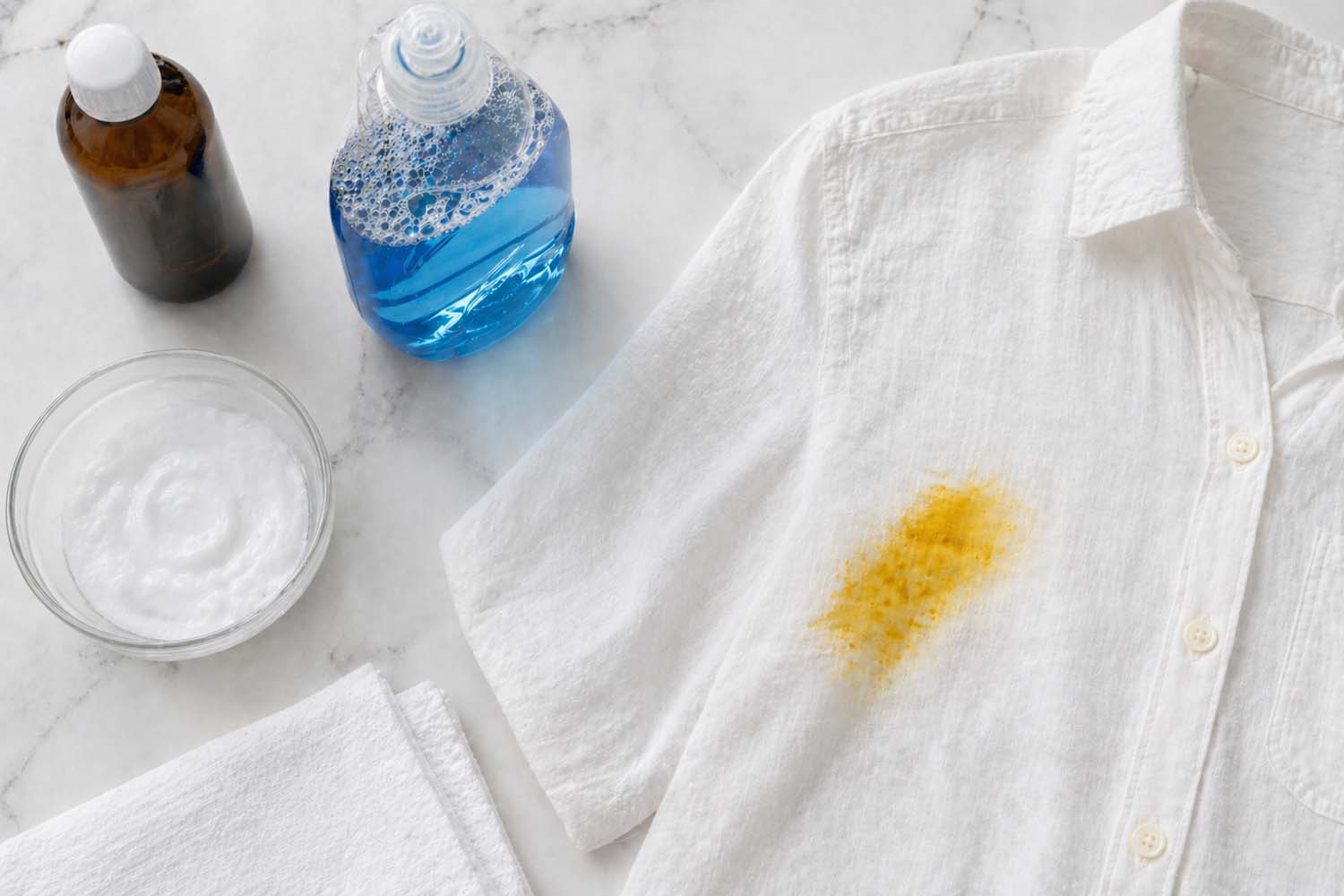

I didn’t panic when the curry dropped. That was my first mistake.
It was a Tuesday night, takeout from the place around the corner, and I was eating on the couch like a reasonable adult when a spoonful of chicken tikka masala slid right off the fork and landed directly on my favorite white linen shirt. I grabbed a paper towel, blotted it up, rinsed it with cold water, and thought I’d handled it. The stain looked lighter. Almost gone, honestly.
The next morning I pulled the shirt out of the hamper and it was a deep, brilliant yellow. Not faded. Not sort of stained. Bright. Like someone had taken a highlighter to it.
That’s when I learned what turmeric actually is, and why curry stains don’t follow the same rules as everything else in the laundry. Turmeric isn’t just a pigment that sits on the surface of your fabric. It’s a natural dye. It bonds to fiber at the molecular level, the same way textile dyes do in commercial fabric production. Once it’s set, it’s genuinely difficult to reverse. But “difficult” isn’t the same as “impossible,” and the chemistry points to a clear path if you catch it early and use the right tools in the right order.
Here’s everything I’ve figured out about getting curry out of clothes without making it permanent.
Quick Answer: How to Get Curry Out of Clothes
Turmeric is a natural dye (curcumin) that bonds to fabric fibers, so standard stain removers often fail. The most effective sequence: scrape off solids, blot (never rub), apply dish soap immediately to cut the oil carrier, rinse with cold water, then treat with an alkaline solution like baking soda paste or OxiClean. Finish by air-drying in direct sunlight. UV light degrades curcumin and takes stains from “almost gone” to completely gone. Avoid heat at every stage.
Why Curry Stains Are Different From Everything Else
Most food stains are just particles sitting in fabric fibers. You break them down chemically and they wash out. Curry doesn’t work that way, and the reason is curcumin.
Curcumin is the compound that gives turmeric its color. It’s been used as a natural fabric dye for thousands of years across South and Southeast Asia, and it works so well as a dye precisely because it bonds strongly to protein and cellulose fibers. Cotton, wool, silk, linen: curcumin finds those fiber molecules and attaches to them. This is called a dye-fiber bond, and it’s fundamentally different from most food stains, which are just surface deposits.
The other complicating factor is that curcumin is pH-sensitive in a way that matters a lot for stain removal. In acidic environments it stays a stable, vivid yellow and clings to fiber. In alkaline environments (pH above 7.5) curcumin loses a proton from its molecular structure, which does two things: it shifts the color from yellow to red or orange, and it becomes significantly more water-soluble and easier to flush out. This is why you might see your stain turn pinkish-red when you apply OxiClean or baking soda paste. That color change isn’t a bad sign. It’s actually confirmation the chemistry is working. Rinse it out while it’s in that alkaline state and it’s much more likely to leave the fabric. This is also why you should never reach for vinegar on turmeric. Vinegar is acidic, which locks curcumin right back into its stable yellow form and makes it significantly harder to remove.
Curry stains also have an oil component (from ghee, coconut milk, or cooking oil) layered on top of the curcumin problem. That oily carrier actually helps spread curcumin deeper into fabric, which is why these stains look worse after a few minutes than they do when they first land. The oil has to be addressed first, before you tackle the curcumin underneath.
And then there’s heat. Heat sets curcumin permanently. Hot water, machine drying, even leaving a stained shirt in a hot car. Once curcumin has been heat-set into a fiber, professional cleaning is your only realistic option.
Not All Curry Stains Are the Same
The turmeric content of the dish makes a big difference. A golden latte, turmeric tea, or something like these ginger turmeric immune-boosting shots leaves a stain that’s almost pure curcumin in a water base. That’s actually easier to treat than a full curry stain because there’s no oil component. A proper restaurant curry (tikka masala, korma, vindaloo, yellow Thai curry) has both curcumin and a fatty carrier that penetrates deeper and spreads faster.

Dry curry powder spilled on fabric is also different from a wet curry stain. Same goes for something like a beet turmeric refresher if it splashes: the beet adds a second pigment problem on top of the curcumin, so treat both stain types. Dry powder hasn’t had a chance to fully bond yet. Brush it off gently without pressing it in, then treat immediately, and you’ll have a much better outcome than with a wet stain that’s had time to sit.
Age matters more with curry than with almost any other stain. A fresh curry stain treated within the first 10 minutes is very manageable. One that’s sat for an hour is significantly harder. One that’s been through the dryer is very likely permanent.
4 Methods That Actually Work (Tested Results)
Fabric Matters: What Works on What
The approach that works on white cotton isn’t the same one that works on silk or wool. Curcumin bonds to protein fibers (silk, wool) especially aggressively, which means delicates need a gentler hand even though the chemistry working against you is stronger. Synthetics don’t absorb curcumin as deeply, but they’re less forgiving of harsh oxidizers. Know your fabric before you reach for the OxiClean.
White cotton: Dish soap first, then OxiClean soak (1-6 hrs), cold wash, sunlight. Avoid hot water and the dryer before the stain is gone.
Colored cotton: Dish soap first, then baking soda paste (30 min), cold wash, sunlight. Avoid hydrogen peroxide, which may strip dye.
Linen: Same as cotton for the relevant color. Linen is very absorbent so act faster than you think you need to. Avoid rubbing, which loosens the weave.
Polyester / synthetics: Dish soap and cold rinse, then an enzyme stain remover like Zout or Spray ‘n Wash. OxiClean can affect some synthetic dyes, so test first.
Silk: Dish soap very gently in cold water, rinse, diluted white vinegar as a final rinse only after the stain is already gone. Air dry in sun. Avoid baking soda (abrasive), OxiClean, hydrogen peroxide, and any heat.
Wool: Dish soap in cold water, extremely gentle pressure. No soaking, no baking soda, no OxiClean, no heat, no agitation. A wool-safe enzyme cleaner is your only escalation option. When in doubt, take it to a professional.
Step-by-Step Emergency Protocol
Step 1 – Remove solids immediately. Use the back of a spoon or a butter knife to lift any chunks of curry off the fabric. Don’t press down. Don’t smear. Lift. If you’re out and don’t have a spoon, the edge of a credit card works. The goal is to get the mass of curry off before it spreads the oil carrier deeper into the weave.
Step 2 – Blot, don’t rub. Use a clean white cloth or paper towel to blot up as much liquid as possible. Press and lift. Rubbing spreads the stain and pushes curcumin deeper into the fibers.
Step 3 – Apply dish soap. Squeeze a small amount of liquid dish soap directly onto the stain. Work it in gently with your fingertip using light circular motions. This addresses the oil carrier and prevents it from spreading the curcumin further.
Step 4 – Rinse from the back. Flip the garment and run cold water through the back of the stain to push it out. Keep the pressure moderate. Rinse for 1-2 minutes.
Step 5 – Apply your main treatment. White or light fabric: OxiClean soak or hydrogen peroxide. Colored fabric: baking soda paste. Let it sit for at least 30 minutes, up to several hours for OxiClean.
Step 6 – Launder in cold water. Machine wash on cold. Check the stain before putting anything in the dryer. If any yellow remains, repeat the treatment before drying.
Step 7 – Dry in direct sunlight. Skip the dryer. Lay the damp garment in direct sun for 2-4 hours. This is the step that finishes what chemistry started.
Never Do These Things With a Curry Stain
- Never use hot water. Heat sets curcumin into fabric permanently. Cold water only, at every stage.
- Never put it in the dryer before the stain is completely gone. There’s no coming back from it.
- Never use white vinegar as a treatment. Vinegar is acidic, which stabilizes curcumin in its bright yellow form and makes removal harder. The only time vinegar belongs near a turmeric stain is as a final rinse on silk, after the stain is already gone.
- Never rub the stain. Rubbing spreads it wider and drives it deeper. Blot only.
- Never treat the front of the fabric before treating from the back. Front treatment pushes the stain further in.
What Definitely Does Not Work
Cold water alone. Rinsing a curry stain with cold water feels productive. It removes the surface liquid and the stain looks lighter. It doesn’t remove the curcumin that’s already bonded to the fiber. The stain will look much worse once the fabric dries.
White vinegar as a primary treatment. This is the most common wrong advice I see repeated. Vinegar’s acidity stabilizes curcumin’s yellow color and makes it bond more effectively to fiber. It’s the opposite of what you want.
See also

Lemon juice. Also acidic. Same problem as vinegar, and citric acid can bleach colored fabrics unevenly.
Club soda. Works well for red wine because the carbonation helps lift tannins. Has no meaningful effect on a curcumin dye bond.
Regular laundry detergent on its own. Standard detergent is designed for general soil and protein-based stains. It doesn’t have the alkalinity or oxidizing power to break a curcumin dye bond. You’ll get the oil component partially, but the yellow pigment will survive the wash.
One method worth knowing about that I haven’t listed as a primary method: glycerine. It’s used by professional dry cleaners as a pre-treatment, applied directly to the stain, left for an hour, then rinsed before the main treatment. It doesn’t remove the stain on its own but softens the curcumin’s grip on the fiber, making the subsequent OxiClean or baking soda step more effective. If you have it in the house, it’s a useful addition especially on older stains.
The One Thing I Wish I’d Known Sooner
Sunlight isn’t a backup plan. It’s a key part of the process. I spent years treating turmeric stains chemically and getting them to “almost gone” and then calling it close enough. I didn’t realize that laying the damp, treated garment outside for a few hours would take it the rest of the way. Curcumin degrades in UV light. That’s not folk wisdom, it’s a documented property of the compound. The alkaline treatment weakens the dye bond, and the sunlight finishes it off. Do both. Every time.
Final Thoughts
My linen shirt is still in my closet. It took three treatment cycles and two sunny afternoons, but the stain is gone. I genuinely can’t find where it was.
Curry stains feel catastrophic when they happen because turmeric is so vivid and because most people’s instincts (hot water, rubbing, vinegar) actively make things worse. But once you understand that you’re dealing with a dye rather than a standard stain, the approach becomes logical. Cool temperatures to prevent bonding. Alkaline chemistry to shift the curcumin toward solubility. Oxygen bleach on whites to break the dye bond. Sunlight to finish what the chemistry started. And patience, because this one usually takes a couple of rounds.
The most important thing is avoiding heat at every stage. Do that, use the right chemistry for your fabric, and finish in the sun. The garment that seems ruined after a curry spill usually isn’t. And if turmeric has your attention for better reasons, it’s worth knowing it shows up in some genuinely good places, like adding turmeric to your morning coffee for a brain health boost.
Frequently Asked Questions
Can you get old curry stains out of clothes?
It depends on whether the stain has been heat-set. If the garment went through the dryer with the stain on it, the curcumin has likely bonded permanently and professional cleaning is your best option. If it’s just old (sat for hours or days but not dried with heat), soak in OxiClean for several hours, launder cold, and follow with direct sunlight. Multiple treatment cycles can dramatically reduce old stains even if full removal isn’t possible.
Does vinegar remove turmeric stains?
No, and it can make them harder to remove. Vinegar is acidic, and curcumin is more stable and more vividly yellow in acidic conditions. Use an alkaline treatment instead: baking soda paste for colors, OxiClean for whites. The only appropriate use of vinegar near a turmeric stain is as a final rinse for silk after the stain has already been removed.
Why does my curry stain look worse after rinsing?
Because rinsing with water removes the surface liquid and makes the stain look lighter when wet, but once the fabric dries the curcumin that’s bonded to the fibers becomes visible again. The stain didn’t get worse. You’re just seeing what was always there. Cold water alone isn’t enough. You need a treatment that actually breaks the dye bond.
Is a turmeric stain permanent?
Not if you act fast and avoid heat. Turmeric is a natural dye that bonds to fabric, so it’s more persistent than most food stains, but it’s not permanent if treated correctly before heat-setting. The biggest risk is the dryer. If the garment goes through a hot cycle before the stain is gone, removal becomes extremely difficult. Always check before drying.
Does sunlight really remove turmeric stains?
Yes, and it works better than most people expect. Curcumin is photodegradable, meaning UV light breaks down its chemical structure and destroys the color. After treating and washing, lay the damp garment in direct sunlight for 2-4 hours. This step frequently takes a stain from “mostly gone” to “completely gone” and works on any fabric type.
How do you get turmeric out of white clothes specifically?
After blotting and applying dish soap, soak the stained area in an OxiClean solution (cold water, package-directed concentration) for 1-6 hours depending on stain age. Rinse, launder cold, and check the stain before drying. If any yellow remains, repeat the OxiClean soak. Finish with a damp air-dry in direct sunlight. For stubborn stains on white cotton, a 30-minute application of 3% hydrogen peroxide before the OxiClean soak can help break the initial bond.
More Stain Removal Guides:
Better Living may earn commissions through affiliate links and may occasionally feature sponsored or partner content. If you make a purchase through our links, we may receive a small commission at no cost to you.