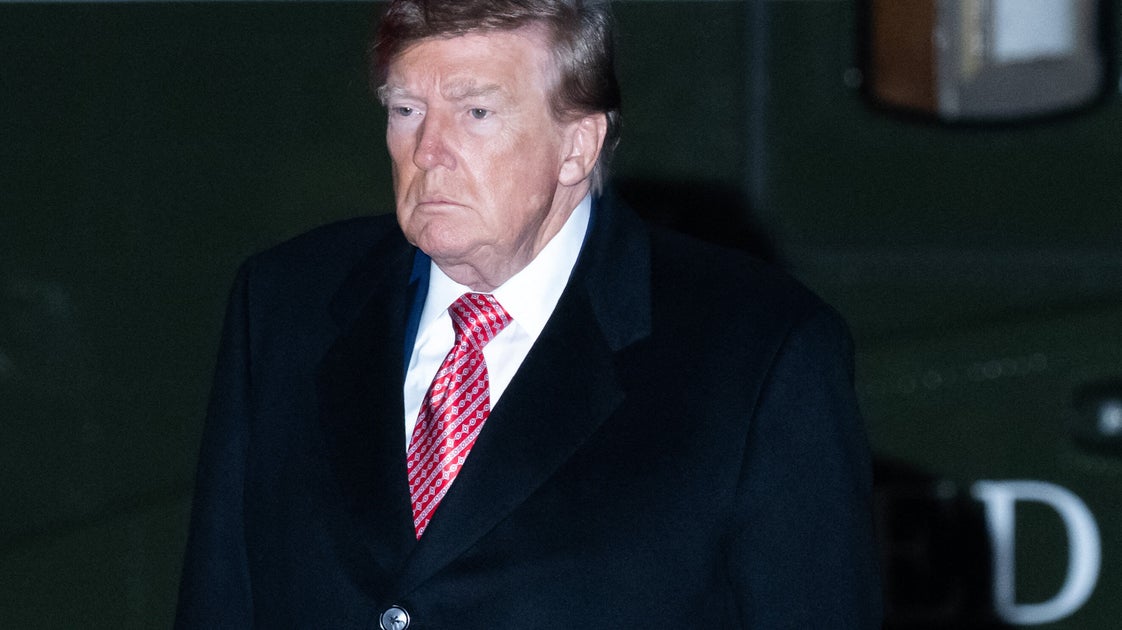

President Donald Trump’s efforts to interfere with the 2026 elections have almost universally failed. Courts have halted his most egregious actions, Congress has rejected his anti-voting legislation and civil groups have stepped up to support election officials.
The list of Trump’s failures is long.
Courts blocked both of his executive orders aimed at limiting access to voting, including an effort to direct the Postal Service not to deliver certain mail ballots. His administration has lost all 26 cases it has brought against states demanding their full, unredacted voter rolls as part of a plan to run that information through a citizenship database known for its faults. In September, a district court judge ruled that such a plan constituted an illegal “dragnet” that “flies in the face of duly enacted laws designed to protect Americans.”
In Congress, Trump’s push to pass the SAVE Act, which would have added significant new barriers to voter registration and could have disenfranchised every woman who took her husband’s last name, failed to clear a Democratic filibuster in the Senate, even after multiple attempts were made to attach it to unrelated legislation.
“These overt efforts to attack elections are failing over and over again,” said Hannah Fried, CEO of All Voting Is Local, a voting rights nonprofit.

Eric Lee via Getty Images
That doesn’t mean Trump won’t keep trying.
From falsely claiming that President Barack Obama was born in Africa and could not serve as president to lying about his 2020 election loss and attempting a coup to stay in power, Trump has not accepted the results of any election that didn’t go his way. Trump has even falsely claimed there was fraud in elections that he won.
“One thing is certain: on election night we will hear from the president from the White House spreading lies about our elections and slandering election workers as they’re busy doing their work,” said David Becker, executive director of the Center for Election Innovation & Research.
But Trump’s lies and bluster are likely to remain just that. After all his efforts over the past two years have failed, Trump has a few more ways to try to interfere in the midterms. But none of them are legal, and courts have said so. Meanwhile, more than 9 million people have already voted.
“I have been through every scenario and they all fall down at some point,” said Justin Levitt, a professor and election law expert at Loyola Marymount University. “There is one point at which every single one is not practically possible.”
Just look at Trump’s latest effort to meddle in the election in California. The Department of Justice sent a letter and a thumb drive to state election officials, demanding they use the drive’s files to purge suspected non-citizens from the voter rolls within 48 hours. When state officials refused to put that drive into their computers, the DOJ sued.
While this appears to be an attempt to interfere in California’s election just weeks before Election Day, it carries no teeth. The administration has no legal authority to demand a state remove voters from their rolls. States also cannot do so within 90 days of an election, which the Supreme Court affirmed in September. The letter and lawsuit are “not serious,” Levitt said. “It’s a PR stunt.”
“For members of the public, the easiest way to see how thoroughly amateur hour this is and how thorough nonsense this is is the fact the DOJ sent the thumb drive,” Levitt said. “That tells you immediately that these are not serious people.”


Spencer Platt via Getty Images
Election officials have strict cybersecurity rules, including not inserting a thumb drive into a computer in their offices that was mailed with the password attached by sticky note, as was the case here. The thumb drive was not a “secure medium,” Los Angeles County Registrar-Recorder/County Clerk Dean Logan said in a statement.
The timing of the lawsuit also raises obvious questions about its legitimacy. Why wait until after mail ballots have gone out to voters and within the 90-day window when states cannot legally remove voters from the rolls?
“This lawsuit is going to have some very serious problems and raises questions about the DOJ’s timing here,” Becker said.
The lawsuit could serve as a fig leaf to other threatened actions to interfere with the election, like deploying federal agents to polling places, seizing ballots after the election or disrupting the certification process. All of these threats are already illegal, as courts have affirmed, and would be challenged immediately if attempted.
Since these threats have been suggested for a long time, voter protection groups have taken significant steps to prepare and educate election officials, local law enforcement and judges about how to handle them.
“The law and the courts are on voters’ side,” said John Cusick, a lawyer with the NAACP Legal Defense Fund. “It’s Illegal to deploy federal troops or armed federal agents at any polling location as it’s been since the Civil War. Most states also make voter intimidation illegal. And we’re not waiting for these problems to happen.”
“This is bullying without any force to back it up. The people who run elections are state and local officials and he’s not their boss so they don’t have to listen.””
– Justin Levitt, Loyola Marymount University law professor
The Legal Defense Fund has already filed suit with the League of United Latin American Citizens and other groups to preemptively challenge the deployment of immigration enforcement or other federal law enforcement personnel to the polls on Nov. 3. That litigation is still pending, along with a related lawsuit by Democratic Party organizations, but it serves as a ready vehicle waiting before a judge in case the threat materializes.
“We stand ready to use that litigation for anyone who would try to intimidate voters,” Cusick said.
Trump’s allies have also urged the president to seize voting machines or ballots during or after the election. This threat became more serious after the DOJ seized ballots from the 2020 election from election offices in Fulton County, Ga., in 2025. While the warrant in that case was based on disproven allegations of voter fraud, it targeted a 6-year-old election and not an ongoing one.
Voter protection groups have also spent resources on reports to inform election officials, law enforcement and judges about how to handle such demands in the future.
“I don’t think there’s a judge in the country who has not been alerted to the possibility that somebody might come asking for a warrant,” Levitt said. “That flag is now well and thoroughly raised.”
A report by the nonprofits Verified Voting, Advance Elections and the Election Law Program that details the laws and legal history governing the chain of custody for ballots was shared with election officials and judges. The UCLA Safeguarding Election Report, which outlines how judges should consider requests for subpoenas to seize ballots or election materials, was also sent to judges nationwide.
“The good news about this election is the heretofore unseen levels of cooperation and collaboration are what give me a lot of strength going into this election,” said Pamela Smith, president of Verified Voting, a nonprofit that works to safeguard elections. “I think everyone’s ready for whatever comes and voters certainly seem ready.”

Pete Kiehart/Bloomberg via Getty Images
Election officials can also look at the California Supreme Court’s ruling saying it was illegal for GOP Sheriff Chad Bianco to seize ballots from the 2024 election in Riverside County. The court expedited the case so it would be decided before the midterms, leaving no question about such actions this fall. While the decision only applies to California, it provides a clear legal model for how courts should handle such attempts if they arise in this election.
Since 2020, local Republican officials, sometimes at Trump’s direction, have also attempted to refuse to certify elections where Democrats won. But courts have repeatedly ruled that certification is a purely “ministerial” duty and not an opportunity to question the already tabulated results of an election.
“Refusing to certify is the point where an attack on an election becomes an attack on our institutions,” Fried said. “We’ve been down that road too recently to dismiss how serious that can become, but they have failed every single time.”
Trump’s most extreme allies often flout outlandish scenarios like a presidential invocation of the Insurrection Act or declaring a national emergency to take control of the elections. To date, Trump has declined to dismiss these ideas.
The Insurrection Act is not a blank check to override the Constitution or laws protecting elections. Any declaration would be immediately challenged in court. Meanwhile, a declaration of a national emergency to take control of elections would have no force because the Constitution gives the president no role in elections.
“He’s not in charge,” Levitt said. “This is bullying without any force to back it up. The people who run elections are state and local officials, and he’s not their boss so they don’t have to listen.”
Becker is unequivocal: “It’s just not going to happen.”
The real problem these threats pose is not that they will succeed, but that they will frighten and demoralize people from turning out to vote.
“My only concern is that we forget that we’re in charge,” Levitt said. “These elections are for us, not for him.”