
Close Menu

    Subscribe to Updates

    Get the latest creative news from FooBar about art, design and business.

    What's Hot

    How The Economy Is Affecting People’s Everyday Spending Habits

    November 5, 2026

    Does Vegetable Broth Need to Be Refrigerated? Full Guide

    November 5, 2026

    How To Report SEO Performance When Analytics Data Is Incomplete

    November 5, 2026
    Facebook X (Twitter) Instagram
    Trending
    • How The Economy Is Affecting People’s Everyday Spending Habits
    • Does Vegetable Broth Need to Be Refrigerated? Full Guide
    • How To Report SEO Performance When Analytics Data Is Incomplete
    • Waymo confirms it will split with Uber in January 2028
    • How Are U.S. Household Finances Doing?
    • Sweet Potato Pie Season in Louisiana and the Law Behind Home Bakers
    • 18 Cold And Flu Hacks That Actually Work
    • Claude integrations worth adding to your GTM stack
    Facebook X (Twitter)
    SBM Global News
    Demo
    • Home
    • Top Stories
      • Politics
    • Business
      • Small Business
      • Marketing
    • Finance
      • Investment
    • Technology

      Waymo confirms it will split with Uber in January 2028

      November 5, 2026
      Read More

      Google takes Dreambeans to India in bid to bring AI-generated personal stories to the masses

      November 3, 2026
      Read More

      TechCrunch Mobility: A new, bigger AV boom is here

      November 2, 2026
      Read More

      Connecta Satellite Solutions LLC – Company Profile

      November 1, 2026
      Read More

      Pile-ins, payouts, and pacing pressure: the investors behind the VCs open up

      October 31, 2026
      Read More
    • Lifestyle
      • Travel
    • Feel Good
    • Get In Touch
    SBM Global News
    Demo
    Home»Business»Canada Will Use Its Retaliatory Tariff Earnings to Aid Workers and Businesses
    Business

    Canada Will Use Its Retaliatory Tariff Earnings to Aid Workers and Businesses

    By Staff WriterApril 10, 20254 Mins Read
    Facebook Twitter LinkedIn Reddit Email
    #image_title
    Share
    Facebook Twitter LinkedIn Pinterest Email

    The 25 percent tariff Canada began collecting on cars and trucks imported from the United States early Wednesday is not just the country’s latest act of retaliation against tariffs imposed by President Trump on Canadian exports.

    The estimated 8 billion Canadian dollars a year, about $5.7 billion, that those levies are expected to generate will also bankroll help for companies and workers now under economic threat from the United States.

    With no obvious or immediate end in sight to Mr. Trump’s tariffs push, Canada is now turning its attention on how to lessen the impact of the job losses, plant closings and bankruptcies that the levies are likely to cause. Other countries, including Spain and South Korea, have also announced various measures to try to cushion the blow from tariffs.

    In Canada, the fallout from the tariffs on autos, the country’s largest export to the United States aside from energy, came quickly.

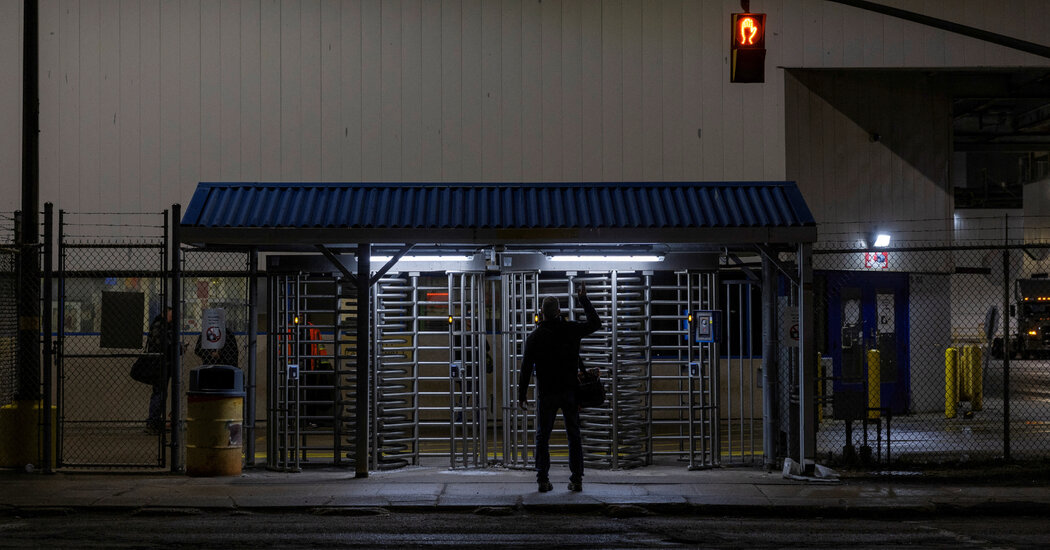
    Hours before a 25 percent U.S. tariff on autos made in Canada went into effect this month, Stellantis announced that its assembly plant in Windsor, Ontario, was closing for two weeks as it assessed its plans.

    Flavio Volpe, the president of the Automotive Parts Manufacturers’ Association of Canada, estimates that up to 12,000 workers at parts plants in Canada and at Canadian-owned parts plants in the United States have been idled by the Stellantis shutdown.

    So far, however, Prime Minister Mark Carney has not laid out exactly how the money generated by Canada’s response to U.S. tariffs will be spent. Besides the $5.7 billion from the retaliatory auto tariffs, Canada also expects to generate $42 billion annually from a set of levies it imposed in March in response to earlier tariffs on Canadian goods applied by Mr. Trump.

    The nature of the economic crisis created by Mr. Trump is also challenging governments in Canada and around the world to figure out what kind of financial support will work.

    Rob Gillezeau, an economics professor at the University of Toronto, said many of the temporary measures used during the pandemic or during past recessions are unlikely to be effective if Mr. Trump does not quickly back down on tariffs.

    “Usually you expect a return to normal,” he said. “But this is, potentially, a permanent structural trade shock. I don’t think that there’s necessarily good reason to think that the firms here today are going to be the same firms here tomorrow.”

    Canada has been hit with three separate U.S. tariffs: levies on autos and auto parts, aluminum and steel, and a third tariff on goods that are outside the scope of the trade agreement among the United States, Canada and Mexico.

    Some Canadian provinces have dusted off measures they used during the pandemic, most notably Ontario, which is home to the country’s auto industry and much of its broader industrial base, including the steel sector.

    On Monday, Doug Ford, Ontario’s premier, said that businesses would be able to defer paying a variety of taxes due at the end of June by several months.

    “We can’t control President Trump but we’re in full control of the kind of future we build for ourselves,” said Mr. Ford, who has become something of a fixture on American television news outlets recently as he has made the case against tariffs.

    Demo

    The government estimates that delaying tax bills will allow businesses to hold onto about 9 billion Canadian dollars for longer than they had anticipated.

    “For a firm on the margin, this could matter, it will help.” Professor Gillezeau said. “But given that this is going to drag out, I don’t think the impact on firms’ survival will be particularly meaningful.”

    The province said it was also returning 2 billion Canadian dollars of a surplus in a workplace accident insurance fund to employers as a further boost.

    The Western province of Manitoba has announced payment deferrals for its businesses on some taxes, while Quebec and New Brunswick are offering low-cost loans for businesses to adjust to a world where the United States may no longer be a financially feasible market.

    The Business Development Bank of Canada, which is owned by the federal government, has a special loan program for companies affected by tariffs. And, in another reprise from the pandemic, unemployment insurance rules have been altered to help workers whose hours will have been reduced because of the U.S. tariffs.

    “We have not really been in a situation like this before,” Professor Gillezeau said. “Trying to identify which firms and sectors that are going to come out OK — that’s really tricky,” he added.

    View original article here

    Share. Facebook Twitter LinkedIn Email Reddit
    Previous ArticleTrump Reverses Course on Global Tariffs, Announcing 90-Day Pause
    Next Article OpenAI Asks Court to Bar Elon Musk From Unfairly Attacking It

    Related Posts

    Fed Holds Rates Steady Despite ‘Elevated’ Inflation

    October 29, 2026
    Read More

    Women Sluggers Are No Longer in a League of Their Own

    September 27, 2026
    Read More

    Elizabeth Holmes to Transfer to Halfway House in August 2027

    September 24, 2026
    Read More
    Add A Comment

    Leave A Reply Cancel Reply

    Demo
    Top Posts

    Former FBI, CIA Head Has ‘Serious Concerns’ With Trump Cabinet Picks

    December 28, 2024435

    Emirates to operate next-gen A350 on the third daily service to Cape Town

    January 14, 2026256

    AAVE Price Prediction: Target $215-225 by Mid-January 2025 as Technical Indicators Signal Bullish Momentum

    December 15, 2025240

    Wall Street Slumps As Alphabet, Qualcomm And Other Tech Stocks Fall

    February 7, 2026212
    Don't Miss
    Finance

    How The Economy Is Affecting People’s Everyday Spending Habits

    By Staff WriterNovember 5, 20266 Mins Read

    For years, Emmy Byers, founder of Texas-based event company Poppy Planning, came home from the…

    Read More

    Does Vegetable Broth Need to Be Refrigerated? Full Guide

    November 5, 2026

    How To Report SEO Performance When Analytics Data Is Incomplete

    November 5, 2026

    Waymo confirms it will split with Uber in January 2028

    November 5, 2026
    Stay In Touch
    • Facebook
    • Twitter
    Demo
    Find More
    Trending News
    • How The Economy Is Affecting People’s Everyday Spending Habits
    • Does Vegetable Broth Need to Be Refrigerated? Full Guide
    • How To Report SEO Performance When Analytics Data Is Incomplete
    • Waymo confirms it will split with Uber in January 2028
    • How Are U.S. Household Finances Doing?
    • Sweet Potato Pie Season in Louisiana and the Law Behind Home Bakers
    • 18 Cold And Flu Hacks That Actually Work
    • Claude integrations worth adding to your GTM stack
    • Ripple CTO Emeritus Clarifies Current Role at Ripple – BitRss
    • Six Fitness ‘Rules’ That Don’t Actually Matter
    Other News
    • Business
    • Feel Good
    • Finance
    • Fitness
    • Health
    • Investment
    • Lifestyle
    • Marketing
    • Politics
    • Small Business
    • Technology
    • Top Stories
    • Travel
    About Us

    Small Business Minder brings together business and related news from around the world in one place. Follow us for all the business news you'll need.

    Facebook X (Twitter)
    Our Picks

    How The Economy Is Affecting People’s Everyday Spending Habits

    November 5, 2026

    Does Vegetable Broth Need to Be Refrigerated? Full Guide

    November 5, 2026
    Most Popular

    Former FBI, CIA Head Has ‘Serious Concerns’ With Trump Cabinet Picks

    December 28, 2024435

    Emirates to operate next-gen A350 on the third daily service to Cape Town

    January 14, 2026256
    Categories
    © 2026 Small Business Minder
    • Home
    • Get In Touch

    Type above and press Enter to search. Press Esc to cancel.

    Ad Blocker Enabled!
    Ad Blocker Enabled!
    Our website is made possible by displaying online advertisements to our visitors. To get the most from our site, please disable your Ad Blocker.