
Close Menu

    Subscribe to Updates

    Get the latest creative news from FooBar about art, design and business.

    What's Hot

    How The Economy Is Affecting People’s Everyday Spending Habits

    November 5, 2026

    Does Vegetable Broth Need to Be Refrigerated? Full Guide

    November 5, 2026

    How To Report SEO Performance When Analytics Data Is Incomplete

    November 5, 2026
    Facebook X (Twitter) Instagram
    Trending
    • How The Economy Is Affecting People’s Everyday Spending Habits
    • Does Vegetable Broth Need to Be Refrigerated? Full Guide
    • How To Report SEO Performance When Analytics Data Is Incomplete
    • Waymo confirms it will split with Uber in January 2028
    • How Are U.S. Household Finances Doing?
    • Sweet Potato Pie Season in Louisiana and the Law Behind Home Bakers
    • 18 Cold And Flu Hacks That Actually Work
    • Claude integrations worth adding to your GTM stack
    Facebook X (Twitter)
    SBM Global News
    Demo
    • Home
    • Top Stories
      • Politics
    • Business
      • Small Business
      • Marketing
    • Finance
      • Investment
    • Technology

      Waymo confirms it will split with Uber in January 2028

      November 5, 2026
      Read More

      Google takes Dreambeans to India in bid to bring AI-generated personal stories to the masses

      November 3, 2026
      Read More

      TechCrunch Mobility: A new, bigger AV boom is here

      November 2, 2026
      Read More

      Connecta Satellite Solutions LLC – Company Profile

      November 1, 2026
      Read More

      Pile-ins, payouts, and pacing pressure: the investors behind the VCs open up

      October 31, 2026
      Read More
    • Lifestyle
      • Travel
    • Feel Good
    • Get In Touch
    SBM Global News
    Demo
    Home»Health»Bad Quality Sleep Could Increase the Risk of Glaucoma for Some People
    Health

    Bad Quality Sleep Could Increase the Risk of Glaucoma for Some People

    By Staff WriterApril 10, 20244 Mins Read
    Facebook Twitter LinkedIn Reddit Email
    #image_title
    Share
    Facebook Twitter LinkedIn Pinterest Email

    The results of a large study suggest that poor quality sleep, such as excessive or not enough sleep, snoring, and daytime sleepiness, could be associated with a greater risk of irreversible sight loss known as glaucoma.

    The results emphasize the necessity for sleep therapy for individuals with a high risk of the condition in addition to eye checks for individuals with long-term sleep issues to monitor for early signs of glaucoma.

    Glaucoma is a major cause of blindness which will probably impact approximately 112 million individuals globally by 2040.

    Characterized by the progressive loss of eye cells that are light sensitive and optic nerve damage, the causes and factors that contribute to glaucoma are still not well understood. However, if left untreated, the condition can progress to blindness which is irreversible.

    While screening at the population level might not be cost-effective, focused screening of groups with a high risk could be. And other studies suggest that sleep disorders could be a significant risk factor.

    To look into these issues more in-depth, the researchers conducted a study to determine glaucoma risk in individuals with various sleep behaviors: insomnia; excessive or not enough sleep; owl (night) or lark (morning) chronotypes; snoring; and daytime sleepiness.

    They made use of data from 409,053 individuals who participated in the UK Biobank, who were between the ages of 40 and 69 from 2006 to 2010 when they enrolled, and who had provided sleep behavior details.

    Sleep duration of 7 to less than 9 hours a day was identified as normal and outside this range as not enough or excessive. Chronotype was classified based on whether the individual identified as more of an owl or lark.

    The severity of insomnia, difficulty falling asleep at night, or waking up frequently, was categorized as sometimes/never or usually, while daytime sleepiness was categorized as never/rarely, occasionally, or frequently.

    Background information on factors that could potentially influence the results was collected from the questionnaires completed when enrolled: lifestyle, age (an average of 57), race/ethnicity, sex, BMI, educational attainment, and residential area deprivation level.

    Death registration data and medical records were made use of for tracking the survival and health of all the individuals until a 1st glaucoma diagnosis, emigration, death, or when the monitoring period ended, whichever came 1st.

    Throughout a monitoring period of just more than 10.5 years on average, 8690 glaucoma cases were diagnosed.

    Individuals with glaucoma were more likely to be a smoker, older and male, and to have diabetes or hypertension compared to individuals who weren’t identified as having the condition.

    The other 4 sleep patterns/behaviors were all linked to varying levels of increased glaucoma risk except for the chronotypes.

    Demo

    Long or short sleep duration was linked to an 8% increase in risk; insomnia a 12% increase in risk; snoring a 4% increase in risk; and frequent daytime sleepiness a 20% increase in risk.

    Snorers and individuals with daytime sleepiness had a 10% higher chance of having glaucoma in comparison to individuals who had a healthy sleep pattern, while individuals with a long/short sleep pattern and insomniacs had a 13% higher chance of having it.

    Similar results were seen when categorized by various kinds of glaucoma.

    Because this was an observational study, the cause could not be established. The study depended on self-reporting instead of objective measurement and reflected only 1 point in time. Glaucoma might itself impact sleep patterns, instead of vice versa.

    There are however potentially credible explanations for the sleep disturbance and glaucoma association. The eye’s internal pressure, an important factor in glaucoma development, increases when sleep hormones are out of balance and when individual is lying down, as takes place in insomnia.

    Anxiety and depression, which frequently go together with insomnia, could also increase the eye’s internal pressure, possibly due to dysregulated cortisol production.

    It has also been suggested that prolonged or repetitive episodes of low cellular oxygen levels, due to sleep apnea, could result in the optic nerve being damaged.

    As sleep behaviors are modifiable, these results emphasize the need for sleep treatment for those with a high glaucoma risk and potential ophthalmologic screening in people with long-term sleep issues to help in preventing glaucoma.
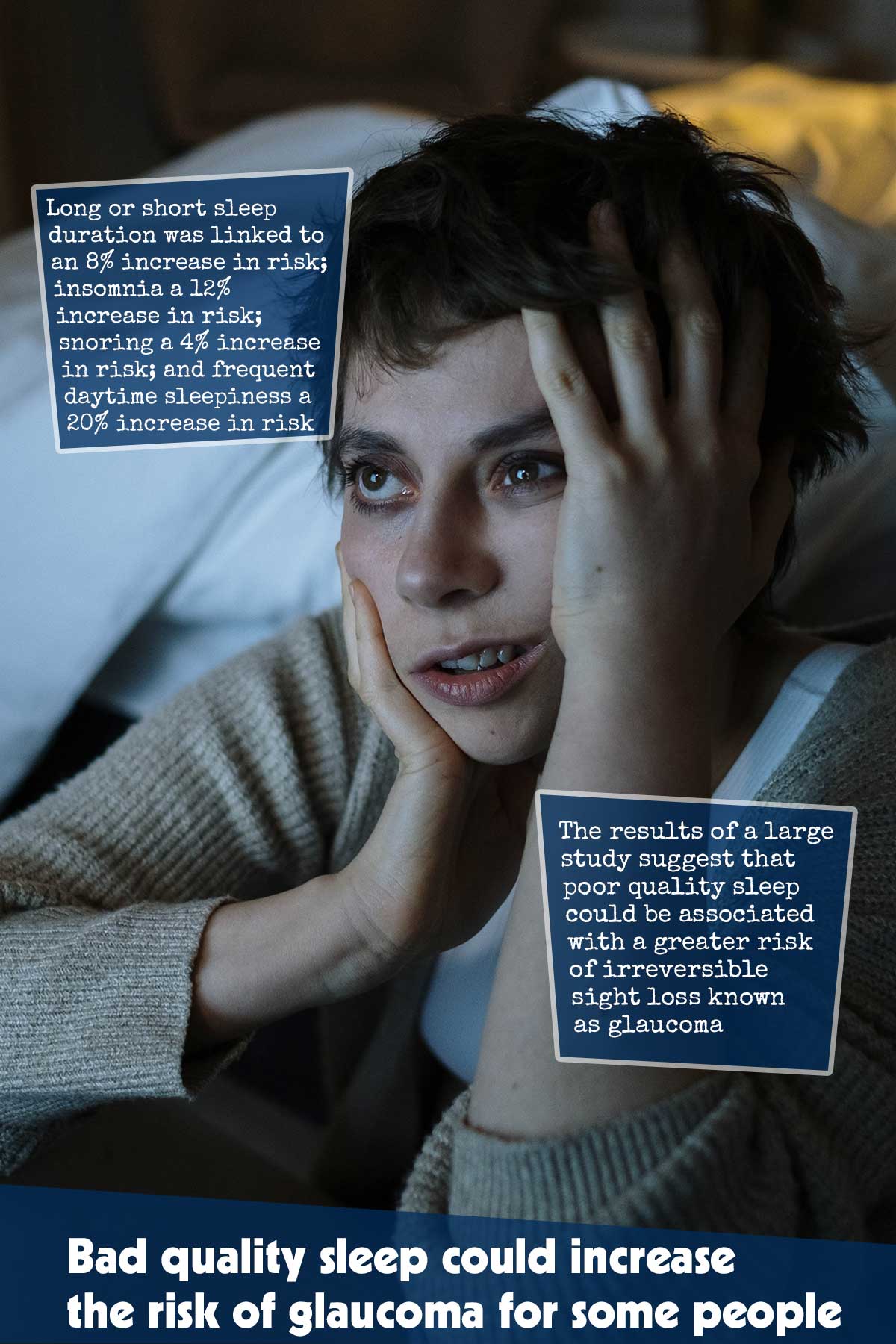
    Bad Quality Sleep Could Increase The Risk Of Glaucoma For Some People

    Photo by cottonbro studio from Pexels


    View original article here

    Share. Facebook Twitter LinkedIn Email Reddit
    Previous Article9 Pivotal Marketing Trends to Watch in 2024, According to Experts
    Next Article How To Solve A Sensitive Issue Without Blowing It Up · Primer

    Related Posts

    18 Cold And Flu Hacks That Actually Work

    November 4, 2026
    Read More

    Health Myths And False ‘Facts’ That Aren’t Really True

    November 2, 2026
    Read More

    What It’s Like + Doctor’s Opinion

    October 30, 2026
    Read More
    Add A Comment

    Leave A Reply Cancel Reply

    Demo
    Top Posts

    Former FBI, CIA Head Has ‘Serious Concerns’ With Trump Cabinet Picks

    December 28, 2024435

    Emirates to operate next-gen A350 on the third daily service to Cape Town

    January 14, 2026256

    AAVE Price Prediction: Target $215-225 by Mid-January 2025 as Technical Indicators Signal Bullish Momentum

    December 15, 2025240

    Wall Street Slumps As Alphabet, Qualcomm And Other Tech Stocks Fall

    February 7, 2026212
    Don't Miss
    Finance

    How The Economy Is Affecting People’s Everyday Spending Habits

    By Staff WriterNovember 5, 20266 Mins Read

    For years, Emmy Byers, founder of Texas-based event company Poppy Planning, came home from the…

    Read More

    Does Vegetable Broth Need to Be Refrigerated? Full Guide

    November 5, 2026

    How To Report SEO Performance When Analytics Data Is Incomplete

    November 5, 2026

    Waymo confirms it will split with Uber in January 2028

    November 5, 2026
    Stay In Touch
    • Facebook
    • Twitter
    Demo
    Find More
    Trending News
    • How The Economy Is Affecting People’s Everyday Spending Habits
    • Does Vegetable Broth Need to Be Refrigerated? Full Guide
    • How To Report SEO Performance When Analytics Data Is Incomplete
    • Waymo confirms it will split with Uber in January 2028
    • How Are U.S. Household Finances Doing?
    • Sweet Potato Pie Season in Louisiana and the Law Behind Home Bakers
    • 18 Cold And Flu Hacks That Actually Work
    • Claude integrations worth adding to your GTM stack
    • Ripple CTO Emeritus Clarifies Current Role at Ripple – BitRss
    • Six Fitness ‘Rules’ That Don’t Actually Matter
    Other News
    • Business
    • Feel Good
    • Finance
    • Fitness
    • Health
    • Investment
    • Lifestyle
    • Marketing
    • Politics
    • Small Business
    • Technology
    • Top Stories
    • Travel
    About Us

    Small Business Minder brings together business and related news from around the world in one place. Follow us for all the business news you'll need.

    Facebook X (Twitter)
    Our Picks

    How The Economy Is Affecting People’s Everyday Spending Habits

    November 5, 2026

    Does Vegetable Broth Need to Be Refrigerated? Full Guide

    November 5, 2026
    Most Popular

    Former FBI, CIA Head Has ‘Serious Concerns’ With Trump Cabinet Picks

    December 28, 2024435

    Emirates to operate next-gen A350 on the third daily service to Cape Town

    January 14, 2026256
    Categories
    © 2026 Small Business Minder
    • Home
    • Get In Touch

    Type above and press Enter to search. Press Esc to cancel.

    Ad Blocker Enabled!
    Ad Blocker Enabled!
    Our website is made possible by displaying online advertisements to our visitors. To get the most from our site, please disable your Ad Blocker.