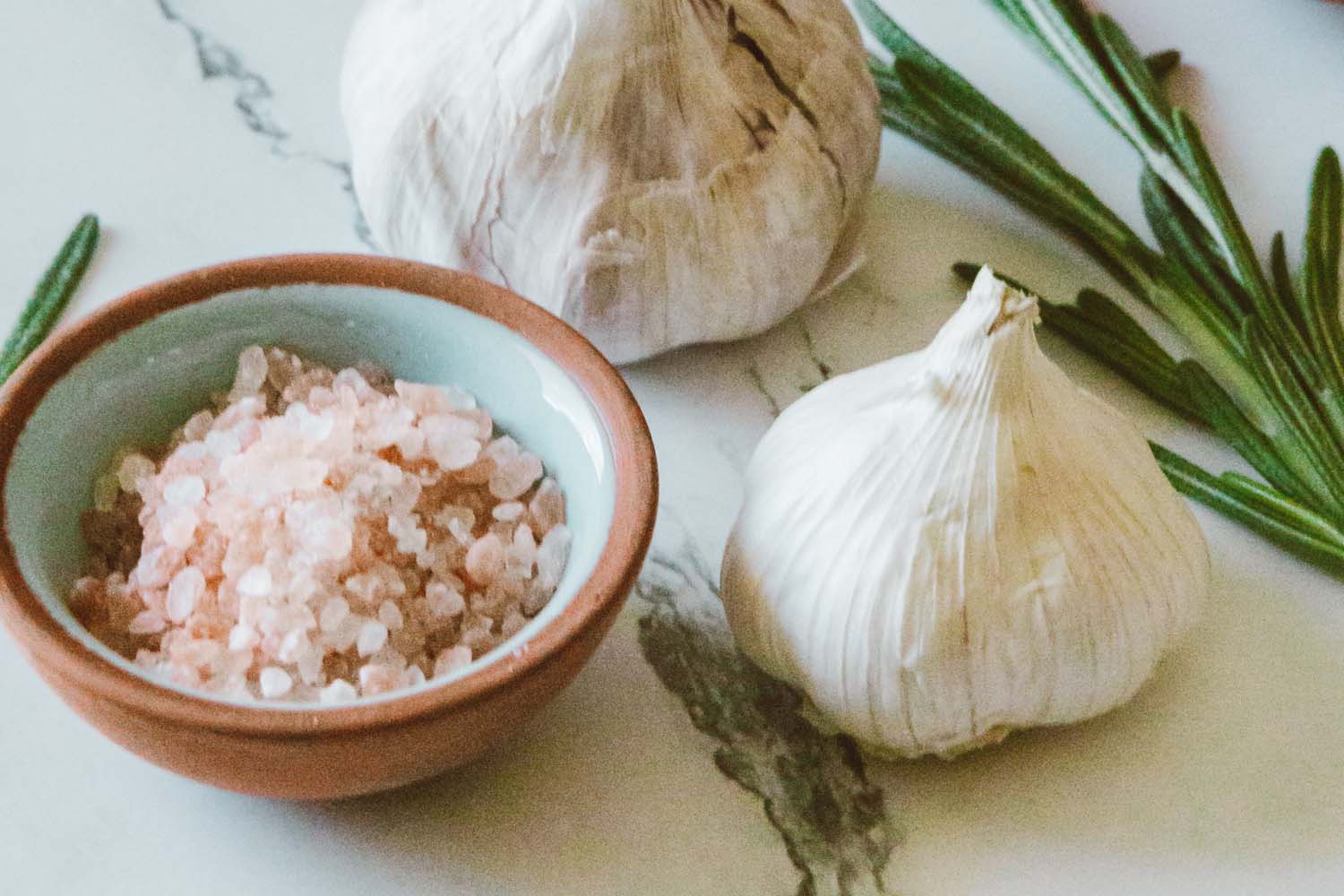

Most people either refrigerate all their garlic or none of it. Both are wrong. The right answer depends entirely on which form of garlic you have, and getting it wrong in either direction shortens the life of what is one of the most useful things in your kitchen.
Does garlic need to be refrigerated?
The short answer: It depends on the form. Whole unpeeled garlic bulbs and individual unpeeled cloves belong in the pantry, not the refrigerator. Cold temperatures trigger sprouting and moisture buildup that shorten their life. Peeled cloves must be refrigerated and used within 7 to 10 days. Minced or chopped garlic must be refrigerated and used within 3 to 5 days. Garlic stored in oil must be refrigerated immediately and used within 4 days. Storing garlic in oil at room temperature is a genuine botulism risk.
For storage times and spoilage signs, see our companion post Does Garlic Go Bad? or browse the full Food Storage Guide.
Key Takeaways
- Whole unpeeled bulb: pantry only. Fridge triggers sprouting and shortens life.
- Unpeeled cloves broken from the bulb: pantry, up to 2 to 3 weeks
- Peeled cloves: refrigerator required, airtight container, 7 to 10 days
- Minced or chopped: refrigerator required, airtight container, 3 to 5 days
- Garlic in oil: refrigerator immediately, use within 4 days. Never at room temperature.
- The simple rule: if the skin is still on, pantry. If the skin is off, fridge.
Why Whole Garlic Should Not Go in the Fridge
This is the most common garlic storage mistake. It feels intuitive: refrigerating food keeps it fresh longer, so refrigerating garlic should extend its life. For whole unpeeled bulbs, the opposite is true. The refrigerator creates a cold, humid environment that signals to the garlic bulb that winter is ending and it is time to sprout. Whole bulbs stored in the fridge often sprout within one to two weeks and develop moisture and mold inside the papery skin significantly faster than the same bulb would at room temperature.
UC Davis Cooperative Extension confirms that whole garlic maintains its flavor compounds better at cool room temperature than under refrigeration. A whole bulb stored correctly in a cool dry pantry will last 3 to 6 months. The same bulb put in the fridge can sprout and deteriorate significantly faster, often within one to two weeks. The pantry wins by a wide margin.
The Simple Rule
If the papery skin is still on, the garlic belongs in the pantry. The skin acts as a protective barrier that regulates moisture and slows deterioration. As long as the skin is intact, the garlic is better off at room temperature in a well-ventilated spot.
Once the skin comes off, the protective barrier is gone. Peeled garlic is exposed to air, moisture, and bacteria and needs to go straight into the refrigerator in an airtight container. This applies to individual peeled cloves, sliced garlic, and minced garlic alike.
How to Store Garlic in the Pantry
Whole bulbs and unpeeled cloves need three things: cool temperature, low humidity, and airflow. A mesh bag, a small wicker basket, or a clay garlic keeper in a cool dark cupboard is ideal. Temperatures between 60 and 65 degrees Fahrenheit are optimal. Avoid plastic bags and sealed containers, which trap moisture. Avoid storing garlic near the stove, where heat fluctuations accelerate deterioration. Keep garlic away from onions, which release gases that speed up spoilage in nearby produce.
How to Store Peeled and Minced Garlic in the Fridge
Peeled cloves go into an airtight glass or plastic container and into the coldest part of the fridge, toward the back. Use within 7 to 10 days. Minced or chopped garlic goes into a small airtight container and should be used within 3 to 5 days. The cut surface of garlic oxidizes and deteriorates quickly, which is why chopped garlic has a much shorter window than whole peeled cloves.
Commercial jarred minced garlic contains acidifiers and preservatives that extend its refrigerator life significantly, typically 3 to 4 months after opening. Always use a clean spoon to avoid introducing bacteria into the jar, and check the manufacturer’s label for specific use-within guidance.
Garlic in Oil: Never at Room Temperature

Garlic submerged in oil at room temperature creates ideal conditions for Clostridium botulinum, a spore-forming bacterium naturally present on garlic. In a low-acid, low-oxygen environment like olive oil at room temperature, these spores germinate and produce botulinum toxin. The FDA is explicit: homemade garlic-in-oil must be refrigerated immediately after preparation and used within 4 days. It must never sit at room temperature for more than 2 hours. The critical danger is that botulinum toxin produces no odor, no taste, and no visible change in the oil. There is no way to detect it by looking or smelling. Commercial garlic-in-oil products are safe because manufacturers add food-grade acidifiers that prevent toxin formation. Homemade versions have no such protection.
Storage Quick Reference
See also

- Whole unpeeled bulb: Cool dark pantry, mesh bag or basket, 3 to 6 months. Not the fridge.
- Unpeeled cloves, broken from bulb: Cool dark pantry, 2 to 3 weeks. Use before the rest of the bulb.
- Peeled cloves: Airtight container, refrigerator, 7 to 10 days.
- Minced or chopped: Airtight container, refrigerator, 3 to 5 days.
- Commercial jarred minced garlic: Refrigerate after opening, check label, typically 3 to 4 months.
- Homemade garlic-in-oil: Refrigerate immediately, use within 4 days. Never at room temperature.
- Freezer option: Peeled cloves or minced freeze well for up to 12 months. Use directly from frozen in cooked dishes.
Why the Pantry Works for Whole Garlic
Garlic evolved in central Asia as a dry-climate plant. Its papery outer skin is designed to protect the cloves during dry storage over winter months. The conditions that extend its life: cool temperatures, low humidity, and airflow. These mimic its natural storage environment. The refrigerator does the opposite: it introduces humidity and signals the bulb to prepare for spring by sprouting. This is also why properly cured garlic from a farmers market or specialty grower often outlasts supermarket garlic by weeks: the curing process (drying the bulb after harvest) tightens the papery skin and removes excess moisture, maximizing pantry shelf life.
Further Reading
Does Garlic Need to Be Refrigerated FAQ
I already put my whole garlic bulb in the fridge. Is it ruined?
Not necessarily. If it has been in the fridge for only a few days and shows no signs of sprouting or moisture, move it to the pantry immediately. Use it within a few weeks. If it has been refrigerated long enough to develop green sprouts, it is still safe to use. The sprouts are edible, just slightly more bitter. Remove the sprout from each clove before using in raw preparations. If there is visible mold or a sour smell, discard it.
Can peeled garlic sit out on the counter?
Only briefly. Peeled garlic can sit at room temperature for up to 2 hours safely. Beyond that, it should be refrigerated. Leaving peeled garlic on the counter overnight means it has spent too long at room temperature to be safe. For meal prep where you peel garlic in advance, refrigerate the peeled cloves in an airtight container until you are ready to cook.
Does store-bought minced garlic in a jar need to be refrigerated?
Yes, after opening. Commercially jarred minced garlic contains acidifiers and preservatives that allow it to be stored at room temperature before opening. Once the seal is broken, refrigerate it and check the manufacturer’s label for the use-within guidance. Most recommend using within 3 to 4 months of opening. Always use a clean spoon when scooping from the jar to avoid introducing bacteria that accelerate spoilage.
How long can garlic sit out at room temperature after cooking?
Cooked garlic in a dish follows the standard two-hour rule for all cooked food. Dishes containing cooked garlic should be refrigerated within two hours of cooking. Garlic confit, roasted garlic, or other preparations where garlic has been cooked in oil should be refrigerated immediately and used within 4 days. Do not leave garlic-oil preparations at room temperature even after cooking. The botulism risk applies to the preparation method, not just to raw garlic.
Better Living may earn commissions through affiliate links and may occasionally feature sponsored or partner content. If you make a purchase through our links, we may receive a small commission at no cost to you.