
WASHINGTON – Two decades after then-Vice President Dick Cheney declared that deficits don’t matter, members of his own party appear intent on proving his theory, adding another massive, multi-trillion-dollar slab onto the national debt.
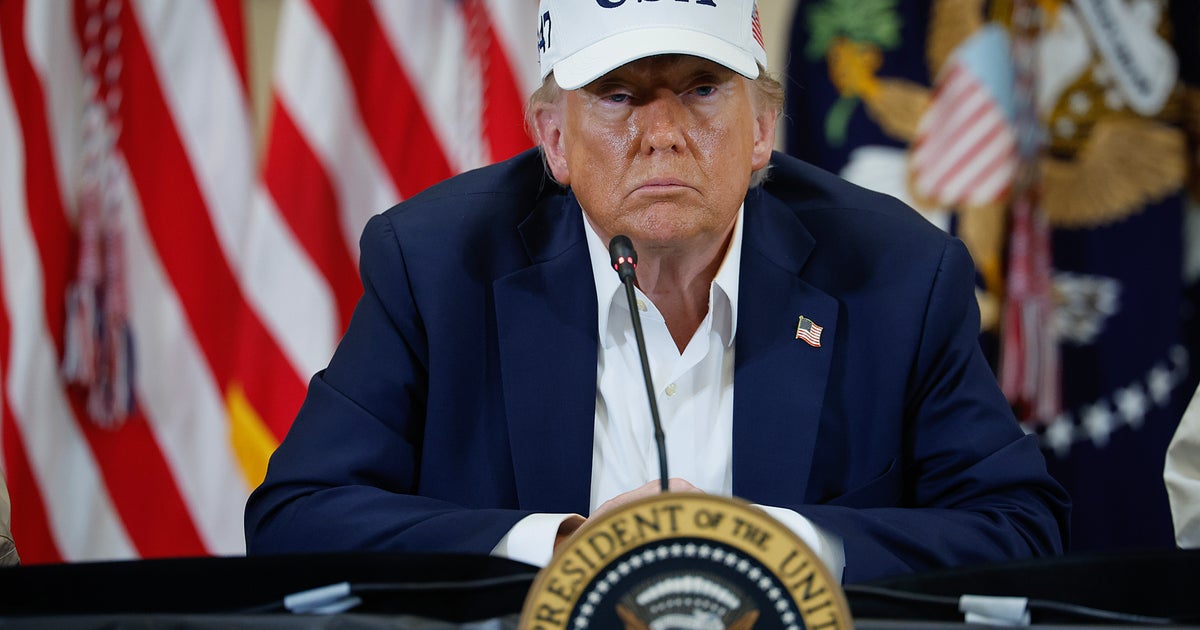
Despite frequently expressing outrage about how much the country is borrowing to pay for basic operating costs, President Donald Trump and Republican majorities in both chambers of Congress voted to erode the tax base even further, increasing annual deficits and sending the federal debt to historic highs.
HuffPost is dedicated to holding lawmakers accountable and covering how their actions impact you, your community, and the country. Support journalism that demands transparency — join our membership program today.
Trump inherited a robust economy with low unemployment in 2017 and yet, with a big tax cut, began generating $1 trillion-a-year budget deficits. When the COVID pandemic hit in the final year of his term, shrinking tax revenues while simultaneously requiring massive federal spending to avert a recession, the combination left Trump adding $8 trillion to the debt in just four years.
As he began his second term in January, the anticipated new debt already projected by the non-partisan Congressional Budget Office totaled some $7 trillion, and that was before the $3.4 trillion his new legislation will add over the coming decade. If the temporary components of the just-passed tax bill — such as new deductions for the elderly and those earning overtime and tip income — are made permanent, that total would surpass $5 trillion.
Bobby Kogan, an economist with liberal Center for American Progress, said if there were ever a time to let expiring tax cuts lapse, as the 2017 Trump tax cuts would have this year, to put the country’s finances closer to a stable path, it was now, with low unemployment and a relatively strong economy.
“This would have been the time to do it, but instead they cut taxes even more,” he said.
Which means that by the time Trump is constitutionally required to leave office in 2029, the national debt will likely be $45 trillion — with Trump himself having contributed $18 trillion of it over two terms.
Which also means that interest on the federal debt is now among the top budget categories, near $1 trillion a year, and the country’s key ratio of debt to gross domestic product is near 100% and could pass 120% by 2035 – renewing fears of a debt crisis where investors both at home and abroad are no longer willing to lend the U.S. money by purchasing treasury bonds.
“Bad things don’t happen until they do,” said Justin Wolfers, an economics professor at the University of Michigan. “You can switch very quickly from everyone thinking everything’s OK to everyone freaking out.”
From Reagan to Trump
While Trump and his followers routinely lie that his tax cuts are the largest in history, that honor actually belongs to Ronald Reagan, who in 1981 pushed through reductions totaling 2.9% of the nation’s GDP at the time.
In contrast, George W. Bush’s 2001 and 2003 cuts amounted to 1.3% of GDP and Trump’s 2017 cuts were about 0.7% of GDP.
But between Reagan and the second Bush came a sea change in how the party viewed federal debt.

While Reagan is universally known for cutting taxes, Americans are less aware today that he also raised them, repeatedly, a total of 11 times over his two terms. His Tax Equity and Fiscal Responsibility Act of 1982, in fact, was among the largest tax increases in U.S. history.
Reagan had campaigned on reducing the federal deficit and instead had watched it balloon thanks to his increased defense spending paired with his 1981 cuts. And it bothered him, his aides and allies said. In the end, his tax increases effectively undid about half of his tax cuts.
“He wasn’t very happy about it. He did it reluctantly. But at the end of the day, the math was overwhelming,” his budget director, David Stockman, told NPR in 2011.
For Republicans today, math no longer seems to matter. Starting in the early 1990s, Republicans in Congress began opposing all tax increases, all the time. In 1993, when Democratic President Bill Clinton pushed through a modest hike, not a single Republican in Congress voted for it.
Thanks in no small measure to anti-tax activist Grover Norquist’s efforts over the past 30 years to obtain pledges from Republicans at all levels of government never to raise taxes, opposing any and all tax increases and, in fact, claiming that all tax cuts somehow increase tax revenue, have become GOP orthodoxy.
Wolfers said the goal is clear: to “starve the beast” — continually cutting taxes with the hopes of someday bringing on a catastrophic debt crisis that forces the president and Congress to gut Social Security, Medicare, Medicaid and other programs that activists have been unable to cut through consensus legislation.
Norquist — who in 2001 boasted that his goal was to get the government small enough to where he could “drag it into the bathroom and drown it in the bathtub” — did not respond to a HuffPost query.
Embracing debt
The irony of the debt explosion in recent years is how quickly the country’s long-term financial outlook has changed. It was just two and a half decades ago, within the lifetimes of all but the youngest voters, that the United States had finally achieved balanced budgets and diminishing debt.
In the final years of Clinton’s second term, the debt-to-GDP ratio was shrinking, and actually paying off the national debt seemed within reach.
That prospect quickly evaporated. The presidential candidate who won the 2000 election had promised sweeping tax cuts and immediately worked to enact them after taking office.
George W. Bush and congressional Republicans in that year also came up with a strategy that has since become a core part of the playbook: game the congressional budgetary analyses that would reveal how their tax cuts would generate massive and persistent deficits simply by making the cuts temporary.
In reality, everyone involved understood that once the public had grown accustomed to paying less in taxes, any president and Congress, regardless of the party, would be wary of letting the cuts lapse and being accused of raising taxes.
“We have a problem of Republicans beginning tax cuts on a partisan basis, and then Democrats being afraid not to extend them,” Kogan said.
Democrats, indeed, have repeatedly shied away from making the case that the country’s long-term financial health requires a return to previous tax rates. Instead, they have taken to arguing that the fiscal hole can be filled merely by taxing the rich — increasing rates on the richest 1% or 2% of Americans — even though the money raised by those proposals comes nowhere close to what is needed to get long-term revenues back in line with long-term spending.
An intentional revenue problem
For years, Republicans and tax opponents like Norquist have declared that Washington does not have a revenue problem, but a spending problem.
History, however, suggests the opposite. That spending on health care for the elderly and Social Security payments for an aging population would increase as a share of the federal budget has been known for decades. It was known and accounted for back in the late 1990s, when the existing level of taxation nevertheless projected an improving debt-to-GDP ratio for decades to come.
And as the years passed, despite new costs associated with a new Medicare prescription drug benefit added under George W. Bush and the Affordable Care Act under President Barack Obama, the long-term spending trend line remained largely as forecast, Kogan said.
“We used to be on track for our revenues to be on pace with our spending,” he said. “Then we cut taxes disproportionately for the rich. Now we are no longer on track.”
Today, the revenue line and the spending line diverge into the future, and will require tax increases or spending cuts totaling $1 trillion a year or more just to maintain a debt-to-GDP ratio that is as high as it was at the end of World War II.
How this can be resolved is unclear. Although an across-the-board tax increase to return to fiscal stability would be relatively modest, Republicans remain committed to not raising taxes and Democrats fear even making the effort.
Voters, meanwhile, do not seem eager to pay any more, especially given the claims from Trump and his allies that the federal government is rife with “waste, fraud and abuse” — notwithstanding the inability of multi-billionaire and former White House aide Elon Musk to find it in any meaningful quantities.
Even economists who are proponents of Modern Monetary Theory, who tend to be the least concerned about the national debt of a country that controls its own money supply, allow that sufficient tax revenue must be brought in to keep inflation and interest rates in check.
More mainstream economists wonder whether policymakers will appreciate their situation in time or whether it will require an actual economic disaster to spur them into action.
“That’s what happened to Greece,” Wolfers said. “So it does happen to first-world countries.”