
U.S. consumers, fatigued by a three-year bout of inflation, want lower prices. And large retailers that have increased prices, partly to contend with their own rising costs, appear to be responding to customer concerns — to an extent.
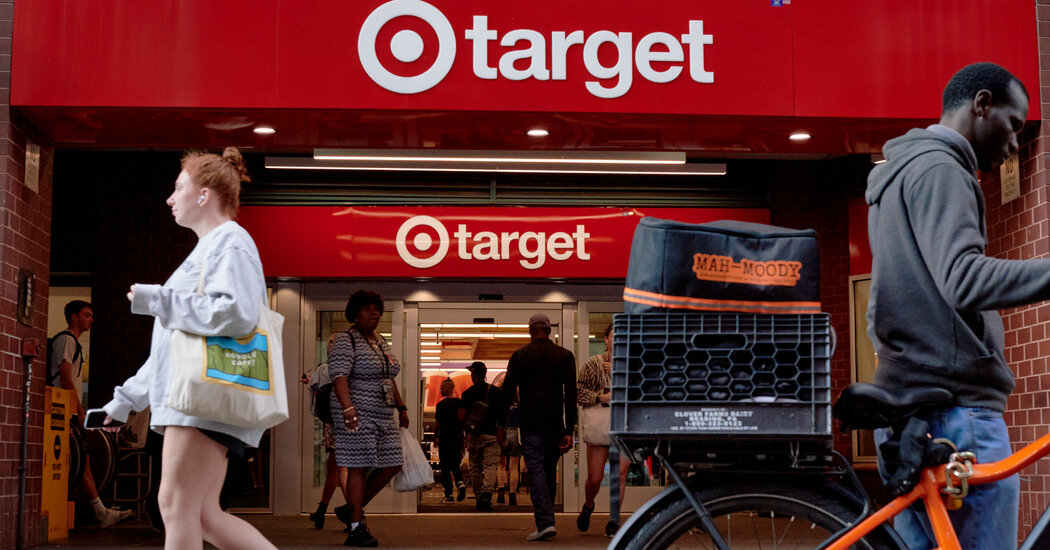
Walgreens said last week that it was lowering prices on over 1,000 items. Target recently announced modest price cuts on 5,000 food products and household goods. Craft and furniture stores like Michael’s and Ikea have also said they will drop prices on popular items.
A broader range of companies have indicated on quarterly earnings calls that they plan to slow price increases and seek other ways to expand profitability.
Signaling empathy with customers facing higher living costs is an increasingly important marketing strategy, retail analysts say. But regardless of motivation, a shift is in motion that may help ease inflation in the coming months.
“Retailers have recognized they have to make some movement on pricing because the customer now is getting to the point where they’re shopping around more, they’re cutting down on the amount that they buy,” said Neil Saunders, managing director at GlobalData Retail, a research and consulting firm.
In some ways, the industry seems to be entering a new phase.
After a slog for retailers during much of the 2010s, when they often resorted to heavy discounts to gain or maintain market share, the pandemic upended consumer habits. Suddenly, bank accounts were buoyed by emergency federal aid, and millions of consumers unable or unwilling to spend on in-person services shifted to buying goods.
Then, as reopenings revved up the economy, wages surged, and retailers passed on markups with relative ease. Much of the inflation was related to the increases in production, labor or transportation costs that businesses faced in 2021 and 2022. Some was not, and helped deliver hefty profits.
Recent economic data and corporate earnings, however, show that this leverage over buyers — known as “pricing power” — is abating.
Coca-Cola, for instance, reported that although its overall revenue grew in the first quarter, largely because of past price increases, its sales volume in North America was flat.
Julia Coronado, a former Federal Reserve economist and the president of MacroPolicy Perspectives, has argued that “fading pandemic distortions mean consumers have returned to their price-sensitive ways, and pricing power has evaporated.”
Overall goods prices have risen by only 0.1 percent over the past year, according to the Fed’s preferred gauge of inflation.
Underwhelming earnings from upmarket brands like Starbucks, which had a decline in foot traffic, and department stores like Kohl’s, which reported net losses, showed that a variety of companies face a consumer base that has grown more selective, searching for value.
Over the past year, a series of indignant McDonald’s customers took to social media and posted receipts of orders they feel were overpriced. (In 2019, the average cost for a McDonald’s Big Mac was $4.39. It now costs $5.29, a 21 percent jump.)

In February, as its chief financial officer acknowledged that “consumers are more wary — and weary — of pricing,” the company vowed to focus on affordability. Now, McDonald’s is promoting a $5 value meal. Burger King announced last week that it would offer a comparable $5 meal.
Another fast-food giant, Wendy’s, faced scorn online in February after executives told investors that it planned to experiment by pricing items according to demand levels at certain hours. The chain quickly issued assurances that it had “no plans” to “raise prices when our customers are visiting us most,” and this month it turned to promoting a $3 breakfast value meal.
While that might feel like the kind of price-cutting competition more common a decade ago, retail analysts — who cover a range of snack makers, apparel brands, restaurant chains and general merchandise companies — do not see a major reversal underway.
“Not only do these companies want to stay profitable, I don’t think they have an appetite to race to the bottom,” said David Silverman, a retail analyst at Fitch Ratings.
That race in the 2010s to offer the best sale possible was a great deal for consumers. Goods prices were often flat or falling (a rarity in service industries) as decades of globalization and innovations in technology lowered labor and production costs. But that scramble to attract consumers with inexpensive options frequently put a low ceiling on potential profits industrywide.
Companies have little interest in renewing that dynamic. They are approaching other ways to attract customers and reassure them that they are getting their money’s worth, even if overall prices are never going back to 2019 levels.
The 1990s darlings Gap and Abercrombie & Fitch posted impressive quarterly results on the back of rebrands. Executives at Chipotle, where profit margins grew and in-store sales rose 19 percent over the past year, say it is thriving — despite costlier burritos — by reducing waits and marketing itself as a healthy option only a few dollars pricier than fast-food competitors.
In April, Walmart introduced a private-label food line and said more than 70 percent of the products within that assortment would cost less than $5.
Another reason that industry analysts and insiders believe a race-to-the-bottom price cycle is unlikely is that firms have built sophisticated e-commerce businesses since 2020. They are able to cater to a variety of tastes and gauge how much customers are willing to pay by using vast troves of data such as credit card info and artificial intelligence.
Deborah Weinswig, the chief executive of Coresight Research, a research and advisory firm whose clients have included Microsoft, Kroger and Walmart, says her team has done more work than ever in the past year to help companies with dynamic pricing. Those projects involve greater flexibility in setting prices based on competition, individual customers’ backgrounds and their propensity to buy an item at a given time.
Ms. Weinswig is aware that some find the practice upsetting. She sympathizes, she said, but sees it as an inevitable tech-driven trend. “It’s so funny; if you change the ZIP code of where you’re shopping from,” which can lead to a much higher product price, “it’s in some ways pretty outrageous: ‘Why should I pay more?’”
Mr. Silverman said that in this moment retailers must be attuned to customers’ underlying desires. As he sees it, businesses — whether they’re selling lunch bowls, sandals or garden tools — will do best by offering convenience or satisfaction, even if it doesn’t come at the lowest price possible.
“These companies don’t have to race to being the lowest-price provider,” he said, “because they have other things that they’re offering that the consumer wants.”