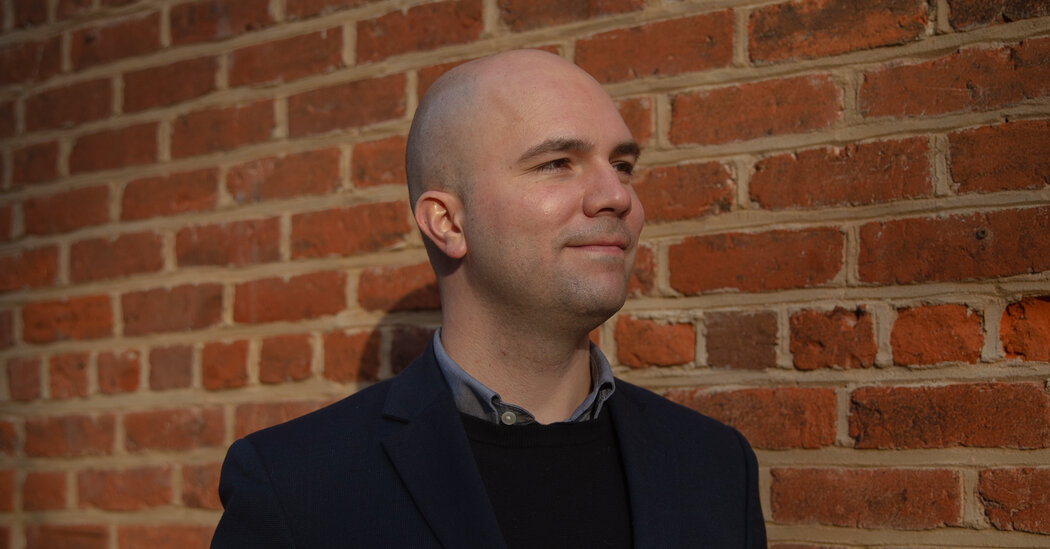

Edward Silva grew up wanting to be a chief executive.
In 2018, Mr. Silva enrolled at the Stanford Graduate School of Business with the goal of starting his own company. “I was going to live the Stanford dream,” he said. “I was going to find an engineer — we were going to find a venture capital firm and found a technology start-up.”
Then a classmate told him about another path for budding entrepreneurs. Instead of starting a company from scratch — Mr. Silva had co-founded one before business school and even been its chief executive — he could buy one and run it. To do so, he’d have to raise a “search fund,” a pool of money from investors willing to bet that an ambitious young person with no track record will make them money.
Mr. Silva, 34, was intrigued. “I realized you don’t have to deal with V.C.s who have unreasonable expectations,” he said. After raising a search fund of more than $30 million from a small group of investors, Mr. Silva bought MásLabor, a Virginia consulting firm specializing in employment visas, in July 2021. It was the perfect target company: The owners, a couple in their 70s, were ready to retire and had no children — just 15 dogs.
Search funds started out as a business school experiment four decades ago, but have gained popularity in recent years as persuasive newbies armed with M.B.A. degrees entice investors to make these niche bets with the promise of high returns. Across 2020 and 2021, nearly $800 million was invested in search funds, about one-third of the total amount raised for such funds since the idea emerged, according to data from the Stanford Graduate School of Business.
“At first, it was just a sprinkle of interested students,” said H. Irving Grousbeck, an adjunct professor at Stanford. Mr. Grousbeck is credited with coming up with the search-fund idea in 1984 when he was a lecturer at Harvard Business School and helped Jim Southern, a student in his entrepreneurship class, raise money to acquire Uniform Printing, a printer of specialty insurance documents.
“Jim was an early success story,” Mr. Grousbeck said. In 1994, after 10 years as chief executive, Mr. Southern sold Uniform Printing for a return of 24 times on the investment, according to a 2016 study on entrepreneurship by the University of Chicago Booth School of Business.
After seeding the idea at Harvard, Mr. Grousbeck joined Stanford, where he introduced the search fund model to generations of business school students. “Eventually, the talent, capital and opportunity came together to form a true search fund community,” he said.
Today, search fund courses are taught in nearly every major M.B.A. program, including at the Kellogg School of Management at Northwestern University and the Yale School of Management, although Stanford remains one of the biggest proponents and is the only institution that has consistently tracked data charting the growth of the industry. In the last decade, the number of funds started has grown five times, rising to 105 in 2023 from 20 in 2013.
While venture capital funding is down, tech hiring has cooled and salaries on Wall Street have stagnated, search funds have proved to be an attractive — if small — way to invest. The so-called average internal rate of return — the most common way for investors to gauge the potential of an investment opportunity — for all search fund investments from 1986 to 2021 was 35 percent, far above the 15 percent that private equity funds have returned over the past two decades.
In the early days, investors were mostly wealthy individuals who backed young entrepreneurs — giving anywhere from hundreds of thousands of dollars to a couple of million — but big investors, including private equity firms, have recently started investing in search funds.
The typical search fund strategy goes like this: The entrepreneur raises an initial funding round to cover his or her salary and travel expenses while looking for a company to buy. While there is no recipe for a successful acquisition, most share a few key ingredients: The company is profitable and in a fragmented industry (think HVAC, home health care or waste management), and its owners are approaching retirement with no apparent heir.
If the would-be chief executive finds a target, he or she will go back to the investors to try to raise a second round of funding to buy the company. Investors and entrepreneurs make a return if the acquired company is sold or goes public for more than it was purchased.
Entrepreneurial M.B.A.s from major business schools have long been able to raise millions of dollars from venture capitalists to fund their start-ups, and search funds have become another way for some of them to raise large sums right after their degree. Still, they have to convince wary investors.

“Searchers are often approaching a small business from a fancy school without a ton of experience,” said G.J. King, a search fund investor.
Mr. King looks for entrepreneurs who are humble and collaborative and have a good sales pitch — three qualities he believes are essential for overcoming skepticism from potential sellers and their employees. Only when convinced of those attributes does he decide to invest. “People are going to be rightfully skeptical of you,” he added.
Mr. Silva, who became the chief executive of MásLabor, said he had written over 1,000 personalized emails and placed about 800 phone calls before finding the right target — a company in good financial health, with owners willing to sell.
“I looked at their finances and was like, wow, there’s something really special here,” he said of MásLabor. Mr. Silva wouldn’t disclose how much he paid, except to say it was more than two times the median 2021 search fund purchase price of $16.5 million — which works out to more than $33 million.
The deal took more than five months to close and involved uprooting his eight-months-pregnant wife and their toddler from California and moving everyone to Virginia. (Mr. Silva shut down his previous company, Henlight, after struggling to expand the business.)
As a part of the deal, he also acquired AgWorks H2, a MásLabor partner company. Mr. Silva intends to do more acquisitions to build the business.
An acquisition-based growth strategy is gaining popularity, driven partly by increasing competition among both investors and searchers. “You make a land grab and buy as many of these companies as you can and put them together,” said Peter Kelly, a search fund investor and lecturer at Stanford’s business school, of the industry’s emerging mergers-and-acquisitions strategy.
Kelsey Holland, a 2023 Harvard Business School graduate who raised a search fund last year, said she was well aware of the growing competition. “Search has been found out,” said Ms. Holland, who had worked as a product manager at companies like Equinox before business school.
Like Mr. Silva, Ms. Holland always wanted to be the chief executive of a company and assumed she would achieve her goal by founding a start-up. Then, in her first year of business school, she learned about search funds — a model she said she and her peers were especially attracted to in the current economic climate.
“If you’re plugged in, you read about all these start-ups that you thought were doing well and are now raising down rounds, struggling and doing layoffs,” she said.
In September, Ms. Holland, 33, began searching for a health care company to acquire, having raised about half a million dollars from individuals and investment firms as she searches for a company to buy. She has sent hundreds of personalized emails to business owners and met with more than 20 potential sellers.
Many of the owners she has met receive frequent emails from other searchers and private equity firms that are also interested in acquiring their company, Ms. Holland said. If she finds a company, she plans to go back to her investors to ask for anywhere from $10 million to $100 million, depending on the size of the target.
Ms. Holland doesn’t think search funds are a surefire path to the corner office, given the increasingly competitive market, but said she was confident she would find the right company. “It just takes more creativity these days.”