
The traditional American career ladder has always promised the same thing: Work hard, keep your head down, prove yourself, get promoted. It’s a neat, linear formula that suggests success is simply a matter of time and talent. But for many women (and other structurally marginalized groups), that ladder has always had a missing step.
Long before women ever reach the executive suite, many of us are filtered out at the first opportunity to lead. This early barrier was coined by researchers in 2019 as the “broken rung” — the first promotion from individual contributor to manager, where women are consistently promoted at lower rates than men.
And things haven’t improved much since then. A 2025 report that drew on data from more than 120 companies and 9,000 employees found that for every 100 men promoted to manager, just 81 women receive that same opportunity, with the numbers even lower for Black and Latina women.
That missed opportunity doesn’t just delay a promotion — it compounds over the course of an entire career, shrinking leadership pipelines, widening pay gaps and making it exponentially harder to reach senior positions years later.
And, truth is, the challenge isn’t simply what happens inside the office. Women’s careers are often expected to exist alongside pregnancy and motherhood, caring for aging parents, managing households or taking on the invisible labor that keeps everyday life running.
While every family’s dynamic is different, women universally still shoulder a larger share of caregiving in many households, making the idea of climbing a perfectly straight corporate ladder feel less like reality and more like a model that was never designed with their lives in mind. It’s not that women lack ambition; it’s that the path to leadership has rarely accounted for the realities many of them are navigating outside of work.
Perhaps that’s exactly why we find ourselves questioning whether we’re the problem, when in reality, the system was never built around the realities of our lives. Long before women even have a chance to shatter the glass ceiling, we get stuck much earlier, wondering why we’re outperforming our peers while watching others receive the promotion, the stretch assignment or the leadership opportunity. It’s an experience that’s frustrating, exhausting and, over time, deeply personal.
Professional coach Kerry Sutcliffe explains that while the broken rung itself is a systemic issue, the emotional impact often becomes internalized. “[So] many women I see [have] confidence issues and imposter syndrome,” she says. “It’s really shocking how many of us are carrying this. The self-doubt compounds over and over again when women face these invisible barriers throughout their lives.”
That’s why women are taking matters into their own hands and building something entirely their own. Rather than waiting for outdated workplace structures to evolve, they’re redefining success altogether — building careers that don’t rely on someone else’s permission to advance instead of pouring every ounce of energy into climbing a ladder that wasn’t designed with them in mind.
Despite how intimidating it can be, women are starting their own businesses and brands. Consulting has become a viable long-term career rather than a temporary detour. And freelancing, portfolio careers, creator businesses and side hustles are no longer viewed as fallback plans; they’re increasingly becoming the destination.
Women aren’t dropping out. They’re often pushed out — by rigid schedules, by caregiving responsibilities that workplaces refuse to accommodate, by a system that still treats flexibility as a perk rather than a necessity.
To understand why this is happening now, on a larger scale than ever before, you have to look at what the last few years have actually revealed. The coronavirus pandemic didn’t invent the broken rung, but it definitely exposed it. When offices shuttered and kitchens became conference rooms, something shifted in the collective consciousness of working women.
For the first time, millions got a glimpse of what it might feel like to build a career around their lives, rather than the other way around. No commute. No performative face time. No apologizing for a doctor’s appointment or a sick kid. Just work, done well, on terms that actually accounted for the lives they were already living.

And then, slowly, companies started asking for it all back.
Return-to-office mandates have rolled out across corporate America, and women have been the ones paying the price. When return-to-office mandates intensified in 2025, the labor force participation rate of women ages 25 to 44 living with a child under 5 fell nearly 3 percentage points in just six months. It was the first real reversal in years.
And it’s no coincidence that women’s participation is falling as flexibility disappears. Not because they’re less committed, but because they understand, better than most, what’s at stake.
This is the part that gets missed in the conversation about “quiet quitting” and “lazy girl jobs” and whatever the next buzzy term will be. Women aren’t dropping out. They’re often pushed out — by rigid schedules, by caregiving responsibilities that workplaces refuse to accommodate, by a system that still treats flexibility as a perk rather than a necessity.
Caregiving was the No. 1 reason women voluntarily left the workforce, with more than one-third of those women citing jobs with no schedule flexibility, compared to 22% of women who stayed. They were likely being torn between the lives they were responsible for and the rigid way we continue to do work.
So women started building something else.
And the numbers tell a story that corporate America should probably be paying closer attention to. In 2024, women started nearly half of all new businesses — the highest rate on record. When researchers asked them why, the answer wasn’t money. It was freedom. Women entrepreneurs were far more likely than men to say they started a business to set their own schedule and be their own boss, and flexibility was the driving motivation for the vast majority of them.
This isn’t a side trend. It’s a recalibration of what success is supposed to look like.
The decision to step off the corporate ladder rarely starts with a dramatic resignation. More often, it’s the slow accumulation of disappointments — watching promotions go to less-qualified colleagues, proving yourself over and over only to be overlooked or realizing the career you’ve worked so hard to build still isn’t giving you the life you actually want. It’s a sentiment Sutcliffe hears constantly in her coaching practice. “I just want to do something more meaningful, but I don’t know how or what,” clients tell her. Increasingly, there’s another layer, too: “I want to build something that’s mine — for me and my family, not to line an organization’s pockets.”
Of course, that’s far easier said than done. Leaving a steady paycheck to freelance, consult or launch a business requires financial security that many women simply don’t have. Not everyone has savings to fall back on or a partner’s income to cushion the risk. For single women, primary breadwinners or anyone already navigating financial instability, entrepreneurship isn’t just a career move; it’s a financial leap.
And yet, despite those realities, more women are deciding it’s a leap worth taking. The common thread isn’t entrepreneurship itself — it’s autonomy.
Women aren’t necessarily walking away from corporate careers because they dream of becoming founders. They’re walking toward work that offers more ownership over their time, priorities and future.
There’s a reason that resonates so deeply. Traditional career paths were built around uninterrupted careers and linear progression, which are assumptions that haven’t reflected many women’s lives. Women have long been expected to navigate caregiving, motherhood and countless forms of invisible labor while climbing the same ladder as everyone else. When the path forward no longer fits, it’s only natural to start imagining a different route altogether.
Sutcliffe says that when clients begin considering a career change, she doesn’t start by asking what job they want next. She starts by asking what kind of life they want to build. She has them imagine their ideal career with no financial or practical limitations — a surprisingly difficult exercise for many people.
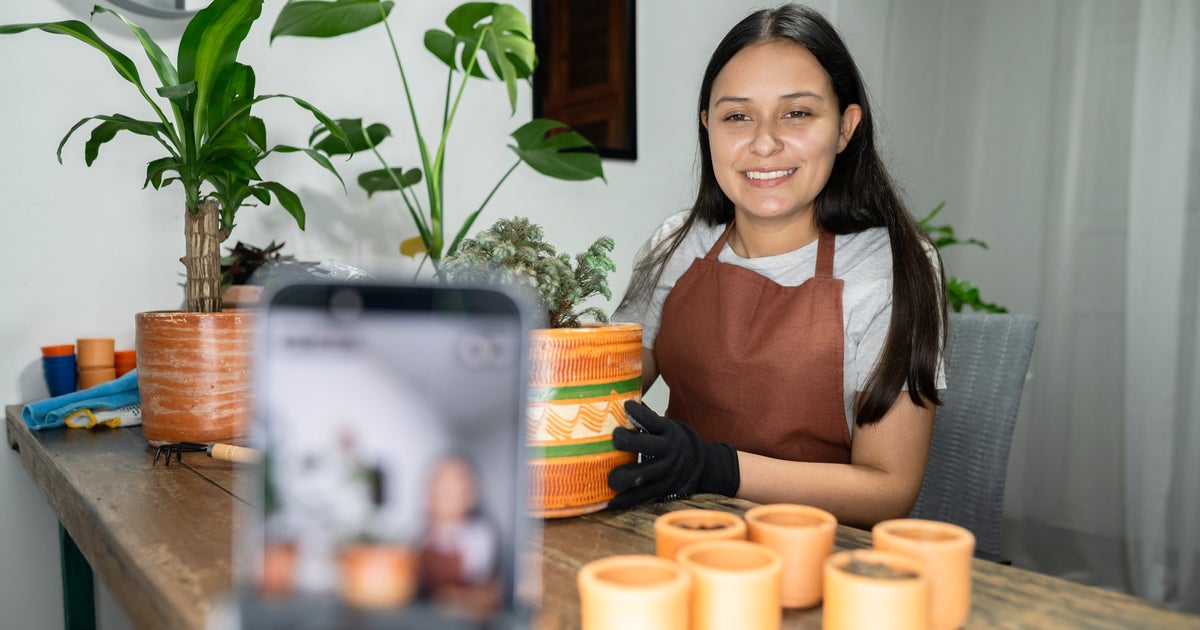
That’s because we’ve spent years measuring success by someone else’s yardstick. Promotions become goals simply because they’re the next logical step. Bigger titles become proof that we’re moving forward. But once those external markers fall away, a different picture often emerges. Evidence of this is all over Instagram and TikTok: Women entrepreneurs creating beautiful things and launching small businesses with very little overhead.
When women define success on their own terms, Sutcliffe says, the answers are rarely about status. They’re about flexibility, freedom, adventure, meaningful work and having enough time and energy left over for family, friendships and passions.
It’s a very different question than previous generations were encouraged to ask. Instead of “How high can I climb?” more women are asking, “What kind of life do I want my career to support?”
The future of women’s careers may not be about fixing the ladder. It may be about recognizing that the most fulfilling careers were never ladders to begin with — they were always something women had the power to build themselves.