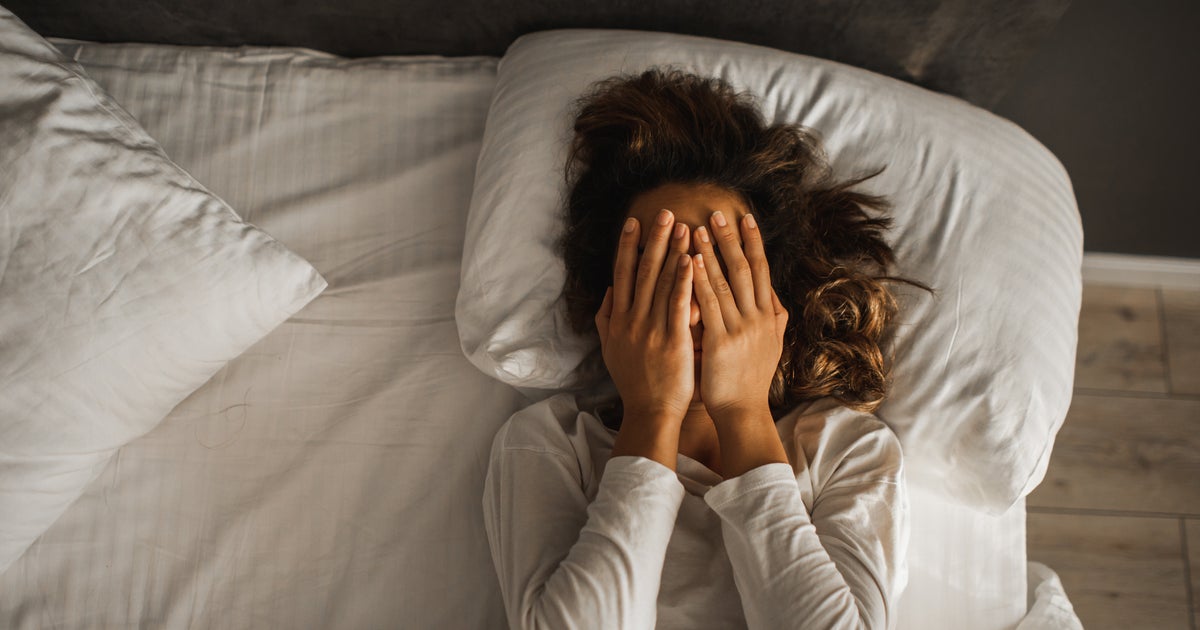

From Oura rings to mobile apps to smart mattress pads, sleep-tracking technology is abundant nowadays. These tools promise to help us improve our rest by sharing insights into how much we sleep, how well and even when we should go to bed and wake up.
But this tech-driven pursuit of better sleep isn’t always so helpful. In fact for some people, it might even be counterproductive to that ultimate goal ― giving rise to a condition experts have dubbed “orthosomnia.”
What is orthosomnia?
Orthosomnia is a condition characterized by poor sleep that stems from an obsessive pursuit of optimal sleep.
Coined by researchers in 2017, this emerging term is not yet recognized as a formal diagnosis in the DSM-5, the official handbook of mental health disorders. But that may change as people continue to use wearable technology to track all kind of biometrics.
“Orthosomnia is when people get so caught up in trying to sleep ‘perfectly’ that the stress actually keeps them from sleeping well,” Dr. Raj Dasgupta, a sleep medicine doctor and chief medical advisor for Sleepopolis, told HuffPost. “A lot of the time, it’s triggered by sleep tracker data. People see a low score and start worrying about it night after night. Ironically, the harder they try to control their sleep, the worse it gets.”
You might compare orthosomnia to orthorexia ― an excessive preoccupation with healthy eating that reaches psychologically unhealthy levels. Both terms draw from the Greek word “orthos,” meaning “straight” or “correct.” And both show the potential dark side of recent wellness trends.
“We are surrounded by information that feeds the fire of orthosomnia,” said neurologist, sleep specialist and “The Sleep Unplugged” podcast host Dr. Chris Winter. “Articles are everywhere that overpathologize sleep and make the normal ups and downs of sleep seem imminently dangerous.”
He explained that reports about the bad things that can happen when humans don’t get enough sleep and the lists of “tips and tricks” for improving rest don’t necessarily reach the people actively engaged in sleep deprivation who need this information. Instead, these articles find their way to folks struggling with insomnia and serve to intensify their quest for perfection.
“Perfectionist tendencies and the need to be in control play a huge role,” said Martin Seeley, a sleep expert with MattressNextDay. “People who suffer from orthosomnia can go to great lengths to perfect every single part of their sleep routine ― setting a strict sleep schedule, taking supplements and avoiding blue light.”
The extreme pressure to stick to these routines can make it even more difficult to fall or stay asleep.
“At its core, orthosomnia is a performance anxiety, so in that way, it’s probably existed forever,” Winter added. “People have stressed about their sleep quality for a long time.”
Modern technology, however, has has made our sleep “scores” more concrete.
“Orthosomnia is definitely a newer issue,” Dasgupta said. “The rise of wearable tech and sleep apps has made people hyper-aware of their sleep patterns, sometimes to the point where it backfires. These tools can be helpful, but if you’re relying on the numbers more than how you actually feel, that’s where problems start.”

What are the signs someone might be struggling with orthosomnia?
“Symptoms of orthosomnia may include excessive concern about sleep duration and quality, anxiety related to data insights from sleep trackers and monitoring, excessive time spent trying to improve metrics and perhaps difficulty falling or staying asleep in relation to an attempt to improve metrics,” said Dr. William J. Healy, an assistant professor in the division of pulmonary, critical care and sleep medicine at the Medical College of Georgia.
If you’re invested in tracking your sleep, try to pay attention to how your interest affects your actual sleep experience.
“Some red flags are constantly checking your sleep app, feeling frustrated or anxious about your sleep or waking up feeling tired even when you’ve had a full night in bed,” Dasgupta said. “People might also have trouble falling asleep or wake up a lot during the night because their minds are so focused on how they’re ‘supposed’ to be sleeping.”

A big issue with orthosomnia is that even the best sleep trackers are not totally accurate, so people who are getting solid sleep might come to believe otherwise ― leading to stress that subsequently does harm their sleep.
“In general, sleep trackers are not measuring sleep itself, the stages of sleep or of wakefulness after the onset of sleep,” noted Dr. Indira Gurubhagavatula, a professor of medicine in the division of Sleep Medicine at the University of Pennsylvania. “They use indirect data like heart rate, movement or body position to estimate whether the person is awake or asleep. They may even tell you that this ‘sleep’ is ‘light,’ ‘deep’ or ‘REM’ sleep.”
She added that the algorithms these trackers use may also be proprietary ― leading to a lack of transparency as to how exactly their determinations are made.
“The gold standard for measuring sleep is usually done in a laboratory, using soft electrodes taped to the scalp, which assess electrical activity of the brain, and electrodes near the eyes to see if REM sleep is happening,” Gurubhagavatula said. “Wearable trackers are not using such signals to measure sleep.”
A lot of people who use this technology are unaware of the difference, however, and may even view the numbers they see on their devices as exact sleep measures.
“They may become stressed or anxious when they wake up and realize they did not achieve the sleep metric scores they were hoping for, and some may even depend heavily on their wearables data to self-diagnose sleep disorders,” said Katie McCullar, a research fellow in the neurology department at Massachusetts General Hospital.
Researchers have shared stories of individuals so attached to the data from their wearable devices that they refused to believe it could be wrong, even after undergoing overnight lab studies with different results.
The hyper-focus on rest can actually be counterproductive to wellness, leading to heightened anxiety or guilt around sleep metrics. People with orthosomnia might also cancel plans with friends, skip workouts or totally overhaul their routines to chase a better sleep score.
“I’ve seen patients who use sleep trackers engage in behaviors that may cause even more problems ― for example, lying awake in bed for long hours, hoping to get a a better sleep score,” Gurubhagavatula said. “Since the trackers are not great at assessing true sleep versus lying quietly in bed, those who stay in bed for a long time without sleeping may get artificially higher scores. This can then perpetuate the practice of lying awake quietly in bed for a long time, which can worsen insomnia.”
How is orthosomnia treated?
“Treatment for orthosomnia may involve curtailing use of sleep tracking and reading on improvement in sleep metrics, at least for a time, to see if this improves symptoms,” Healy said.
Just as you’ve been experimenting with optimizing your sleep, consider experimenting with taking a break from such a data-driven pursuit.
“I suggest backing off the sleep tracking for a bit,” Dasgupta said. “You don’t have to delete your app forever, but maybe don’t check it every morning. Focus more on how rested you feel, not just the numbers on your screen.”
If you have trouble letting go of your sleep trackers or even scaling back your influx of data, you might want to reach out to a mental health professional.
“The best treatment is usually cognitive behavioral therapy for insomnia, or CBT-I,” Dasgupta said. “It helps people reset their thoughts around sleep.”
Ultimately, the goal is to focus on how you’re feeling, rather than what data says. Engage in healthy sleep practices, but don’t put so much effort into tracking and achieving highly specific goals.
“I encourage patients to follow good sleep hygiene on most days,” Gurubhagavatula said, listing things like consistent bedtimes, moderation with caffeine and alcohol, healthy eating, regular exercise and light exposure and a nice sleep environment. “However, there is wiggle room and one doesn’t have to be perfect 100% of the time.”
As with other areas of wellness, the goal with sleep is balance, not perfection.