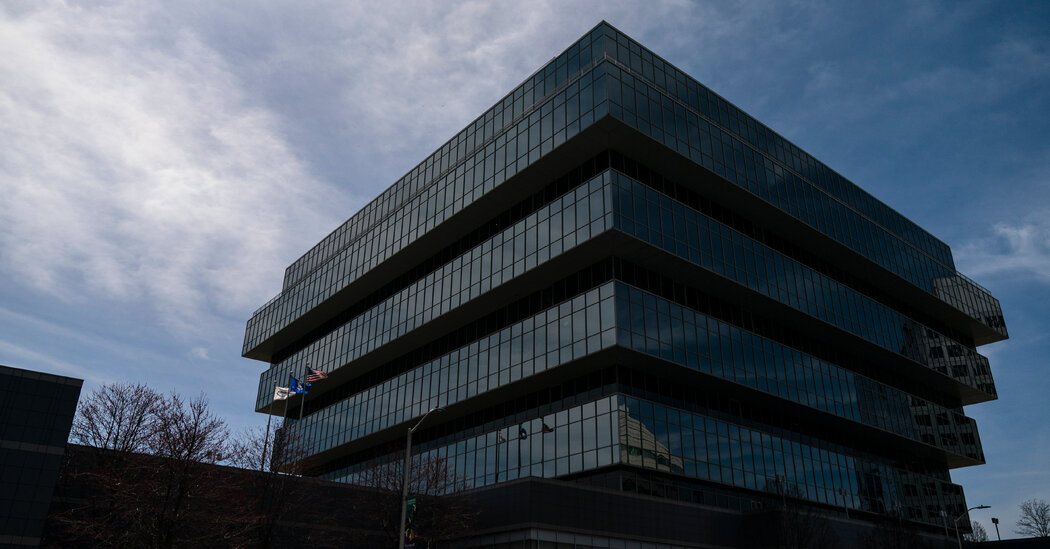

The hard-fought settlement of thousands of lawsuits against Purdue Pharma was close to capsizing on Thursday, after the Supreme Court rejected liability protections for the company’s owners, members of the billionaire Sackler family. The ruling effectively prevents the release of billions of dollars that could help alleviate the ravages of opioid addiction.
The future of the cases, some of which are a decade old, is now in limbo, as states, local governments, tribes and more than 100,000 individuals who sued the company, best-known for its prescription painkiller OxyContin, figure out next moves.
The court struck down a condition that the Sacklers had long insisted upon: immunity from all current and future opioid lawsuits in return for payments of up to $6 billion to plaintiffs.
In a statement, Purdue called the decision “heart-crushing,” because the settlement had been agreed to by an overwhelming majority of plaintiffs.
“We will immediately reach back out to the same creditors who have already proven they can unite to forge a settlement,” the company said, so that Purdue could emerge from bankruptcy and funds could begin to flow.
Descendants of Dr. Mortimer Sackler and Dr. Raymond Sackler issued a joint statement suggesting they were willing to keep talking and were “hopeful about reaching a resolution that provides substantial resources to help combat a complex public health crisis.”
But they did not indicate whether they would agree to pay billions of dollars without the liability shields. “The unfortunate reality is that the alternative is costly and chaotic legal proceedings in courtrooms across the country,” the statement continued. “While we are confident that we would prevail in any future litigation given the profound misrepresentations about our families and the opioid crisis, we continue to believe that a swift negotiated agreement to provide billions of dollars for people and communities in need is the best way forward.”
In statements, a number of states said they were eager to resume talks.
“The court’s ruling means we now have to go back to the negotiating table. Purdue and the Sacklers must pay so we can save lives and help people live free of addiction,” Josh Stein, the attorney general of North Carolina, said. “If they won’t pay up, I’ll see them in court.”
A statement from lawyers negotiating for local governments noted that the continuing delay was eating up potential payouts, as legal fees accumulated. “We will study the opinion and chart a course to see that the Sackler family does not escape justice,” the statement said.
A central question hovers over any new negotiations: Without the Sacklers able to get the comprehensive liability protection, how much will they be willing to pay to resolve these cases?
Some lawyers involved in the long-running Purdue negotiations had been braced for the possibility that the Supreme Court would decide against the current plan. Those who spoke with The New York Times did so on condition of anonymity, citing the sensitivity of the issue. They said mediation sessions have been scheduled and privately predicted that a resolution would ultimately be achieved.
Protection from civil lawsuits is typically granted to companies emerging from bankruptcy restructuring, as Purdue is. But because only the company, and not the Sacklers, had filed for bankruptcy, the Supreme Court said that the Sacklers were not entitled to the same shield.
In doing so, the court agreed with the U.S. Trustee, an arm of the Justice Department that oversees the federal bankruptcy system, which said that a bankruptcy judge did not have the authority to grant such a shield. The government argued that allowing the family that protection would have been done without the consent of future plaintiffs, and so would deprive them of due process rights.

A handful of states fought the settlement for months, ultimately extracting more money from the Sacklers before they signed on. After the Supreme Court ruling, William Tong, the attorney general of Connecticut, one of those states, said, “The U.S. Supreme Court got it right — billionaire wrongdoers should not be allowed to shield blood money in bankruptcy court.” He expected negotiations to return to bankruptcy court.
The settlement also included payments to hundreds of tribes. Verlon Jose, chairman of the Tohono O’odham nation, with 36,000 enrolled members based largely in Arizona, said: “The Sacklers brought suffering to millions, billions of dollars in damages, and an epidemic of misery that has spanned decade. The remaining Sacklers are going to stay billionaires while people continue to die of addiction.”
Of the many pharmaceutical companies that have been sued in the national opioid litigation, a scant few, including Purdue, agreed to payouts for individual victims in addition to the state and local governments. More than 100,000 individual plaintiffs, including families of those who died from opioid overdoses, might have been eligible for between $3,500 and $48,000 from the Purdue settlement.
Ryan Hampton, who was co-chair of a committee in the Purdue bankruptcy that represented individual victims, said on Thursday that he was chiefly concerned about protecting that stake in any new negotiations.
“Advocates from across the country are going to fight like hell and put pressure on state attorneys general to ensure that every single penny of victims’ compensation is protected at all costs,” he said. “Victims must come first, before any state takes a piece of whatever the new negotiated deal is.”
But Ellen Isaacs, whose son died from an overdose, had long fought the Purdue settlement because she believed the Sacklers should not be given a legal pass.
Her lawyer, Michael Quinn, praised Thursday’s ruling, saying, “The decision preserves the rights of individual victims to either consent to a deal or exercise their right to go into court against non-debtors,” he said, using a legal term to refer to the Sacklers.
Like the more than $50 billion in settlements that have already been struck with other pharmaceutical companies in the national opioid litigation, the Purdue and Sackler billions were intended to go toward addiction education, treatment and prevention. Each state and its local governments have their own disbursement protocols.
Although many companies manufactured, distributed and sold opioids, Purdue is widely seen as creating the dynamic market for the painkillers in 1996, with the introduction of OxyContin, which it marketed aggressively as long-acting and almost nonaddictive. Other manufacturers leaped into the lucrative business and within several years, opioid abuse and overdose death spread nationwide. The impact hit families, law enforcement, emergency services and child welfare agencies.
By 2014, local governments began filing lawsuits against Purdue. By September 2019, Purdue, facing nearly 3,000 lawsuits, hundreds of which personally named the Sacklers, filed for bankruptcy restructuring, a move that suspended all claims.
In the more than four years since, the most intractable demand holding up resolution has been the Sacklers’ insistence that they should be permanently released from future Purdue opioid lawsuits.
As years passed, groups of state attorneys general dropped their objections to the Sacklers’ demand, in the interests of just getting the deal done.