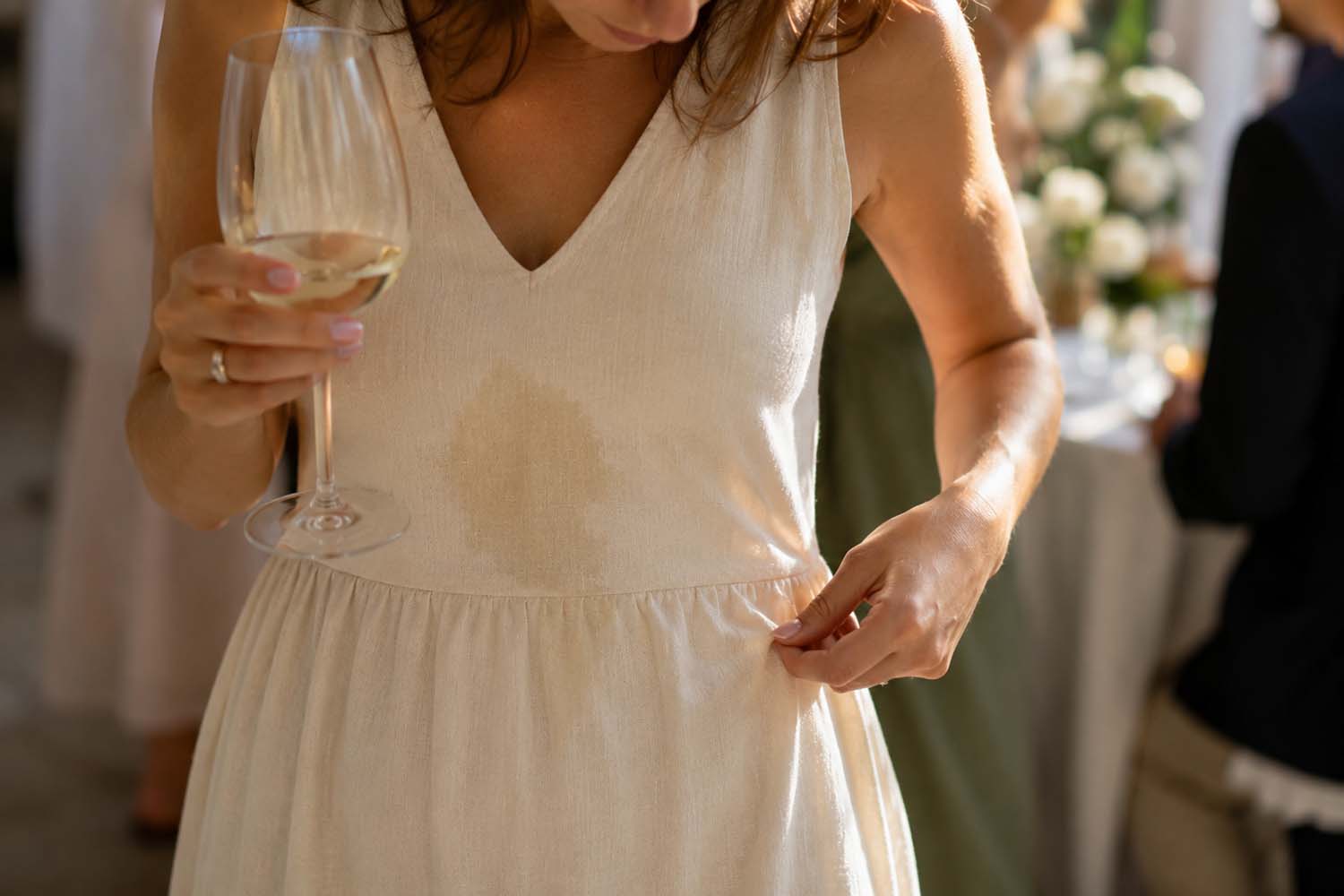

The glass tipped at the reception and a wave of Sauvignon Blanc landed on my linen dress. I blotted it with a napkin, held it up to the light, saw nothing, and decided it was fine. The fabric was cream-colored. The wine was clear. By every visible measure, there was no white wine stain. I wore the dress home, hung it up, and forgot about it.
Three weeks later I pulled it out for another event and found a pale yellow patch the size of my palm at the hip. The stain had been there all along. I just couldn’t see it yet.
This is the specific way white wine ruins clothes. Not immediately, not dramatically, but slowly and invisibly, through a chemical process that starts the moment the wine hits the fabric and finishes weeks later when you’re standing in front of your closet wondering what happened. The good news is that this stain is genuinely easy to treat if you act when you can’t yet see it. The bad news is that most people wait until they can see it, and by then the damage is significantly harder to undo.
The Short Answer:
Blot immediately with a clean cloth, never rub. Flush the stain with cold water from the back of the fabric. Pre-treat with a small amount of laundry detergent or dish soap, let it sit for 5 to 10 minutes, then wash in the warmest water the care label allows. Check the stain before putting anything in the dryer. Heat sets sugar residue and makes the eventual yellowing permanent.
For a stain that has already yellowed: soak in oxygen bleach dissolved in tepid water for one to two hours, then rewash. This is the most reliable rescue method for white wine and champagne stains that have started to show.
Why White Wine Stains Clothes at All
White wine looks harmless. It’s clear, it dries clear, and when it lands on most fabrics nothing appears to happen. The staining mechanism is invisible by design, which is exactly what makes it dangerous to clothing.
All wine (red, white, and sparkling) contains tannins. These are biomolecules that bond aggressively to other molecules, including fabric fibers. In red wine, tannins carry dark anthocyanin pigments with them, which is why a red wine stain is immediately visible. White wine has tannins but virtually no anthocyanins. The tannins still bond to the fabric. There’s just nothing visibly colored attached to them yet.
The yellowing happens through oxidation. The sugars and tannins in white wine react with air over time, the same way a cut apple turns brown. This process is slow; it can take days or weeks, which is why the stain that looked like nothing at the reception becomes a yellow patch three weeks later in your closet. The warmer and more humid the storage environment, the faster the oxidation progresses.
White wine also contains acids and residual sugars that degrade natural fibers over time. On cotton, linen, and silk especially, untreated white wine weakens the fabric structure and makes the stain harder to reverse the longer it sits. The sugar residue also attracts dirt, so even if the yellow never fully develops, the stained area will collect grime faster than the rest of the garment and eventually show as a dirty patch.
The Golden Rule: Treat It When You Can’t See It
Every other stain guide is about treating something visible. This one is about treating something invisible, and that requires a different mindset. When white wine lands on your clothes, the correct move is to treat it immediately as if it were a red wine stain, with the same urgency, the same steps, and the same no-dryer rule, even though there is no visible evidence of a stain.
The treatment window closes fast. Fresh white wine is water-soluble and flushes out easily. Tannins that have had a few hours to bond to fibers take more effort. A stain that has dried, oxidized, and yellowed is a significantly different problem that may require soaking, and in some cases it may not fully reverse. The ease of removal goes from trivial to difficult to sometimes-permanent over the course of days to weeks, entirely based on when you decide to act.
If you can do one thing from this guide: excuse yourself, get cold water on the fabric, and blot within the first few minutes. Everything else can happen later. That first flush is the highest-leverage move you have.

White Wine vs. Red Wine: What’s Actually Different
The chemistry is the same: tannins bonding to fabric fibers. But the practical differences matter for treatment. Red wine stains are visible immediately and produce urgency naturally. White wine stains produce no urgency at all, which is why they end up set more often despite being easier to treat when fresh.
Red wine stains require hydrogen peroxide to address the anthocyanin pigment. White wine stains do not have that pigment, so hydrogen peroxide is less central to the white wine treatment and can be skipped on colored fabrics where it poses a bleaching risk. The base treatment of cold water, detergent, cool wash, and no dryer works on both, but the stakes of waiting are higher with white wine precisely because you cannot see the clock running.
One question that comes up often: does white wine remove red wine stains? Some sources say the tannins in white wine help dilute and neutralize fresh red wine stains. Results are mixed and the science is thin. If you’ve spilled red wine and white wine is the only thing available, it’s worth trying as a dilution step at a party. It’s not a reliable treatment method. For the full red wine protocol, see the complete guide to getting red wine out of clothes.
Does Champagne Stain Clothes?
Yes, and the stain is sneakier than still white wine because champagne looks even less threatening when it spills.
Champagne contains the same tannins and sugars as white wine and stains by the same oxidation mechanism. The stain is invisible fresh, turns yellow or brown over time, and gets significantly harder to remove the longer it sits untreated. The chemistry and the treatment are identical to still white wine.
What’s different about champagne is the carbonation. The bubbles in sparkling wine drive liquid deeper into fabric fibers more quickly than still wine would. A champagne spill penetrates faster, which means it has less time before the tannins begin bonding. The urgency is slightly higher than with still white wine, and the first blot matters even more.
Prosecco, cava, and other sparkling wines behave identically to champagne for stain purposes. The same steps apply.
One practical note specific to champagne: use a white cloth or white paper towel when blotting. Colored napkins and paper towels can transfer dye onto a wet, slightly acidic fabric, adding a second problem on top of the original spill.
Does White Wine Stain Dark Clothes?
The stain is not visible on dark fabric, but the damage still happens. The tannins still bond to the fibers. The sugar residue still oxidizes over time. The acid still degrades natural fibers. On dark clothes the result is not a yellow patch but an area that collects dirt faster, develops a slightly different texture, and may eventually show as a faded or discolored zone after repeated washing.
Dark clothes are worth treating even though the stain is invisible. The treatment is identical and takes two minutes. Skipping it because you can’t see anything is the same mistake as ignoring the cream dress.
Stain Variants: What Situation Are You In?
Fresh spill, still wet (best case): Cold water flush and detergent pre-treatment is often sufficient. The tannins have not yet bonded significantly. This is the situation where the stain is genuinely easy to remove.
Dried but not yet yellowed: The tannins have begun to bond but the oxidation hasn’t progressed. Rewetting the stain with cool water, applying enzyme detergent, and washing on a warm cycle handles most of these. The enzyme-based stain remover step becomes important here for breaking down the bonded tannins.
Already yellowed or brown: The oxidation is complete and the tannin bond is set. Oxygen bleach soak is the primary rescue method. Expect to repeat. Some stains that have yellowed for weeks may not fully reverse. If you’re serving white wine at a summer gathering and a dress gets caught in this situation, getting it to the laundry within a few hours rather than the next day is the difference between a stain that clears and one that doesn’t.
Dry-clean-only fabric: Blot, don’t wet. Get it to a dry cleaner as quickly as possible and tell them what it is. Do not attempt to rinse or treat a dry-clean-only garment yourself. Wetting certain fabrics, particularly structured garments, wool, and some silks, can cause water spotting or permanent distortion that is harder to fix than the original wine stain.
Champagne on delicate or structured fabric: The carbonation penetrates quickly. Blot immediately and get to a cleaner. For washable delicates, use the silk method below.
Four Methods, Ranked
1
2
3
4
Pro tip: Never use natural bar soap or soap flakes on a wine stain. The fatty molecules in bar soap bond to tannins and can actually make a tannin stain harder to remove, not easier. Liquid laundry detergent, dish soap, or enzyme treatment are the right tools. Bar soap at a restaurant is the wrong move even when it’s the only thing offered.
If you entertain regularly and white wine is on the table, keeping a stain remover pen in a drawer near the dining area is worth it. Five seconds of enzyme treatment at the table is worth more than a full treatment cycle the next morning.
Same tannin chemistry, different fabric: if the white wine made it to the tablecloth or napkins, see the guide to berry stains and coffee stains for the sister chemistry that applies to those fabrics.
By Fabric Type
White and light-colored cotton: The most forgiving situation. Cotton is durable and tolerates enzyme detergents, warm water, and oxygen bleach. For whites, you can add a small amount of oxygen bleach directly to the wash cycle. Check before drying every time.
Colored cotton: Same approach as white cotton but skip any bleaching agents. Enzyme detergent pre-treatment and a warm wash handle most colored cotton stains. Oxygen bleach is generally color-safe but check the product label before using on darker fabrics.
Linen: Slightly less absorbent than cotton and responds well to cold water flushing. White vinegar applied directly to a linen stain before washing is a good pre-treatment option: pour it on, let it sit for a few minutes, then launder. The natural acidity helps counteract tannin bonding. Enzyme detergent also works well. The same method applies to linen tablecloths and napkins: cold water flush, vinegar or enzyme pre-treatment, warm wash, air dry rather than machine dry to prevent shrinkage.
Polyester and synthetic blends: These resist absorption slightly better than natural fibers, which works in your favor. The cold water and detergent method usually handles fresh stains completely. Hydrogen peroxide mixed 1:3 with water works on white or light polyester for stubborn stains. Synthetics generally tolerate a warmer wash temperature.
Silk: Skip hydrogen peroxide entirely on silk. Silk is a protein fiber and can be permanently damaged or water-spotted by aggressive treatments. Use the club soda and white vinegar method: blot the stain, apply a diluted solution of white vinegar and cool water (1:3 ratio), blot again with a clean cloth. Hand wash in cool water with a drop of mild detergent formulated for delicates. Air dry flat. If the silk garment is structured or the stain is significant, take it to a dry cleaner and tell them what it is. Dry-clean-only silk: blot only, no wetting, straight to the cleaner.
Wool and cashmere: Cold water only and a gentle wool-safe detergent. Enzyme detergents can damage wool fibers. No hot water, no oxygen bleach, no machine spin cycle. Blot the stain, rinse gently with cold water, apply a small amount of wool-safe detergent, and rinse again. Lay flat to dry. For significant wool stains or cashmere, professional cleaning is the right call.
Rayon: Soak gently in cool water with a small amount of mild detergent. Don’t wring or twist rayon when wet; it weakens and distorts easily. Rinse thoroughly and lay flat to dry.
Denim: Denim handles wine stains well. Cold water flush, enzyme pre-treatment, and a normal wash cycle in the warmest water the label allows. The main risk with denim is that dried stains set into the weave and require the oxygen bleach soak to fully clear.
Dry-clean-only garments: Blot only. Do not wet the fabric. Get it to a dry cleaner as quickly as possible and describe exactly what the stain is. Early professional treatment is almost always successful. Delaying because the stain isn’t visible yet is the mistake most people make with dry-clean-only white wine stains.
The Full Protocol
Step 1: Blot immediately with a clean white cloth or paper towel. Press firmly, don’t rub. Work from the outside edge of the stain toward the center to avoid spreading it.
See also

Step 2: Get cold water on the stain as quickly as possible. If you’re at home, take the garment to a sink and run cold water through the back of the fabric. If you’re out, use club soda and add salt to draw moisture from the fibers while you finish the evening.
Step 3: Apply enzyme-based stain remover or liquid laundry detergent directly to the stained area. Work it in gently with your fingertip. Let it sit for 5 to 30 minutes depending on how long the stain has been there.
Step 4: Wash in the warmest water the care label allows. Use your regular laundry detergent. For cotton whites, add oxygen bleach to the wash.
Step 5: Check the stain before putting the garment in the dryer. Remove the item from the washing machine and hold it up to good light. If any discoloration is visible, do not dry it.
Step 6: If the stain remains after washing, apply enzyme stain remover again and repeat the wash. Do not dry between attempts.
Step 7: For a stain that has already yellowed, soak in oxygen bleach dissolved in tepid water for one to two hours before rewashing. For a yellowed stain that has been sitting for weeks, soak overnight.
Never do these things:
- Don’t put the garment in the dryer before confirming the stain is gone. Heat permanently sets the sugar residue that causes yellowing. A stain you could have rescued from the wash becomes much harder or impossible to remove after the dryer.
- Don’t use bar soap or soap flakes. The fatty molecules in bar soap bond with tannins and can make the stain more difficult to remove, not less.
- Don’t use hot water as a first step. Hot water sets tannins into fabric fibers quickly. Always start with cold water, then wash in warm or hot only after pre-treating.
- Don’t rub the stain. Rubbing pushes wine deeper into the fiber weave and can spread the stain outward. Press and blot only.
- Don’t use hydrogen peroxide on colored fabrics. Hydrogen peroxide is a bleaching agent. At 3% it’s mild, but it can still lighten or discolor colored and dark fabrics. Reserve it for white or very light-colored garments only.
- Don’t wait to see the stain before treating it. This is the most important rule. White wine and champagne stains that are invisible when fresh become increasingly difficult to remove as the tannins bond and the sugars oxidize. The window between trivially easy and genuinely difficult is a matter of hours.
What Definitely Does Not Work
Waiting to see the stain: By the time a white wine stain is visible, the oxidation process is already complete and the tannin bond is set. Treating what you can’t see is uncomfortable but necessary.
Rubbing with a dry napkin: This is the instinctive move at a dinner table. It moves the wine around and pushes it deeper without removing it. Blotting with a damp cloth or club soda is better.
Hot water flush: Feels like it should clean better. Sets the stain faster. Always cold water first.
Bar soap: Widely available in restaurant bathrooms and offered as a quick fix. Fatty soap molecules bond to tannins and create a secondary problem. Liquid hand soap is a better emergency option if nothing else is available.
Spraying with cooking spray or oil: Sometimes suggested for lifting stains off tablecloths. Adds a grease stain to the wine stain and makes the overall situation worse.
Leaving it for tomorrow: The most common mistake and the one most likely to turn a trivial problem into a permanent one. The stain you can’t see is already progressing.
The One Thing I Wish I’d Known Sooner
The dress was fixable. I know that now. A ten-minute treatment the evening of the reception would have cleared it completely: cold water, a squirt of dish soap, left to soak while I slept. The stain was invisible when I got home, which is exactly why I did nothing. Three weeks later it was yellow and set enough that two rounds of oxygen bleach soak got it to faint rather than gone.
White wine requires you to act on information you can’t see, which runs against every instinct. You’re standing there with a clear-looking dress and no visible problem, and the correct move is to treat it exactly as you would a red wine emergency. That mental shift of treating the invisible stain with the same urgency as a visible one is the entire difference between keeping a garment and losing it.
Final Thoughts
White wine and champagne stains are among the most preventable clothing losses because they’re among the easiest stains to treat when fresh. The problem is entirely one of timing and awareness. Fresh tannins are water-soluble and flush out easily. Oxidized, set tannins are a different problem that requires soaking, enzyme chemistry, and sometimes multiple rounds of treatment.
The protocol is not complicated: blot, flush with cold water, pre-treat, wash warm, check before the dryer. The only difficult part is remembering to do it when there’s nothing visible to remind you. That reminder is what this post is for.
If the damage was red wine instead, see the full guide to getting red wine out of clothes. For the same tannin chemistry in a different context, the guide to berry stains covers anthocyanin-based stains with similar treatment logic. And if the spill made it to the carpet or upholstery, blot immediately with cold water and a clean cloth, apply dish soap diluted in cool water, and blot again. For a stain that has already dried into carpet, a professional cleaner is the right call.
Frequently Asked Questions
Does white wine stain clothes?
Yes. White wine contains tannins that bind to fabric fibers and sugars that oxidize over time into a visible yellow or brown stain. The stain is invisible when fresh, which is what makes it dangerous: most people don’t treat it because they can’t see it. Fresh white wine stains are easy to remove. Stains left for days or weeks become significantly harder and sometimes permanent.
Does champagne stain clothes?
Yes. Champagne stains by the same mechanism as white wine: tannins and sugars that oxidize into a yellow-brown discoloration over time. The carbonation in champagne drives liquid deeper into fabric fibers more quickly than still wine, making the urgency slightly higher. The treatment is identical. Prosecco, cava, and other sparkling wines behave the same way.
Does white wine stain come out in the wash?
A fresh white wine stain usually comes out completely in a normal wash cycle with pre-treatment. A dried or already-yellowed stain needs an enzyme pre-soak or an oxygen bleach soak before washing. Never put the garment in the dryer until the stain is confirmed gone; heat sets the sugar residue and makes it significantly harder to remove.
How do you get a dried white wine stain out?
Rewet the stained area with cool water to reactivate the tannin bond. Apply enzyme-based stain remover and let it sit for 30 minutes. Wash in the warmest water safe for the fabric and check before drying. For a stain that has yellowed, soak in oxygen bleach dissolved in tepid water for one to two hours before rewashing. Overnight soaking works better for stains that have been sitting for a week or more.
Does club soda remove white wine stains?
Club soda is a useful emergency measure for a fresh spill. The carbonation helps dilute and lift the wine from fabric fibers before the tannins fully bond. It is not a complete removal method on its own. Follow up with detergent pre-treatment and a full wash as soon as possible. Club soda combined with salt applied while the stain is still wet is the best you can do before getting home to a sink.
How do you get white wine out of silk?
Skip hydrogen peroxide and enzyme treatments on silk. Blot the stain gently with a clean white cloth, then apply a diluted solution of white vinegar and cool water (1 part vinegar to 3 parts water). Blot again. Hand wash in cool water with a drop of mild detergent formulated for delicates and lay flat to dry. If the garment is dry-clean-only, blot only and take it to a cleaner as quickly as possible without wetting it further.
Can white wine remove red wine stains?
The idea is that the tannins and minerals in white wine help dilute and neutralize fresh red wine. Results are mixed and the scientific basis is thin. If white wine is the only thing available in the moment, using it as a dilution step is worth trying on a fresh red wine spill. It should not be relied on as a treatment method. See the complete guide to getting red wine out of clothes for the protocol that actually works.
How do you get white wine out of carpet?
Blot immediately with a clean white cloth to absorb as much liquid as possible. Do not rub. Apply cold water to the stained area and blot again. Mix a small amount of dish soap into cool water and apply to the stain with a clean cloth, working from the outside edges in. Blot dry. For a stain that has already dried or yellowed, apply an enzyme-based carpet cleaner and follow the label directions. For significant or set stains in carpet, professional cleaning gives the most reliable results.
Better Living may earn commissions through affiliate links and may occasionally feature sponsored or partner content. If you make a purchase through our links, we may receive a small commission at no cost to you.