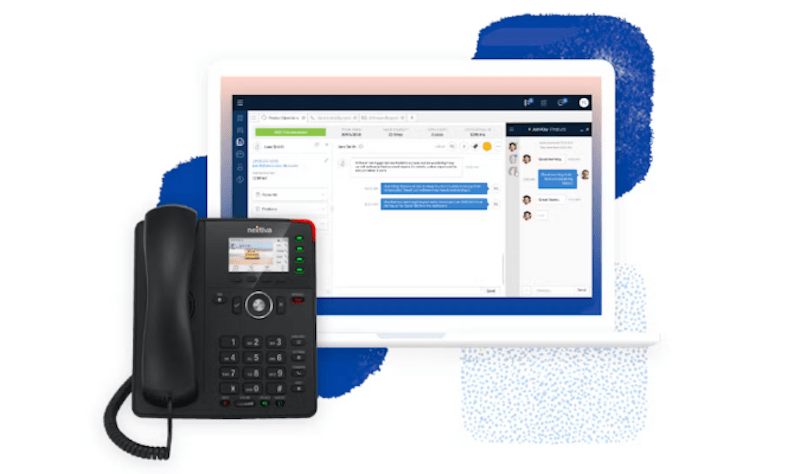

A Voice over Internet Protocol (VoIP) phone system is a fast and easy way to upgrade your business’s communication tools. It’s an internet-based solution that allows businesses to break free from outdated traditional Public Switched Telephone Network (PSTN). This gives teams more freedom and flexibility in choosing where and how they work.
VoIP has a ton of advantages, but it’s still evolving, which means you can’t just sit back and coast for the next decade. It’s all about choosing the right system to accommodate your business’s evolving needs and priorities.
We’ll guide you toward the solution primed to deliver the best long-term performance for your organization, helping you:
- Understand the benefits and drawbacks of each VoIP-based approach
- Leverage the best cost-saving tricks to reduce your overall investment
- Futureproof your chosen solution by shopping with both your current and potential communication needs in mind
Get the Least Complicated VoIP Phone System That Works
Overall, an enterprise VoIP phone system offers a lightweight, internet-based solution to simplify your infrastructure while also offering more flexibility in how your business operates.
However, with so many features to choose from, piecing together the right system for your business is going to feel rather complex at first—no matter how you approach it.
Figuring out what you need in a VoIP system may feel a bit overwhelming, but that’s actually a good problem to have. The customizable nature of VoIP empowers most businesses to benefit from a fairly simple and low-cost setup by cherry-picking only the capabilities they really need.
To avoid overbuying and over-complicating your selection, get crystal clear on your communication needs and objectives before you shop around. Which aspects of a phone system are essential to your operation right now?
If you find a solution that offers most of the features you need but requires an upgrade for a couple of extra features, keep looking. You shouldn’t upgrade just for one or two additional features.
There are likely other highly-rated VoIP providers that price these tools as à la carte add-ons or can customize a bundle to suit your needs.
Tips for Buying Any Type of VoIP Phone System
Plug-and-Play VoIP Phone Systems

Your business probably already has the main component for this cloud-based solution: an internet connection.
As a result, setting up your new system could be as simple as configuring a few additional routers to enable wider coverage. You may also need to install adapters to your desktop phones or any hardware you intend to use to ensure compatibility with the VoIP network.
Your VoIP provider can offer insight into building out your system, even incorporating your Local Area Network (LAN) to maintain privacy. Once the back-end setup is complete, all calls will route through your VoIP-hosted Private Branch Exchange (PBX) system to your designated business devices via the established internet connection.
One of the greatest benefits of plug-and-play is that you don’t have to deal with the cost or hassle of replacing existing phones or hardware. This option is designed to complement your current system setup for a simple, streamlined switch from landline to internet—ideal for new businesses or smaller operations with very little existing infrastructure.
To help further reduce your initial investment, you can supply your team with refurbished phones. Just make sure to consider the brand and manufacturer when outfitting your hardware, as some are easier to upgrade or replace than others. You can also make use of the smart devices your employees already own, as long as you instruct them on best practices for maintaining network privacy, especially when working remotely.

Where you may run into trouble with the play-and-play approach is when your growth outpaces your system capabilities. Let’s say that your customer base expands into the high thousands, your call volume rises dramatically, and your employees now number in the hundreds.
In this case, you’ll need a better system for tracking metrics, segmenting your customers, and creating multiple call flows.
At that point, a basic, no-frills VoIP framework won’t be able to carry the full weight of your communications demands. Fortunately, your budget will likely be larger, so you should be able to upgrade.
Cloud-Based VoIP Phone Systems

Technically, any cloud-based VoIP solution is fairly plug-and-play in its structure. The configuration of your PBX, Session Initiation Protocol (SIP) trunking, and other key pieces of your system are managed offsite via the provider’s server. Your main responsibility is ensuring that your business phones—whether desktop or smart devices—are compatible with the VoIP network.
Once you’ve made the switch from a landline network to a cloud-based VoIP system, you’re able to implement and update network-wide features in real time. Any changes to your system setup, such as adding more lines for your growing team or utilizing toll-free numbers for a targeted marketing campaign, can be made via the online interface.
When you’re ready to deploy more advanced features like automated call menus or call routing, you can manage these over the same user interface from any trusted device. And as your business expands or your needs change, you can upgrade your plan or remove unnecessary add-on features by speaking with your provider.
As with plug-and-play solutions, the best way to keep costs down with cloud-based systems is to consider the quality and longevity of your communication devices. If you’re going to invest in traditional desktop hardware, choose a recognized and highly-rated brand like Nextiva. While it may be tempting to go with the least expensive option, the cheaper choices are usually less reliable and won’t provide as many features.
On-Premises VoIP Phone Systems
An on-premises VoIP system is a solution that involves an onsite server rather than a cloud-hosted one. Some business owners prefer this approach, as it gives you complete control over your system structure and configuration. Aspects like SIP trunk setup, adding or removing users, and updating system security features are all in your hands. The VoIP provider simply extends internet-based phone network capabilities to your existing framework.
If you don’t already have an on-premises system in place, this solution will most likely be far too costly to implement from scratch. It’s typically the most time- and cost-intensive approach because of the extensive hardware, monitoring, and upgrade requirements.
However, once your system is in place, adding more users and capabilities can be less expensive than an ongoing subscription payment to a cloud-hosted provider.
You can take measures to support the longevity of your on-premises system by investing in high-quality hardware and a strong support team. You’ll want a dedicated IT staff available to manage the system, coordinate additional features, and stay on top of the most up-to-date security practices.
Hybrid VoIP Phone Systems
You can also look into hybrid solutions that blend the on-premises and hosted approaches. This may work well if you don’t have room in your budget for extensive IT support and want the ease of configuring certain features through an online interface.
The key here is making sure that your VoIP provider is knowledgeable and capable of offering the ongoing support you need. If you don’t have in-house IT support, you want to make sure you can trust your provider when something goes wrong.
Virtual Call Center Solutions

Several VoIP providers offer a software-based solution for managing not only your phone system but your customer service needs, as well. For example, Nextiva’s AI-powered contact center is built around AI technology engineered to streamline and simplify the customer contact journey across all channels.
These virtual contact center systems pair your VoIP service interface with additional customer service and sales capabilities. You can build and access your CRM database, customize self-service features, and gain access to additional tools.
As with basic VoIP plans, you’ll want to shop around to find the best option for your budget and business size. Another key consideration is whether your VoIP provider can integrate with your chosen virtual call center platform, or if it’s more cost-effective to obtain both from the same company.
VoIP Phone Systems vs SIP Trunking
Within the context of VoIP, a SIP trunk is essentially a “bundle” of virtual lines that manage incoming and outgoing call or data traffic.
Each line within a trunk carries video and voice data to or from a specific destination within your business. Because these lines are virtual, they can be established or closed out in real time as data is sent or received. As a result, multiple team members can share a single trunk, depending on the expected data traffic burden of each.
So why does this matter? The management of these trunks—adding them, removing them, troubleshooting tech issues, and maintaining system security—will depend on whether your system is cloud-hosted or housed on premises.
A cloud-based solution will be fully supervised by your VoIP provider, allowing you to make any changes through its online interface.
An on-premises setup requires IT staff to manually add or update trunks via the system interface, while the VoIP provider simply connects your system to internet network capabilities. The key differences between these options are the amount of control you can exercise over your system and the costs associated with maintaining the hardware, software, and a dedicated IT staff.
Both approaches can be considered futureproof, as both require the same amount of upkeep and maintenance to stay ahead of new technologies.
The major difference is that an on-premises solution puts you and your team in charge of these updates, while a VoIP-hosted plan offers this as an included service from your provider.