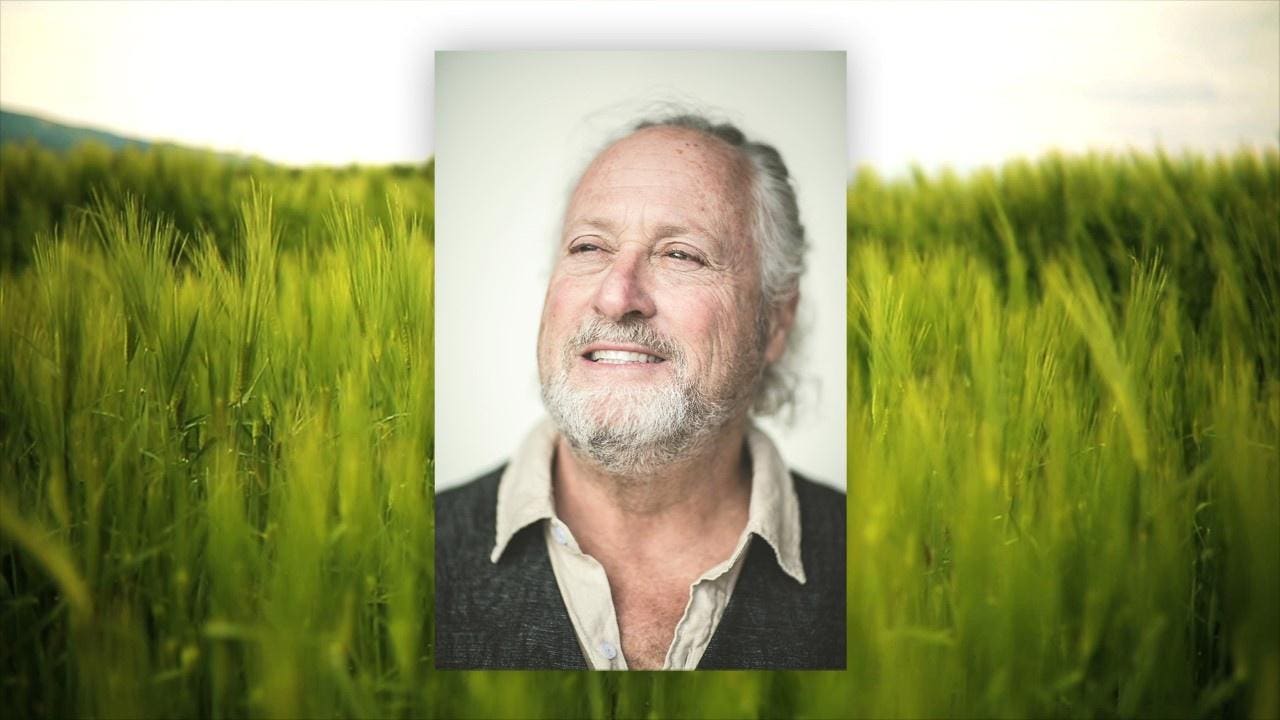

Invesco stock-index owner Robert Wilder has bet on eco-friendly long shots for years, mostly winning. But it’s been a volatile ride.
Robert Wilder, 62: author, lecturer, organic gardener, tree hugger. Something of a hippie? No, this ecologist is a financier, with a sharp eye for how to turn environmentalism into a business.
Wilder is the owner of the stock index that dictates the portfolio of Invesco WilderHill Clean Energy. The exchange-traded fund holds $930 million worth of shares in 82 companies betting on the transition away from carbon. They make things like charging stations, windmill blades and parts for renewable-energy grids. “Speculative” is an understatement for these outfits, most of them in the red. Will Energy Vault ever be able to economically store energy by lifting giant blocks? There are skeptics.
Investors would be hard pressed to find a wilder ride among investment companies. In 2020, the fund was up 206%. Since then it has evaporated half its customers’ money. At this point the portfolio’s companies are, if not bargains, at least on sale. They will presumably prosper if some of the $394 billion Congress recently approved for carbon reduction trickles down to them.
In the 1990s Wilder was a Ph.D. lecturing on environmental science at state universities in Massachusetts and California. There wasn’t enough excitement in that. He says, “Being a professor is the second-best thing to do. The best thing is to be an entrepreneur.”
Wilder quit his academic career, drained his retirement account and visited fund operators in Boston and New York with a proposal for a green-energy fund. “They laughed at me,” he says. At one point he was making ends meet by collecting unemployment benefits.
Eventually, an ETF vendor now part of Invesco signed up. Wilder would pick the companies for a green energy index; the fund company would use this index to create a fund, handling the accounting and the Wall Street connections. (“Hill” refers to an early participant who has backed away; Wilder owns WilderShares LLC outright.)
WilderHill Clean Energy got off to a strong start after opening its doors in 2005 but was a disaster in the stock market crash of 2007-09. In 2020 a fervor for climate-related investing brought it back to glory.
Wilder’s decarbonization fund was, he says, the first of its genre. But now it has a lot of competition, including an ETF from First Trust that is twice as large and has returns far outpacing those of WilderHill Clean Energy. What sets Wilder’s fund apart is its habit of rebalancing the portfolio every quarter to give the chosen companies almost equal weights. Enovix, a $5 million (revenue) pipsqueak working on battery anodes, gets the same allocation as Albemarle, a lithium producer with revenue of $5.6 billion.
HOW TO PLAY IT
By William Baldwin
If you want exposure to exotic and iffy alternative-energy schemes, either of Invesco’s WilderHill funds will serve. But perhaps established companies are more to your liking. Sociedad Química y Minera de Chile is making good money extracting lithium from brine ponds. Canadian Solar, based in Ontario, sources photovoltaic equipment in China and installs it around the globe. NextEra Energy Partners, a sister to Florida Power & Light, owns solar and wind farms.
All three of these outfits have enterprise values (net debt plus value of common shares) between 10 and 20 times earnings before interest, taxes, depreciation and amortization. That’s not unreasonable, given where energy is going.
William Baldwin is Forbes’ Investment Strategies columnist.
The egalitarian approach to stock selection has its virtues. It gives tiny startups a chance to move the needle. But there’s a downside: A long-running winner keeps getting cut down to size.
Tesla was the fish that got away. Wilder says he has been a fan of electric vehicles since riding in one at Disneyland as a child. So that explains the bright orange Roadster at his Encinitas, California, home—one of the earliest off Elon Musk’s assembly line. It explains why his ETF got into Tesla Motors in September 2010. Tesla shares have since climbed 14,200%, but the equal weight rule has forced the fund to sell off some of its stake after every good quarter. The fund’s average annual return over the past decade, 12.4%, would have been better if it had ridden Tesla the whole way.

Invesco WilderHill is, in format, a passively managed portfolio because it mechanically tracks an index—the Clean Energy index that WilderShares oversees. “Passive outperforms active 80% of the time,” Wilder declares, sounding like Vanguard founder John Bogle.
But there are a lot of judgment calls built into that index. A company can be omitted if it is in a line of business that is already well represented, if it is accused of using slave labor (a real risk in China) or if it veers too close to the fossil fuel industry. Such assessments, coupled with the quarterly rebalancing, give rise to a 60% annual turnover of Clean Energy’s portfolio, a huge number for an index fund. No skin off Rob Wilder’s teeth. If it were possible to create an utterly static index of speculative energy stocks, Invesco could dispense with WilderShares.
Together the 0.62% and 0.75% expense ratios on the original fund and a newer offering, Global Clean Energy, bring in $7.5 million a year. Wilder and Invesco are tight-lipped about how much of that haul goes to WilderShares. The licensing fees suffice, at any rate, to cover a small army of contract researchers who work with Wilder’s company (he’s the only employee), while also providing him with the wherewithal to indulge his environmentalist passions. He bought his solar panels long before such things made economic sense. He acquired a failed avocado orchard, built a little house out of straw bales and is now trying to sequester carbon by replacing the avocados with baobabs and stone pines.
Two things could send business Wilder’s way. One is the notion that moving capital out of carbon into alternatives is just good business sense. In this way of thinking, oil is Blockbuster and green energy is Netflix.
The other impetus would be a need for atonement. Wilder confesses to guilt over a trip to Italy on which he burned jet fuel. He consoles himself that the day will come when airplanes don’t do so much damage. His buys include Joby Aviation and Vertical Aerospace, which are working on battery-operated aircraft.
If you want in on energy long shots, a fund is the place to get them. Invesco rents out stocks to short-sellers, collecting lending fees that more than cover the expense ratios. The net annual cost of holding Invesco Clean Energy comes to –1.1%. But should you want in? Only if you hate fossil fuels—and love gambling.
MORE FROM FORBES