

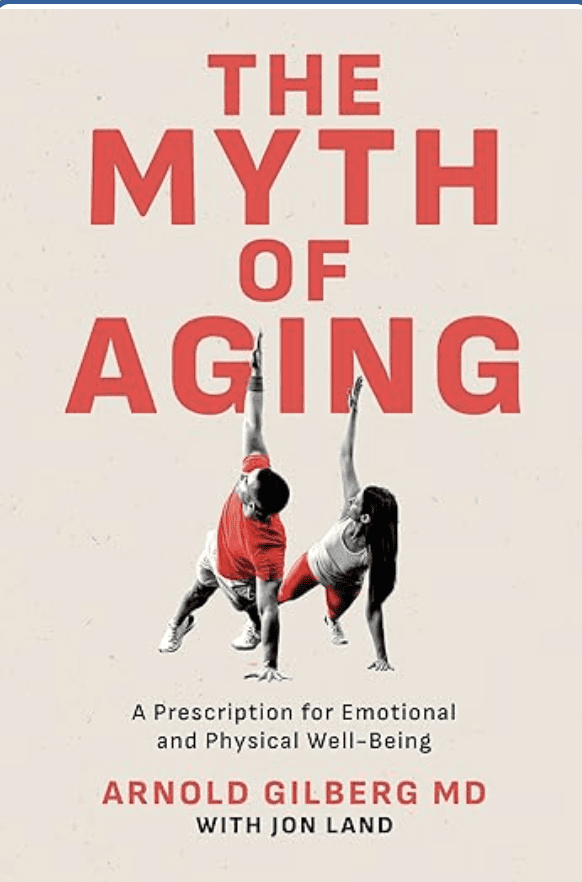
At a time when so many feel overwhelmed and uncertain about what it truly means to thrive, Dr. Arnold Gilberg, MD, PhD, offers a fresh perspective. In his book, The Myth of Aging, he challenges outdated ideas about growing older and reveals a vision of aging as a season of vitality, purpose, and freedom. Through movement, mindset, curiosity, gratitude, and human connection, Dr. Gilberg shows how even small daily habits can transform mental health and enrich life.
Well-being, he says, doesn’t require a dramatic life overhaul. Change begins with perspective—and one small act of movement.
“The first thing they need to do is develop a better attitude about living—that’s the first exercise they need to perform. They have to acknowledge that life is a roller coaster, that they may be in the midst of a dip, but things are going to get better. To help get there, they can try very simple physical activities—walking half a block, joining a TV or web-based exercise class, yoga or tai chi. Even a few minutes can make them feel alive and capable of moving and feeling better.”
This connection between body and mind is more than metaphorical; it is biological. Research shows that movement profoundly affects the brain and the body.
“All the latest research, including a 2023 study from Washington University School of Medicine, suggests that parts of the brain that regulate movement are intrinsically connected to networks responsible for thinking and planning. Other studies, notably from the National Institute of Health, indicate that how we feel about ourselves is rooted in the body’s gut microbiome, which benefits from exercise. When you feel better physically, your attitude improves, and the brain begins to see new possibilities that therapy alone may not achieve.”
This mind-body link also shapes purpose, engagement, and fulfillment.
“The first thing we need to do is accept that the mind and body are connected. They’re unified. Start each day waking up grateful for being alive, and it becomes easier to establish a routine of regular physical activity.”
At 89, turning 90 in six months, Dr. Gilberg embodies his philosophy: curiosity and engagement have no age limit.
“Staying engaged means being curious about everything. Engagement and involvement are synonymous. You have to be involved to maintain a healthy mental attitude, and that has to be a vital part of life. That’s why my book, The Myth of Aging, is so critical—it shows ways to become more involved with the world around you. You can’t wait for tomorrow. Enjoy new experiences and endeavors at any age.”
Gratitude, he emphasizes, is transformative.
“Being grateful for everyday life is not just an expression that sounds good. Someone who is grateful naturally enjoys life more. It’s about focusing on the positive, engaging in new experiences, and removing negativity. The reverse is like living in a dark room where you can’t see the beauty around you. Gratitude opens your eyes.”
He also addresses a modern dilemma: loneliness in a hyperconnected world.
“I see patients who boast about their social media friends and followers, but they’re still lonely. Human beings need physical connection. Social media is superficial and cannot provide the connection we need. Real connection comes from relationships or communities of like-minded people who understand and accept each other. Building community takes effort. If it doesn’t come to you, go out, find it, and develop it. Time is better spent there than scrolling endlessly through feeds.”
The Myth of Aging challenges the idea that aging equals decline.

“People who age are still vital and have tremendous knowledge and experience to share. Aging is not decline—it’s shameful that society views it that way. That’s why I wrote The Myth of Aging: to debunk stereotypes and show that we can continue contributing and seeking new experiences at any age.”
The book is more than a guide—it is a manifesto for living fully, every day. Dr. Gilberg encourages readers to embrace the small, intentional acts that shape mental and emotional well-being: a short walk, a moment of gratitude, a curiosity pursued, a real-world connection nurtured. Each choice, he suggests, compounds over time, creating a life that feels rich, engaged, and alive.
In a world that often equates youth with relevance, Dr. Gilberg offers a luxurious alternative: a life of depth, meaning, and elegance that grows more refined with age. The closing pages of The Myth of Aging remind us that the journey is ongoing, that engagement is timeless, and that the best years are not behind us—they are unfolding now, for anyone willing to approach life with curiosity, gratitude, and courage.
Aging, he concludes, is less about counting years and more about living them—with intention, connection, and joy.
The Myth of Aging is now available for purchase.
Amazon Link