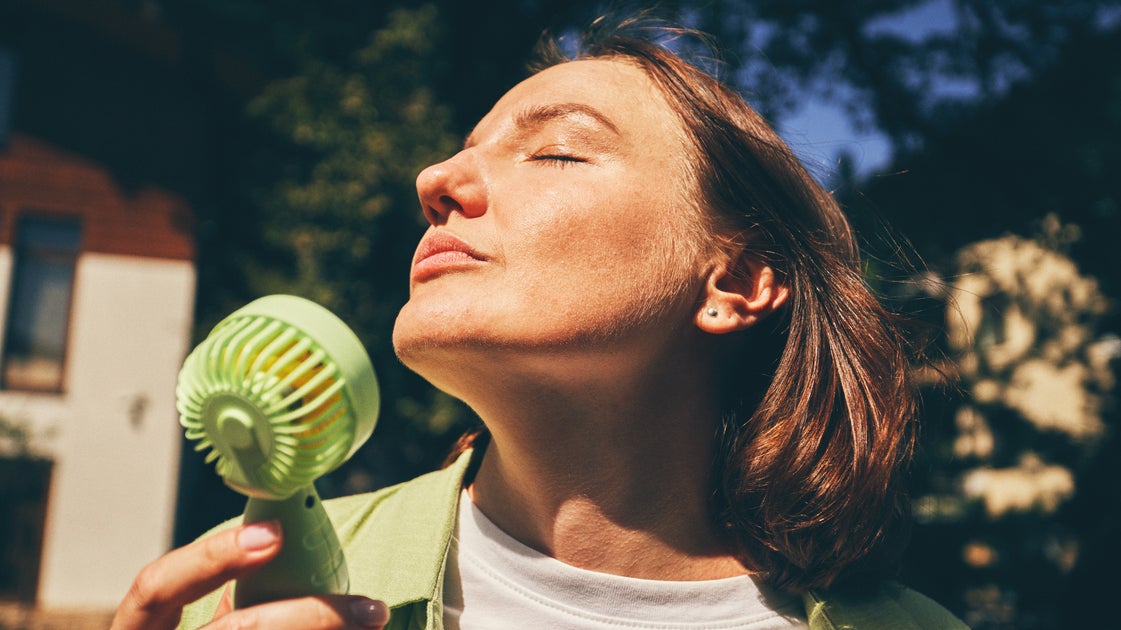

With record-breaking heat sweeping across the country and around the world, people are increasingly seeking ways to stay cool and turning to all kinds of tips, tricks and folk remedies to do it. But how many of those heat-beating hacks are actually grounded in science?
HuffPost asked experts to weigh in on some of the most common old wives’ tales about surviving the heat, from damp sheets to cabbage leaves to yogurt on windows. The verdict? Some have truth to them, others don’t hold up to scrutiny, and a few could actually backfire depending on the conditions.
1. “Sleeping under a damp sheet cools you down.”
“The ‘Egyptian method’ involves sleeping under a damp sheet to cool down,” Dr. Swapnil Patel, vice chair of the department of medicine at Hackensack Meridian Jersey Shore University Medical Center, told HuffPost. “A damp towel can be used as an alternative.”
The cooling effect is the result of a simple evaporation process.
“A lightly damp sheet or cloth can cool through evaporation,” said Dr. Anthony T. Lagina, an associate professor in the department of emergency medicine at Wayne State University, Detroit Medical Center. “As water evaporates from the fabric, it pulls heat away from the skin. This works best in dry, well-ventilated conditions.”
Thus, the effectiveness of sleeping under a damp sheet is limited based on environment. And, the technique can in fact have the opposite effect in the wrong conditions.
“It works poorly in high humidity because water and sweat do not evaporate efficiently,” Lagina explained. “In humid conditions, a damp sheet may feel clammy, disrupt sleep or irritate skin.”
There are other ways to make your sleep environment safe in hot conditions, however.
“To deliver true peace of mind and comfort, I recommend focusing on proven environmental controls such as keeping your bedroom well-ventilated, utilizing lightweight, breathable bedding, taking a cool shower before bed and prioritizing consistent fluid replenishment throughout the day,” said Dr. Scott Braunstein, chief medical officer at Sollis Health.
2. “Smear yogurt on your windows to keep the heat out.”
The idea behind putting yogurt on windows ― a tip that has circulated in the U.K. ― is that the light-colored yogurt forms a thin film on the glass that reflects incoming solar radiation, so less heat passes through the window.
“Putting something reflective on your windows will help keep the sun out and cool your home,” said Anna Bershteyn, an associate professor in the department of population health at NYU Langone Health. “I would suggest a reflective window film, metallic foil or shades rather than yogurt ― that would be more effective and less messy.”
Lagina also advised against putting yogurt on your windows to keep heat out in favor of more practical options.

“It is not a reliable cooling strategy and creates sanitation concerns, including odor, bacterial or mold growth, insects and potential surface damage,” he said.
He also weighed in on a similar hack ― putting wet towels or cloths on your windows.
“A wet towel or damp cloth over a window can provide only mild cooling if the air passing through it evaporates,” Lagina explained. “In humid weather, this may simply add moisture indoors, making sweating less effective. Better home-cooling approaches include blocking direct sunlight with curtains or reflective shades, opening windows only when the outside air is cooler and using fans to move air across the skin.”

Ekaterina Goncharova via Getty Images
3. “Hot beverages cool you faster than cold ones.”
“Some studies have found that hot drinks and spicy foods increase sweating, which could be helpful in dry heat,” Bershteyn said. “Think deserts ― where your sweat evaporates so fast that your skin is dry. If your sweat is dripping off of you ― as it does in muggy, humid heat ― more sweat won’t cool you any faster.”
When sweat evaporates, heat is removed from your body, but in humid conditions, drinking a hot beverage will instead probably just be uncomfortable and add heat initially.
“During heat stress, cool water or an electrolyte-containing drink is usually more practical,” Lagina said. “Moderate caffeine is generally acceptable for many adults, but excessive caffeine and alcohol should be avoided during extreme heat. Alcohol reduces judgment and can worsen dehydration and heat illness risk.”
Indeed, the type of beverage ― hot or cold ― that you consume makes a big difference.
“Cold water or targeted electrolyte solutions are consistently the better choice because they are refreshing, encourage people to consume a higher volume of fluids, and provide immediate physical relief from the heat,” Braunstein said. “Also keep in mind that many hot drinks, such as coffee or tea, are caffeinated, and the caffeine both speeds up your metabolism increasing heat production, and acts as a diuretic contributing to fluid losses and dehydration.”
4. “Cooling your pulse points lowers your temperature more quickly.”
“Cooling the neck, armpits, groin, wrists and the backs of the knees can help, as major blood vessels are near the skin surface,” Lagina said. “Cool packs or wet towels can remove heat from blood and skin.”
Basically, you can quickly cool the body by cooling the parts where blood flows close to the skin.
“Applying cold can briefly cool circulating blood locally, which produces a perception of relief,” said dermatologist Dr. Brendan Camp. “However, this effect is modest and does not significantly lower overall core body temperature on its own. It is best understood as a sensory or comfort-based strategy rather than a true systemic cooling method. It works best when combined with airflow or general body cooling.”
Lagina similarly noted that this trick is “not magic,” as some situations require cooling across the fuller surface of the body.
“For serious overheating, broader cooling is better ― a cool shower or bath; misting with a fan; cold, wet sheets; or cold-water immersion when safe and appropriate,” he said.
Pay attention to potential heatstroke symptoms, which require urgent medical attention.
“If you begin to experience symptoms such as dizziness, nausea, heavy sweating, muscle cramps or unusual fatigue, it is critically important to immediately seek medical care, most often at an urgent care or ER,” Braunstein said. “Heat-related illness is a spectrum that ranges from very mild to life-threatening, so time is truly of the essence.”
5. “Placing a cold cabbage leaf under your hat or on your body can cool you down.”
“Using cabbage leaves is a real folk remedy, for their cooling properties,” Patel said. “While more commonly studied for reducing pain and swelling in conditions like osteoarthritis, the cooling effect of the leaves, with their water content, is real.”
In the context of heat, cabbage leaves can provide a brief, localized cooling sensation, but experts say don’t get too excited about it.
“My mother has tried to treat quite a few of my childhood illnesses with cabbage leaves,” Bershteyn said. “Sadly, I’m not aware of any special cooling powers of cabbage leaves. But anything cold and wet on your head can feel nice.”
The effect is not long lasting, however.
“It warms quickly, does not maintain consistent heat transfer and does not meaningfully affect core temperature,” Camp said. “It is not an effective or reliable cooling strategy from a physiologic standpoint.”
The cabbage leaf trick has historical precedent. Baseball legend Babe Ruth was known to place a cold cabbage leaf under his cap during games to stay cool in the sweltering summer heat.
“A cold cabbage leaf can cool by contact and moisture, just like any cold wet object,” Lagina said. “There is no special heat-related medical property in cabbage. A clean, damp cloth, a cooling towel, a chilled bandana or an ice pack wrapped in cloth is more practical and hygienic. Folk remedies should not delay standard cooling or emergency care.”

Uma Shankar sharma via Getty Images
6. “Placing a bowl of ice in front of a fan works like air conditioning.”
Placing a bowl of ice in front of a fan is a popular TikTok hack for cooling down a room, but experts say the effect is more limited than most people expect.
“This can create a small area of cooler air for someone sitting close by, but it is not an effective way to cool an entire room,” Lagina said. “The ice absorbs heat as it melts, and then the effect stops. It may be useful for short-term personal comfort, especially with good airflow, but it should be paired with hydration, reduced activity, shade and access to air conditioning when possible.”
Bershteyn also noted that a bowl of ice in front of a fan probably won’t meaningfully cool a room.
“In fact, if the ice was made in a freezer in the same room, the heat coming from the back of the freezer would offset the cooling from the ice,” she said. “But if you sit directly in front of the ice, you might get a personal, chilled breeze.”
Here’s what experts actually recommend for staying safe in the heat.
“Many folk cooling methods work only when they improve evaporation, conduction, shade or airflow,” Lagina said. “They are not substitutes for air conditioning, hydration, rest and urgent medical care when heat illness is suspected.”
There are other important facts and precautions to keep in mind as you try to stay safe and cool in extreme heat.
“It takes several weeks for a body to adjust to heat, which is why the U.S. sees more heat-related deaths in the spring than in the summer,” Bershteyn said. “While scientists don’t yet know the exact best way to condition yourself for heat, one thing is clear: Being in good physical shape is a huge benefit.”
She recommended trying to stay physically fit in the springtime and all year-round to make those heat wave days easier to get through. Still, don’t assume that healthy athletes can’t fall victim to heat-related illness.
“Fitness does not eliminate risk,” Lagina said. “Athletes, outdoor workers, children, older adults, pregnant people and people with chronic health conditions are all vulnerable.”
The wrong combination of conditions and exertion can affect even the healthiest people.
“We see healthy young adults and children develop heat exhaustion after prolonged sun exposure, strenuous activity or dehydration,” Braunstein said.
He noted that the best prevention is much simpler than those interesting at-home remedies.
“Stay hydrated before you feel thirsty, wear lightweight clothing, seek shade during the hottest part of the day and take breaks in air-conditioned spaces whenever possible,” Braunstein said.
Loose, thin, light-colored clothing and hats can provide helpful protection, as can periodic cool showers and baths, misting fans, ice packs and damp cloths. When you reach the peak heat of the day, take advantage of air conditioning and avoid strenuous activity. Drink plenty of water and keep your electrolytes replenished if you’re exercising or otherwise sweating a lot.
“Never leave children, older adults, vulnerable people or pets in parked cars,” Lagina said. “Check on older adults, children, outdoor workers, people living alone and anyone with chronic medical conditions. High humidity, poor airflow, dehydration and prolonged heat exposure all increase risk.”
Knowing how to recognize heat illness and act quickly is also incredibly important. Signs of heat exhaustion include heavy sweating, weakness, dizziness, headache, nausea, muscle cramps, cool or clammy skin and feeling faint.
“If these occur, move to shade or air conditioning, stop activity, loosen clothing, sip cool fluids if alert, and use cool, wet cloths, misting, fanning or a cool shower,” Lagina said.
Heatstroke is a more serious medical emergency with warning signs that include confusion, altered behavior, fainting, seizure, slurred speech, severe weakness, a very hot body or an inability to cool down. If you suspect heatstroke, immediately call 911 and begin cooling while waiting for help by moving to a cooler place, removing excess clothing and applying cool water, fan mist, ice packs and/or cold, wet towels to your neck, armpits and groin.
“If symptoms like dizziness, vomiting, confusion, fainting or difficulty breathing develop or don’t quickly improve after cooling down and rehydrating, don’t rely on home remedies,” said Braunstein. “Early treatment can prevent progression to the life-threatening conditions that are on the far end of the clinical spectrum.”