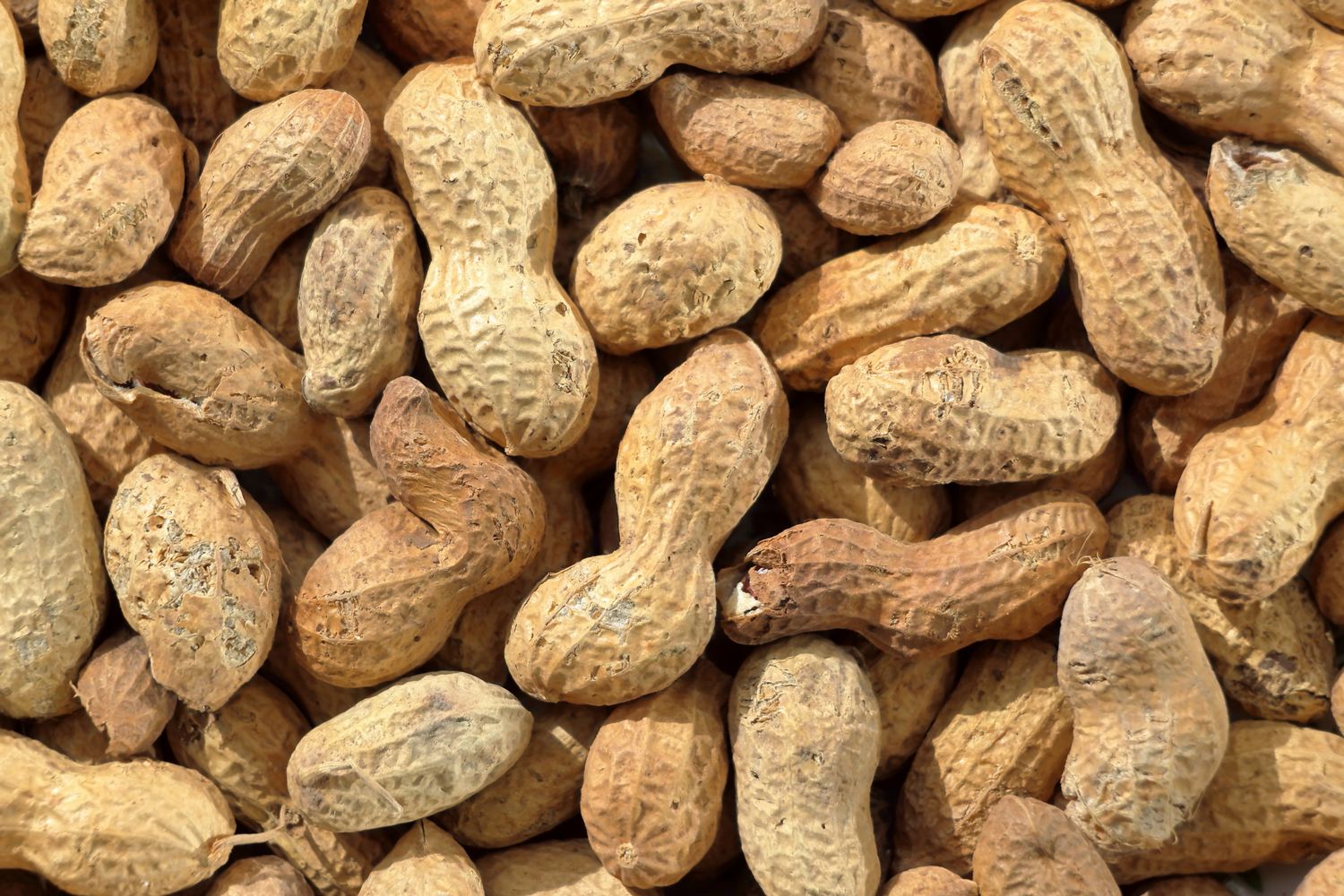

There is a canister of cocktail peanuts from the holidays, or a bag of in-shell peanuts you meant to roast, and you can’t remember when you bought it. Do peanuts go bad? They do, through rancidity and mold. Here is what the National Peanut Board, university extension guides, USDA and FDA say about shelf life, storage and spoilage.
Do peanuts go bad?
The Short Answer: Yes. Peanuts can turn rancid or grow mold, especially with heat or moisture. The National Peanut Board lists bagged peanuts, in the shell or out, at 1 to 2 months in the pantry and 4 to 6 months in the refrigerator. It lists unopened cans or jars at 2 years. These are quality estimates, not a promise of safety. Discard peanuts with visible mold, because USDA lists nuts among foods to throw out when moldy and FDA names peanuts among the foods most susceptible to aflatoxins. A normal look and smell can’t rule out harmful bacteria, per UC.
For a complete pantry and fridge reference, see our Food Storage Guide. For peanut products, see whether peanut butter goes bad, whether peanut butter needs to be refrigerated and whether PB2 goes bad. For other nuts, see whether almonds, pecans, pistachios and walnuts go bad.
📋 Peanuts: At a Glance
| Pantry (room temperature) | 1 to 2 months for bagged peanuts, in the shell or out (National Peanut Board). Kansas State and NDSU list 4 months for unopened in-shell nuts |
| Refrigerator (40°F or colder) | 4 to 6 months (National Peanut Board). NDSU lists 4 to 6 months for opened nuts, and NCHFP lists one year for nuts |
| Freezer (0°F or colder) | Kansas State says to freeze for longer storage. NCHFP lists 1 to 3 years for nuts, depending on the type |
| Unopened cans or jars | 2 years (National Peanut Board). Kansas State lists 3 months and NDSU 1 year for an unopened vacuum can of nuts |
| Moldy peanuts | Discard them. USDA lists legumes and nuts under “Discard” |
| Rancid peanuts | UC says rancid nuts are not unsafe, but quality is poor. We’d throw them away |
| “Best by” date | A quality date, not a safety date, per USDA |
| Best storage | Cold, sealed and dry |
Key Takeaways
- The National Peanut Board lists bagged peanuts, in the shell or out, at 1 to 2 months in the pantry and 4 to 6 months in the refrigerator, and says to store peanuts in airtight containers.
- UC’s consumer nut guide says peanuts are a legume, not a tree nut, and that its storage, safe handling and allergy information applies to peanuts as well as tree nuts. It lists no peanut-specific times.
- USDA’s mold page lists peanut butter, legumes and nuts under “Discard” when moldy, and says not to sniff a moldy item.
- FDA says the foods most susceptible to aflatoxins include peanuts, and that regularly eating foods with aflatoxins can increase the risk of liver cancer. FDA’s nonbinding compliance guidance says it may consider peanuts and peanut products with more than 20 parts per billion of total aflatoxins to be adulterated.
- UC says refrigeration and freezing do not destroy the bacteria behind salmonellosis outbreaks linked to dried foods, and that harmful bacteria cannot be determined by sight, smell, taste or texture.
- In 2024, Hormel recalled a limited number of Planters honey roasted peanuts for possible Listeria. That recall is historical, not a current finding about any bag.
Boiled, Raw, Flavored and Coated Peanuts
This page is about plain peanuts, in the shell or shelled, raw or roasted. Boiled peanuts are a cooked food with their own rules, covered below. For peanut butter, peanut oil and flavored, candied or chocolate-coated peanuts, follow the label, and refrigerate after opening if the label says so.
Do Peanuts Go Bad?
Yes, though they keep a good while when stored cold and dry. The main changes are rancidity, which happens when the oils in the nut break down, and mold. UC Agriculture and Natural Resources’ consumer guide to nuts (Publication 8406, August 2010) says peanuts are a legume, not a tree nut. It says its storage, safe handling and allergy information applies to peanuts as well as tree nuts. Its storage table doesn’t list peanuts, and it says room temperature storage causes nut oils to become rancid quicker.
Peanut-specific storage times are scarce. The National Peanut Board’s peanut butter article (published June 2, 2023) includes a table for whole peanuts. Kansas State University Extension’s cupboard guide, NDSU Extension’s food storage guide and Alabama Extension’s storage charts list nuts as a group. They disagree in places, so the table shows each. We treat every figure as a quality estimate, which is our own reading.
| Storage | Our suggested guideline | What the sources say |
|---|---|---|
| Pantry, bagged, in the shell or out | 1 to 2 months for bagged peanuts. Refrigerate after opening, or sooner for longer-lasting quality | National Peanut Board: 1 to 2 months. Kansas State and NDSU: 4 months for unopened in-shell nuts. Alabama Extension: 9 months for nuts. The figures cover different things, so we use the shortest |
| Pantry, unopened can or jar | Follow the package date | National Peanut Board: 2 years. Kansas State: 3 months for an unopened vacuum can of nuts. NDSU: 1 year for a vacuum can and 3 months for other unopened packaging |
| Pantry, opened package | Refrigerate it | Kansas State: 2 weeks at 70°F, and refrigerate after opening |
| Refrigerator, sealed | About 4 to 6 months for best quality | National Peanut Board: 4 to 6 months. NDSU: 4 to 6 months for opened nuts. NCHFP: one year for nuts at 32 to 45°F |
| Freezer, sealed | About 3 months for best quality, our conservative target. Longer is within published nut ranges | Kansas State: freeze for longer storage. NCHFP: 1, 2 or even 3 years for nuts, depending on the type. Alabama Extension: 3 months for home-frozen nuts |
| Left in a warm spot | Not recommended for long | UC: warmer storage shortens quality time for nuts |
How Long Do Peanuts Last in the Pantry?
Only a short time, by the National Peanut Board’s numbers. Its table lists bagged peanuts, in the shell or out, at 1 to 2 months in the pantry, and unopened cans or jars at 2 years. Kansas State and NDSU list 4 months for unopened in-shell nuts and 2 weeks for an opened package at 70°F. Alabama Extension’s chart lists nuts at 9 months in the pantry.
That is a wide spread, and none of the charts is peanut-specific except the National Peanut Board’s. Store unopened cans and jars in a cool, dry pantry according to the label, and don’t treat the printed date as a promise of safety. USDA says to discard heavily rusted or deeply dented cans, and not to use food from leaking or bulging ones. After opening, or for a bag of in-shell peanuts, we’d refrigerate them unless you’ll finish them in a few weeks, which is our own suggestion.
Do Peanuts Need to Be Refrigerated?
Not on day one, but cold storage helps. The National Peanut Board lists 4 to 6 months in the refrigerator for bagged peanuts, compared with 1 to 2 months in the pantry. Kansas State says to refrigerate nuts after opening, and NDSU’s opened-nut figure is for refrigerated storage. The National Center for Home Food Preservation (a 2014 post) says refrigerated nuts at 32 to 45°F will maintain quality for one year.
If you eat them within a few weeks, a sealed container in a cool, dry cupboard is reasonable, which is our own reading. If the package has its own storage directions, follow those.

Can You Freeze Peanuts?
Yes. Kansas State says to freeze nuts for longer storage. The NCHFP post says frozen nuts at 0°F will maintain quality for 1, 2 or even 3 years depending on the type of nut. Alabama Extension lists home-frozen nuts at 3 months. These are general nut figures, not a peanut-specific agreement. For best quality we’d use the shorter 3-month figure, which is our own conservative target.
Freezing does not change the safety picture. UC says refrigeration and freezing do not destroy the bacteria behind the salmonellosis outbreaks it describes in dried foods. We found no peanut-specific source on how to thaw peanuts, so we’d open the container as needed and reseal it.
Do Peanuts Last Longer in the Shell?
The National Peanut Board’s table gives one figure for bagged peanuts, in the shell or out. Kansas State and NDSU list 4 months for unopened in-shell nuts. We found no source that gives a longer pantry time for in-shell peanuts than for shelled ones. UC says washing nuts in the shell is not recommended, because the extra moisture could encourage bacteria or mold growth, so keep them dry.
Homegrown peanuts need curing first. Clemson Cooperative Extension (updated January 2023) says not to allow peanuts to mold while drying or in storage. It says peanuts bagged in loosely woven containers and hung in a cool, dry area free of insects and rodents may be kept for several months without a significant loss in quality.
How Should You Store Peanuts?
Keep them sealed, cold and dry. The National Peanut Board says to store peanuts in airtight containers. NCHFP says nuts store very well when properly dried and kept in air-tight containers in a cool location.
Steps we would take:
- Move the peanuts from the opened bag to a clean, dry container with a tight lid, which keeps out moisture and odors.
- Keep the container in the refrigerator if you won’t finish it within a few weeks.
- Keep in-shell peanuts dry, and don’t wash them before storing.
- Freeze them for longer storage, in a sealed freezer bag or container.
- Label the container with the date you opened it, which is our own suggestion.
What Does the Best-By Date Mean on Peanuts?
USDA says the phrase “Best if Used By” indicates when a product will be of best flavor or quality, and that except for infant formula, dates are not an indicator of safety. It says food stored at home past its date should still be safe and wholesome if handled properly, until spoilage is evident. A date is a quality guide, not an automatic safety cutoff, and being within the date doesn’t make a bag safe by default, because storage and handling still matter. USDA’s shelf-stable food page says dating is for quality, not safety, and that all foods eventually spoil if not preserved.
A can of peanuts past its date can still be fine if it was stored well, which is our own reading. If the peanuts have been stored somewhere warm, left open or exposed to moisture, their storage history matters more than the printed date. Look for visible mold, insects and signs of deterioration, but remember that normal appearance and smell can’t rule out harmful bacteria.
How Can You Tell if Peanuts Are Bad?
Start by looking for visible mold. If you see any, discard the peanuts without sniffing them, because USDA says not to sniff a moldy item. If there is no mold, check the smell and look. We found no peanut-specific source that describes the smell, so these are our own checklist items: a stale, sour or unusual smell, insects or webbing, damp nuts, or a soft, rubbery or shriveled texture. USDA specifically says to discard moldy nuts. The rest are our own checklist, not an agency list.
A normal smell and appearance don’t prove the peanuts are safe from bacteria. UC says harmful bacteria cannot be determined by sight, smell, taste or texture. USDA says spoiled food may show an off odor or texture, and if food shows signs of spoilage, don’t eat it. We don’t suggest tasting a suspicious peanut.
Are Rancid Peanuts Safe to Eat?
UC says rancid nuts are not unsafe, but it describes them as having a sharp flavor that most people find unpleasant. UC says its guidance covers peanuts as well as tree nuts. We’d throw rancid peanuts away, which is our own suggestion. Rancidity is a quality problem and does not tell you whether harmful bacteria are present. UC says harmful bacteria cannot be determined by sight, smell, taste or texture. Visible mold is a separate reason to discard peanuts.
Are Moldy Peanuts Dangerous?
Discard moldy peanuts. USDA’s mold page lists peanut butter, legumes and nuts under “Discard” for mold, and says foods processed without preservatives are at high risk for mold. It says you only see part of the mold on the surface, and that you shouldn’t sniff a moldy item because it can cause respiratory trouble. The page was last updated in August 2013.
Peanuts are also tied to aflatoxin. FDA says the foods most susceptible to aflatoxins include peanuts, corn, tree nuts such as Brazil nuts and pistachios, and some small grains. It says aflatoxins are mycotoxins produced by certain Aspergillus molds, and that regularly eating foods with aflatoxins can increase your risk of liver cancer. FDA’s compliance guidance for peanuts (revised June 2021) says FDA may consider peanuts and peanut products containing more than 20 micrograms per kilogram, or 20 parts per billion, of total aflatoxins to be adulterated. It excepts raw peanuts that will be further processed to remove moldy and defective nuts. The document is labeled nonbinding.
That level is an enforcement threshold that depends on laboratory testing, not a household safety test. Appearance and smell can’t tell you an aflatoxin concentration, so discarding moldy peanuts is the simple rule.
Can Peanuts Carry Salmonella or Listeria?
Dry foods are not a common source, but it can happen. UC says dry foods like nuts are not a common source of harmful bacteria. It adds that in recent years a number of dried foods have been associated with outbreaks of salmonellosis, including raw almonds, cereal, peanut butter, dried pet food, black pepper and sesame seeds. In May 2024, Hormel Foods Sales recalled a limited number of Planters products. They were 4-ounce packages of honey roasted peanuts and 8.75-ounce cans of deluxe lightly salted mixed nuts, which could have been contaminated with Listeria monocytogenes. The announcement reported no illnesses and said the products went to Publix and Dollar Tree distribution warehouses in the Southeast.
That notice is historical, not a current finding about any bag. If you aren’t sure about a bag, checking current recall notices is a sensible step, which is our own suggestion.
Do Boiled Peanuts Go Bad?
Yes, and they need different handling. The one extension source we found is a recipe from North Carolina Cooperative Extension’s Lenoir County Center (August 2025). It says boiled peanuts will keep 7 days in the refrigerator and several months in the freezer, stored in a sealed container. A second recipe on the same page says to refrigerate for up to 2 weeks or freeze. These are recipe notes, not a food safety guideline, and the two figures differ.
USDA’s leftovers page is the general rule for cooked food. It says to refrigerate cooked food within 2 hours, or within 1 hour above 90°F, and that leftovers can be kept in the refrigerator for 3 to 4 days or frozen for 3 to 4 months. Because the recipe figures run longer than USDA’s, we’d use USDA’s 3 to 4 days for the refrigerator, which is our own reading. If boiled peanuts smell sour or look slimy, discard them, which is our own checklist.
How Should You Store Roasted or Salted Peanuts?
Kansas State and NDSU both note that unsalted and blanched nuts keep longer than salted ones, with no number given, and those notes cover nuts in general. We found no source that compares raw and roasted peanuts. For roasted, salted, honey roasted or flavored peanuts, we’d follow the package date and refrigerate after opening, which is our own advice. Coated or chocolate-covered peanuts follow their own labels.
What Can You Make With Peanuts?
Use properly stored peanuts that show no signs of deterioration in cooking, and keep the rest cold. We have one recipe that calls for whole peanuts:
Peanut butter is a different product with its own storage rules, covered in the posts linked above. Cooking won’t restore the quality of rancid nuts or make moldy nuts suitable to use. Discard nuts with visible mold.
Signs Something Is Wrong
- Visible mold on the peanuts, inside shells or on the container. Don’t sniff it. Discard it.
- A stale, sour or rancid smell. This is our own checklist, not an agency list. Don’t sniff nuts that show mold.
- Insects, larvae or webbing in the bag or jar. UC says room temperature storage encourages insect growth.
- Soft, rubbery, shriveled or damp peanuts. This is our own checklist item.
- A recalled product. If your bag matches a recall notice, don’t eat it. Follow the notice’s instructions to discard or return it.
- Unknown history. If the bag was open for a long time in a warm kitchen, discarding it is the cautious choice.
We don’t suggest tasting nuts to test them. UC says harmful bacteria cannot be determined by sight, smell, taste or texture.
Things That Don’t Automatically Mean Trouble
- Broken pieces and small crumbs at the bottom of the bag or can, which is our own reading.
- Dust or skin flakes from the peanut skins at the bottom of the bag, which is our own reading. Check for mold and smell as well.
These are quality observations, not safety tests. Mold, odor and storage history matter more.
Quick Storage Reference
- Pantry, bagged: 1 to 2 months per the National Peanut Board. Refrigerate after opening, or sooner for longer-lasting quality. Moving old peanuts into the refrigerator does not restore lost quality.
- Pantry, unopened can or jar: Follow the package date.
- Opened: Seal it and refrigerate.
- Refrigerator: About 4 to 6 months for best quality.
- Freezer: About 3 months for best quality, our conservative target.
- Boiled peanuts: Refrigerate within 2 hours. USDA says use leftovers within 3 to 4 days. A North Carolina Extension recipe says 7 days.
- Mold: Discard it. Don’t sniff it.
| Situation | What to Do |
|---|---|
| Unopened can, 3 months past the date | Check for mold, insects and a stale smell. The date is a quality guide, per USDA, but a normal look and smell can’t rule out harmful bacteria. |
| Opened bag in the pantry for 2 months | Kansas State lists 2 weeks at 70°F for opened nuts, which is a quality guideline, not a safety cutoff. Two months is well past it. Refrigeration won’t undo what has already happened, and UC says it does not destroy the bacteria behind salmonellosis outbreaks in dried foods. We’d discard any with mold, insects or an off smell, and replace the bag if you have doubts. |
| In-shell peanuts in the pantry for 6 months | That is past the National Peanut Board’s 1 to 2 months and the 4 months Kansas State and NDSU list for unopened in-shell nuts. Check for mold, insects and a stale smell. If you find mold, our conservative recommendation is to discard the whole bag rather than pick out the visibly moldy kernels. We’d replace the bag if you have doubts. |
| Peanuts in the freezer for 2 years | NCHFP gives a general 1-to-3-year range for nuts but doesn’t say which length applies to peanuts, and this is beyond our conservative 3-month quality target. Check for freezer damage and off odors, and expect lower quality. |
| A few peanuts with white or green fuzzy spots | Discard the peanuts, and our conservative recommendation is to discard the whole bag or container. USDA says to discard moldy nuts. |
| Peanuts that smell stale or sour | Discard them. This is our own rancidity check, and UC says rancid nuts are poor quality. |
| Small insects or webbing in the bag | Discard it. UC says room temperature storage encourages insect growth. |
| In-shell peanuts that got wet | Discard any with mold or signs of spoilage, and don’t assume drying makes the rest safe. UC says washing nuts in the shell is not recommended because the extra moisture could encourage bacteria or mold growth, and we found no recovery step in the sources. |
| Boiled peanuts left out overnight | Discard them. USDA says to refrigerate cooked food within 2 hours. |
| A bag that matches a recall notice | Don’t eat it, and follow the recall notice’s instructions to discard or return it. |
How We Checked This
In November 2026 we read UC Agriculture and Natural Resources’ consumer guide to nuts (ANR Publication 8406, August 2010), which says peanuts are a legume and lists no peanut times. We read the National Peanut Board’s article on peanut butter shelf life (published June 2, 2023), which includes a table for whole peanuts. We read Kansas State University Extension’s cupboard storage guide (the PDF reads MF3131 rev. June 2026) and NDSU Extension’s food storage guide (reviewed January 2023). We read Alabama Extension’s storage charts, a National Center for Home Food Preservation post on nutmeats (November 2014) and Clemson Cooperative Extension’s peanut fact sheet (updated January 2023). We read USDA’s pages on mold, shelf-stable food, product dating and leftovers, FDA’s mycotoxins page, FDA’s staff guidance on aflatoxins in peanuts (June 2021), and FDA’s May 2024 notice for the Planters recall. Peanut-specific storage times are scarce, so apart from the National Peanut Board’s table we apply the nut figures to peanuts as our own reading. For boiled peanuts we read a recipe page from North Carolina Cooperative Extension’s Lenoir County Center (August 2025). It is a recipe note, not a food safety guideline. We use USDA’s leftovers rules as our own reading. We could not open USDA’s FoodKeeper data for peanuts, so we don’t cite it here. The suggested guidelines, checklists and recipe notes are our own judgment. Our own suggestions say we’d or we suggest. This article is general information, not medical advice.
Peanuts FAQ
Do peanuts go bad?
Yes. The National Peanut Board lists bagged peanuts at 1 to 2 months in the pantry and 4 to 6 months in the refrigerator. They can turn rancid or grow mold, so cold, airtight storage helps.
How long do peanuts last?
The National Peanut Board lists 1 to 2 months in the pantry, 4 to 6 months in the refrigerator, and 2 years for unopened cans or jars. Other charts list nuts as a group with different times, so treat these as quality estimates.
How long do peanuts last after opening?
Kansas State lists 2 weeks for an opened package of nuts at 70°F and says to refrigerate after opening. NDSU lists 4 to 6 months for opened nuts kept in the refrigerator. We’d seal and refrigerate them.
How long do unopened peanuts last?
The National Peanut Board lists 2 years for unopened cans or jars. Kansas State lists 3 months for an unopened vacuum can of nuts and NDSU lists 1 year. Follow the date on the package.
Do peanuts expire?
Dates on the can are about quality. USDA says dates are not an indicator of safety except for infant formula. A date is a quality guide, not an automatic safety cutoff, and storage and handling still matter.
Can you eat expired peanuts?
Peanuts may remain usable after a best-by date if they were stored properly, since USDA says dates are about quality, not safety. Discard peanuts that are moldy, rancid, infested or recalled. A normal look and smell can’t rule out harmful bacteria, per UC.
Do peanuts need to be refrigerated?
Not right away, but the National Peanut Board lists 4 to 6 months in the refrigerator versus 1 to 2 months in the pantry. Kansas State says to refrigerate nuts after opening.
Can you freeze peanuts?
Yes. Kansas State says to freeze nuts for longer storage, and NCHFP says frozen nuts keep quality for 1, 2 or even 3 years depending on the type. Alabama Extension lists 3 months. These are general nut figures, and for best quality we’d use the shorter 3-month figure, which is our own conservative target.
Do peanuts go bad in the shell?
They can. The National Peanut Board gives one set of times for peanuts in the shell or out, and Kansas State and NDSU list 4 months for unopened in-shell nuts. Keep in-shell peanuts dry.
See also
How can you tell if peanuts are bad?
First look for visible mold, and if you see it, discard the peanuts without sniffing them. If not, check for a stale or sour smell, insects or dampness, which is our own checklist. A normal look and smell can’t rule out harmful bacteria, per UC.
How can you tell if peanuts are rancid?
UC describes rancid nuts as having a sharp flavor that most people find unpleasant, and we don’t suggest tasting to check. A stale, sour or unusual smell is a reason to discard them, which is our own checklist. Don’t sniff nuts that show mold, per USDA.
Are rancid peanuts dangerous?
UC says rancid nuts are not unsafe, but they have a sharp flavor most people find unpleasant. Rancidity does not tell you whether harmful bacteria are present, and visible mold is a separate reason to discard.
Can moldy peanuts make you sick?
USDA lists peanut butter, legumes and nuts under “Discard” for mold. FDA says peanuts are among the foods most susceptible to aflatoxins, which certain Aspergillus molds produce. You can’t tell by looking which mold is present.
What is aflatoxin?
FDA says aflatoxins are mycotoxins produced by certain Aspergillus molds, and that regularly eating foods with aflatoxins can increase your risk of liver cancer. Peanuts are among the most susceptible foods, and FDA’s nonbinding guidance says it may consider peanuts with more than 20 parts per billion of total aflatoxins adulterated.
Can you test peanuts for aflatoxin at home?
Appearance and smell can’t establish an aflatoxin concentration. FDA’s 20 parts per billion threshold depends on laboratory testing, not a home visual check, so discard moldy peanuts.
Can peanuts have Salmonella or Listeria?
UC says dry foods like nuts are not a common source of harmful bacteria. In May 2024, Hormel recalled a limited number of Planters products, including honey roasted peanuts, for possible Listeria. UC also notes that dried foods, including peanut butter and raw almonds, have been linked to salmonellosis outbreaks, and that refrigeration and freezing do not destroy that bacteria.
Were peanuts recalled?
In May 2024, Hormel Foods Sales recalled 4-ounce packages of Planters honey roasted peanuts and 8.75-ounce cans of deluxe lightly salted mixed nuts, per FDA. It is historical. If you aren’t sure about a bag, checking current recall notices is our own suggestion.
How should you store peanuts?
In an airtight container, cold and dry. The National Peanut Board says to store peanuts in airtight containers. Refrigerate them, or freeze them for longer storage.
Is it OK to leave peanuts out on the counter?
For a short time, yes, which is our own reading. UC says room temperature makes nut oils go rancid sooner, and the National Peanut Board lists only 1 to 2 months in the pantry, so don’t leave a big bowl out for weeks.
Should you wash peanuts in the shell?
UC’s guide says washing nuts in the shell is not recommended, because the extra moisture could encourage bacteria or mold growth.
Do roasted peanuts go bad faster than raw?
We found no source that compares raw and roasted peanuts. Kansas State and NDSU say unsalted and blanched nuts keep longer than salted ones, with no number. For roasted or salted peanuts, follow the package date.
How long do shelled peanuts last?
The National Peanut Board lists bagged peanuts, in the shell or out, at 1 to 2 months in the pantry and 4 to 6 months in the refrigerator. Kansas State has no separate row for shelled nuts, and NDSU lists 4 to 6 months for opened nuts kept in the refrigerator.
How long do roasted or cocktail peanuts last?
We found no source that gives a separate time for roasted peanuts. Use the National Peanut Board’s figures for bagged peanuts, or the date on an unopened can or jar, and refrigerate after opening. The National Peanut Board lists unopened cans or jars at 2 years.
Do boiled peanuts go bad?
Yes. A North Carolina Extension recipe says boiled peanuts keep 7 days in the refrigerator, and USDA says cooked leftovers keep 3 to 4 days. We’d use USDA’s shorter figure, which is our own reading, and refrigerate within 2 hours.
Can you freeze boiled peanuts?
Yes. A North Carolina Extension recipe says boiled peanuts keep several months in the freezer, stored in a sealed container. USDA says frozen leftovers can be kept 3 to 4 months, with some loss of moisture and flavor after longer storage. We’d use the shorter USDA figure.
How long do homegrown peanuts last?
Clemson Extension says cured peanuts bagged in loosely woven containers in a cool, dry area free of insects and rodents may be kept for several months without a significant loss in quality. It says not to allow peanuts to mold while drying or in storage.
Can insects get in peanuts?
UC says room temperature storage encourages insect growth in nuts, which it says may be important for backyard-harvested nuts, and it describes freezing at 0°F for 48 hours to kill pests and eggs. Clemson says to store cured peanuts in a place free of insects and rodents.
Can you put old peanuts out for birds?
Our backyard birds guide says moldy or spoiled food can cause fatal respiratory illness in birds, and to discard food that is wet, clumped or discolored. We wouldn’t put out peanuts with mold or an off smell. We found no agency source on aflatoxin and birds.
Is it OK to eat peanuts with a white coating?
We can’t identify a white coating from a description, so don’t assume it is harmless. If it looks fuzzy, powdery or spreading, discard the peanuts without sniffing them. USDA says to discard moldy nuts.
Are shriveled or discolored peanuts bad?
We found no university or agency source that ties shrinking or color to spoilage. We’d treat soft, rubbery or shriveled peanuts as a sign of age, which is our own checklist. Texture and color alone don’t establish safety, so discard peanuts with mold or other signs of deterioration, and don’t use appearance or smell to clear a recalled or improperly stored product.
Are peanuts a nut?
No. UC’s consumer guide says peanuts are a legume like soybeans, not a tree nut. It says its storage, safe handling and allergy information applies to peanuts as well as tree nuts.
What can I make with peanuts?
Our apple pretzel nachos use roasted peanuts, chopped, along with peanut butter.
Further Reading

Better Living may earn commissions through affiliate links and may occasionally feature sponsored or partner content. If you make a purchase through our links, we may receive a small commission at no cost to you.