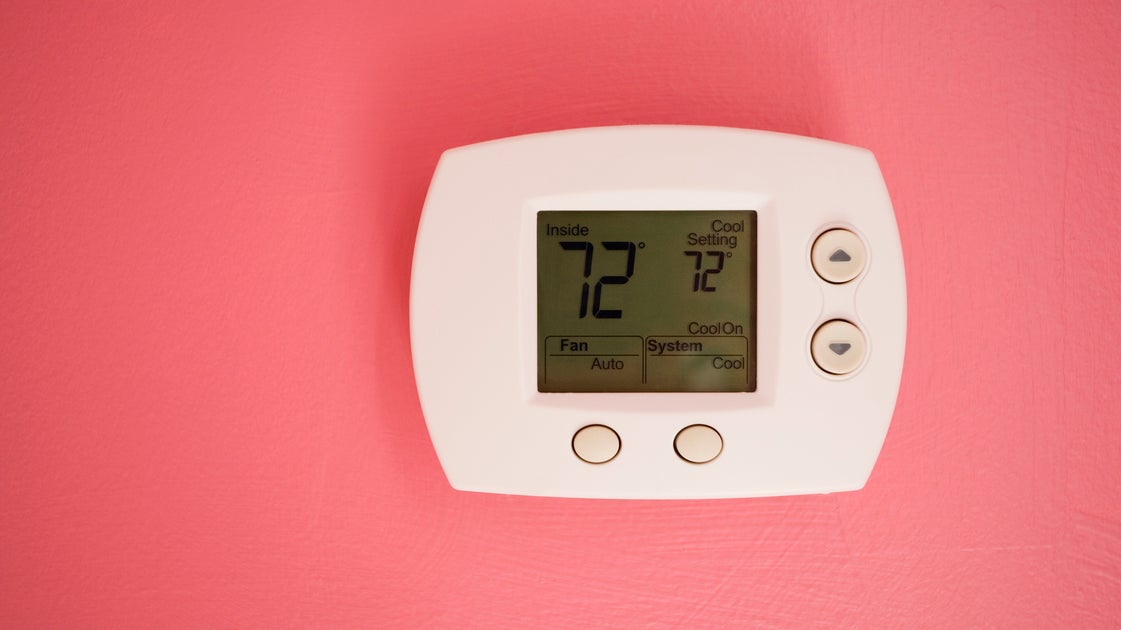

With temperatures soaring this summer, people have been running their air conditioners around the clock. But some of the habits many folks rely on to stay cool ― or save money ― are actually doing more harm than good.
HuffPost asked HVAC experts to share the mistakes they wish people would stop making with their air-conditioning systems and what to do instead.
Setting The Thermostat To An Extreme Low
“A very common thermostat misconception is that turning the temperature way down will make the house cool faster. It won’t,” said Anthony Ferrara, owner of the South Florida air-conditioning company Dang It’s Hot! “If your house is 80 degrees and you normally keep it at 74, setting the thermostat to 60 doesn’t make the air coming out of the vents colder or make the AC cool the house any faster. You’re simply telling the system to continue running until it reaches that temperature. If the system is operating properly, it’s already doing everything it can to get you to 74.”
Not only does this approach fail to speed up the process, but it also may put unnecessary strain on your HVAC system.
“Setting the thermostat to an extreme low like 60 degrees in extreme heat does not cool the house faster,” said Randy Huckstadt, a licensed HVAC contractor and expert with JustAnswer. “It only forces the AC to run longer, continuously cycles the compressor and increases the risk of a system breakdown.”
Constantly Adjusting The Temperature
Turning the thermostat up and down throughout the day might seem like a reasonable way to manage comfort and cost. But it’s actually harder on your system than just leaving it alone.
“One of our frustrating habits to deal with is homeowners who constantly adjust the temperature up and down all day,” Huckstadt said. “All this does is force your AC to constantly turn on and off. This constant cycling strains the system components, especially the capacitors and compressor, and ultimately wastes tons of energy.”
Leaving The Fan Set To ‘On’ Instead of ‘Auto’
Thermostats typically have “on” and “auto” fan settings, and many homeowners opt for “on” at all times without a second thought. Huckstadt said that’s also a mistake.
“Keeping the fan switch set to ‘on’ means the blower motor runs 24/7, even when the AC isn’t actively cooling,” he said. “This adds extra wear to the motor, raises your electric bill and blows trapped moisture off the cooling coils right back into your home, ruining indoor humidity control.”
Set it to “auto” and the fan will only run when the system is actually cooling, which is what it’s designed to do.
Turning The AC Completely Off When You Leave

Shutting everything down when you head out may seem like an obvious energy saver. But in hot, humid climates, it can backfire.
“An air conditioner isn’t only cooling the home, it’s also removing moisture from the air,” Ferrara said. “Allowing the indoor temperature to climb excessively can also allow indoor humidity to rise significantly. Raising the thermostat while you’re away can save energy, but in a hot, humid climate, I wouldn’t recommend shutting the AC off completely.”

Tetra Images via Getty Images
Huckstadt also recommends adjusting by just a few degrees rather than fully switching it off, as well as making use of smart scheduling systems if possible.
“Failing to adjust the temperature when you are away or sleeping forces the system to work hard to condition an empty house,” he said. “Using a programmable or smart thermostat to raise the temperature a few degrees while you are out prevents this unnecessary runtime and helps to keep your hard-earned dollars in your pocket.”
Changing Filters On A Rigid Schedule Instead Of Checking Them
Ferrara warned against assuming there’s one general filter replacement schedule that applies to every home.
“You frequently hear that filters should be changed every 30, 60 or 90 days, but how quickly a filter becomes dirty depends on the home, the type of filter, pets, dust, construction, occupancy and how frequently the system runs,” he said. “My advice is simple: Check it. If it’s noticeably dirty, change it. A dirty filter can restrict airflow and make the system work harder. But don’t assume the calendar knows what’s happening inside your house.”
Huckstadt echoed the importance of filter maintenance, noting that neglecting it ― along with skipping regular maintenance and treating the outdoor unit as a surface to pile things on ― are among the most common complaints HVAC professionals encounter.
“A lot of it boils down to value perceived for the money paid and when we show up and we have to do housekeeping work before we can ever get to the mechanical aspect or explanation as to why the system’s not working,” he said.
Assuming It’s The AC When The House Won’t Cool Down
When the house feels too warm, the instinct is to assume something is wrong with the equipment. But Ferrara said that’s often the wrong conclusion, especially during heat waves.
“The AC is only one part of the equation,” he said. “Attic insulation and ventilation, windows and doors, sun exposure, ductwork, air leakage, ceiling height and even keeping blinds or curtains open during the hottest part of the day can all affect the cooling load of the home.”
He explained that air-conditioning systems are sized and designed for typical outdoor conditions. In times of extreme heat, even a perfectly functioning system may struggle to keep up, so indoor temperatures could rise a few degrees.
“If your home normally maintains 72 degrees under similar outdoor conditions and suddenly can’t, that’s worth investigating,” Ferrara said. “But during unusually extreme weather, you have to look at the entire home and the conditions the AC is working against, not just the number on the thermostat.”
Ignoring Heat Sources Near The Thermostat
“One more biggie in the thermostat department is ignoring nearby heat sources,” Huckstadt said.
For instance, putting a lamp or laptop right under the thermostat or opening curtains such that direct sunlight hits it can create a “localized ‘fake zone’ of heat,” he explained. As a result, the thermostat registers a temperature that is much higher than the reality of the rest of the home, which effectively tricks the AC into running extended cycles to cool down spaces that don’t actually need it.
So check what’s near your thermostat, and move anything that generates heat away from it.
Closing Or Covering Vents In Certain Rooms
It may feel intuitive. If you’re not using a room, why cool it? But HVAC professionals said closing vents is one of the most counterproductive things you can do.
Huckstadt explained that people think they are saving money by choosing not to cool certain areas of their homes. But they end up having to pay more in future service calls because closing vents can cause pressure to build up in the system from air that has nowhere to go ― leading to bigger issues down the road.
Assuming A New AC Means Everything Is New
“I wish more homeowners understood that replacing the AC equipment doesn’t necessarily mean everything connected to it is new,” Ferrara said. “A brand-new AC may still be connected to existing ductwork, condensate drain lines, electrical components and other parts of the system that have been there since the home was built. You can have a 1-year-old AC connected to a drain line that’s 10, 20 or even 30 years old. A restriction or buildup in that line can still shut down a brand-new system.”
And new equipment also still needs regular maintenance for the same reason a new car still needs oil changes.
“Maintenance isn’t just about looking for parts that are ready to fail,” Ferrara said. “We’re checking how the entire system is operating, airflow, electrical components, refrigerant pressures and temperatures, drainage and whether anything has changed since the last visit. Those checks can help identify a developing issue before it turns into a breakdown.”