

Key takeaways
- After the shutdown of Coinhive in 2019, browser mining has made a comeback with new tools like CryptoTab Browser, Pi Network and YouHolder.
- Mining with a browser can cost more in electricity than the crypto earned, especially for users with mid-range devices.
- Despite being less energy-intensive than ASIC farms, browser mining still adds up in terms of cumulative power draw and puts a strain on your device’s hardware.
- Browser mining is evolving with the help of WebAssembly (Wasm), improving script efficiency and creating a smoother user experience.
Browser-based crypto mining sounds like a dream: Just open a webpage, let it run, and your computer starts earning crypto in the background. No bulky ASICs, no GPU farms, no long setup tutorials — just your browser doing the heavy lifting.
The idea blew up in the late 2010s with tools like Coinhive, which let website owners mine Monero (XMR) using JavaScript. At first, it seemed like a clever alternative to ads; visitors donated a bit of unused CPU power, and websites earned crypto.
But then came cryptojacking. Sites began running these scripts without user permission, draining resources and slowing down devices. In 2019, Coinhive shut down, citing shrinking returns and mounting scrutiny.
Now, in 2025, browser crypto mining is making a low-key comeback. New tools, new rules and a fresh generation of crypto users are reviving the concept. But is it worth it or just a relic of crypto’s scrappier past?
Let’s break down where things stand today.
Did you know? In 2018, Coinhive was responsible for approximately 1.18% of all Monero blocks mined.
What’s the status of browser-based crypto mining in 2025?
Active platforms
The biggest name in browser crypto mining today is CryptoTab Browser. It’s a Chromium-based browser with a built-in mining feature that lets users passively earn Bitcoin (BTC). It also offers tools like Cloud Boost to multiply earnings and a mining pool for better efficiency.

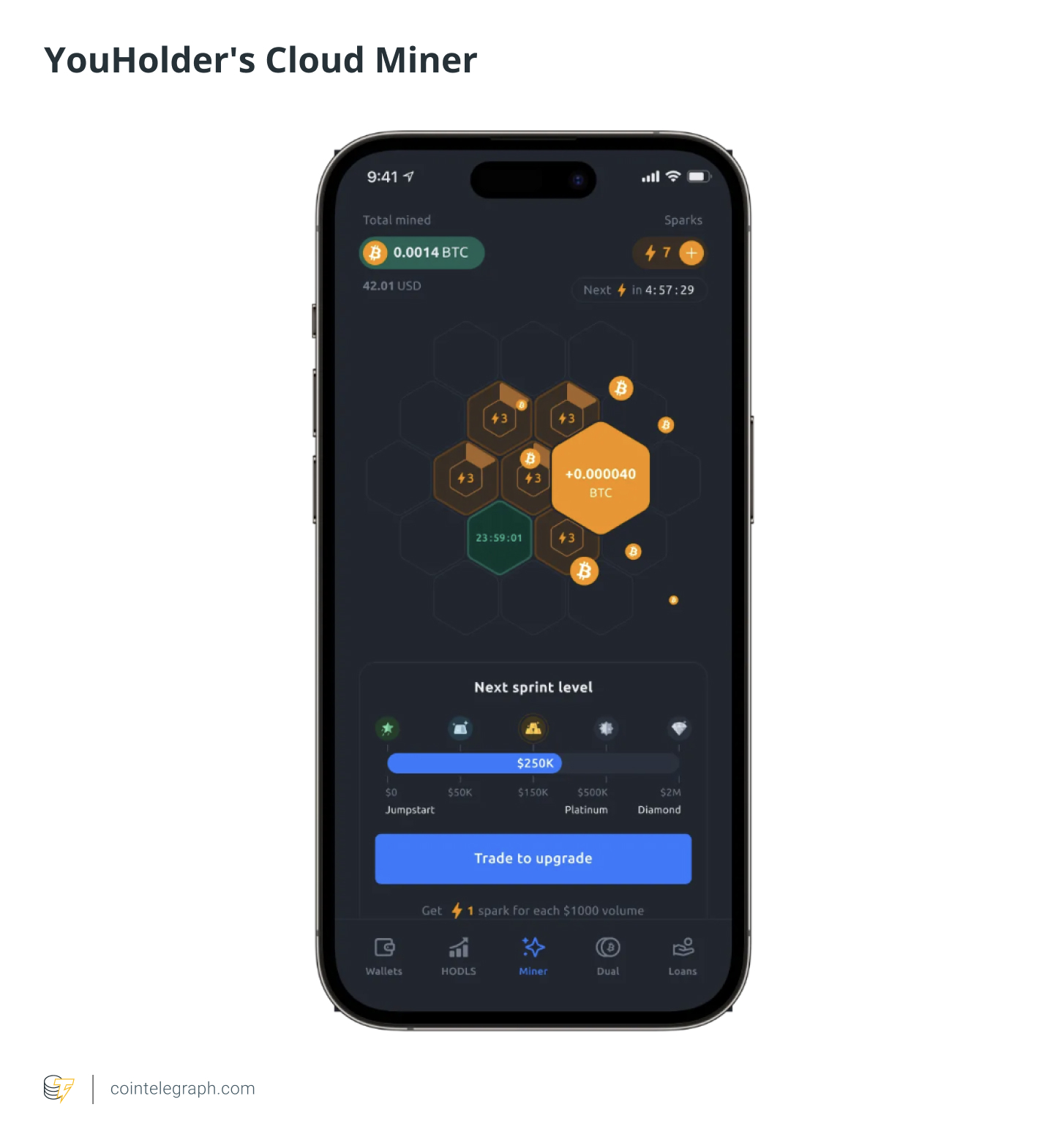
Meanwhile, mobile-first platforms like Pi Network and YouHolder cater to users who want to mine via smartphones — or at least simulate the process while collecting rewards. These platforms blur the line between real mining and gamified engagement, but they’ve drawn millions of users, especially in emerging markets.
Supported coins
Monero is still popular for browser mining; its RandomX algorithm is CPU-optimized and ASIC-resistant, which means regular computers can handle it. CryptoTab, meanwhile, focuses on Bitcoin, though it uses a form of pooled hash power to make it viable through a browser interface, though its efficiency and profitability are often debated due to Bitcoin’s high mining difficulty and reliance on specialized hardware.
Who is mining crypto via browsers?
The browser mining audience today is surprisingly broad:
- Casual users: People who like the idea of passive income without much commitment.
- Newcomers to crypto: Those testing the waters without risking capital.
- Crypto-curious users: Folks who want to earn something on the side while they browse.
Browser mining won’t make you rich — let’s be clear. But it does lower the barrier to entry, especially for users in lower-income regions or without access to advanced hardware.
Did you know? Some browser-based mining scripts have been designed to continue operating even after a user closes the browser tab by opening hidden windows that persist in the background.

Is browser mining profitable in 2025?
Short answer: not really. It’s more about novelty or experimentation than making serious money.
Mining in a browser might get you a few cents’ worth of crypto per day, but only if you leave your computer running non-stop. And that leads to two problems: electricity costs and hardware stress. Over time, those costs can far outweigh the value of the crypto you earn.
For example, in the US, the average residential electricity rate is about $0.15 per kilowatt-hour. Leaving a mid-range laptop mining all day could consume roughly 0.1–0.2 kWh per hour — that’s over $10 per month in electricity for maybe a dollar or two in mined crypto. And you’re putting constant load on your CPU.
Compared to other methods
Browser mining can’t hold a candle to GPU or ASIC setups. A modern ASIC miner like the Antminer S19 Pro churns out up to 110 terahashes per second (TH/s) — that’s several orders of magnitude higher than what a browser script can deliver.

Cloud mining, on the other hand, lets users rent mining power from remote farms. It’s more efficient and hands-off but also comes with subscription fees and mixed reputations. At least with browser mining, you’re only risking your own device and electricity bill.
Did you know? In 2025, some cloud mining platforms have integrated artificial intelligence to optimize mining operations, enhancing efficiency and profitability for users without requiring direct hardware management.
Environmental footprint
While it consumes less power than an ASIC farm, browser mining still adds up. Thousands of users mining inefficiently on personal devices generate a surprisingly high cumulative power draw.
That’s why most efforts to make crypto mining greener — like using renewable energy or optimizing ASIC efficiency — haven’t trickled down to the browser level. If you’re eco-conscious, browser mining isn’t the cleanest option out there.
What’s next for browser crypto mining?
Tech upgrades
WebAssembly (Wasm) has boosted what browsers can do, including mining. It allows faster, more efficient script execution, meaning browsers can now run lightweight mining scripts without wrecking user experience.
Platforms like CryptoTab have also improved their UX, integrating features like built-in VPNs and ad blockers. This is an effort to make mining feel more like a bonus and less like a burden.
Some decentralized finance (DeFi) projects, such as Ore, are even experimenting with combining browser mining and decentralized finance. It’s the early days, but the potential is there to let users contribute computing power and earn rewards while interacting with decentralized applicatioins (DApps) — all within a browser tab.
Market and regulation
In 2025, global crypto adoption has been growing, but so is regulatory scrutiny. In the US, the SEC is pushing for clearer guidance, which may eventually affect how browser-based mining tools are classified or taxed.
Elsewhere, countries like Kuwait have cracked down on mining altogether, citing energy shortages. Local regulations will play a huge role in determining where and how browser crypto mining can survive.
Alternative use cases
Mining isn’t the only game in town. Brave browser, for example, lets users earn Basic Attention Tokens (BAT) just by viewing ads, which can be used within the Brave ecosystem or exchanged. It’s not mining, technically, but it’s another way to earn crypto passively through browsing.
In the DeFi world, there’s potential to connect browser mining with yield farming or liquidity mining. Imagine earning a trickle of tokens just by keeping your browser open and interacting with onchain applications. It’s early, but real experiments are underway.
Here’s an example of how you can use BAT earned from viewing ads and channel them into DeFi for additional returns:
- You transfer your earned BAT to a decentralized exchange (DEX) like Uniswap, a leading DeFi platform for liquidity mining.
- On Uniswap, you pair your BAT with another token — e.g., Ether (ETH) or a stablecoin like Tether’s USDt (USDT) — to provide liquidity to a BAT/ETH or BAT/USDT pool. This involves depositing equal values of both tokens into the pool, receiving LP (liquidity provider) tokens in return.
- You stake these LP tokens in Uniswap’s liquidity mining program (or a similar protocol like SushiSwap) to earn rewards, which may include a share of trading fees (typically 0.3% per trade) and potentially additional UNI (UNI) or other governance tokens as incentives.
- To maximize returns, you could take your LP tokens and stake them on another DeFi platform, like Yearn.finance, which algorithmically seeks the highest yield opportunities across protocols. For example, Yearn.finance might stake your Uniswap LP tokens in a pool offering 10%-20% APY, compounding your returns.
- Alternatively, you could use a yield aggregator like Yield Yak on Solana, which auto-compounds rewards to boost earnings.
However, be aware that in liquidity mining, price fluctuations between paired tokens (e.g., BAT/ETH) can lead to losses compared to holding the tokens outright. Also, the value of earned tokens (BAT, UNI, etc.) and DeFi rewards can fluctuate (market volatility), impacting overall returns.
Is browser-based crypto mining worth it?
So, is browser mining dead in 2025? Not quite, but it’s no gold rush either.
It’s a fringe activity, appealing to newcomers, tinkerers and anyone curious about crypto’s more obscure corners. With better tech and clearer ethics than in the Coinhive days, it’s no longer a threat — just a slow, modest way to dip your toes in.
If your goal is to understand crypto without buying in, browser mining still has a role to play.