
“Do you think I should consider freezing my eggs?”
I posed this question to my grandmother and aunt recently as the reality set in that I’m about to turn 30. According to medical science, the older I get, the fewer chances I have for pregnancy. But as we approach Black Maternal Health Week, I find myself returning to that question, and my age isn’t the only thing giving me pause.
Black women’s bodies have long been at the mercy of harsh surveillance, financial instability and health inequities. Because I have a Ph.D. in maternal and child health, I am well aware that maternal mortality among Black women has been a persistent inequity since the 1930s.
In 2023, for example, the maternal mortality rate among Black women was 50.3 deaths per 100,000 live births and significantly higher than rates for white, Hispanic and Asian women. And though there was a slight dip in 2024 (44.8 deaths per 100,000 live births), the statistics remain frighteningly high.
The higher rates of maternal deaths aren’t attributed to one singular thing. Black birthing people are dying, regardless of income or education, because of multiple factors, including structural and systemic racism, provider bias, quality of linguistic and culturally appropriate care, and cumulative stress and weathering.
I was taught to name these as the social-structural determinants of health, focusing on how multiple levels of influence (i.e., individual, interpersonal, community and societal) can impact an individual’s health outcomes. This knowledge has heightened my awareness and consideration of, well, everything.
Such rates should be enough to alarm us, but as each year passes and more Black women die, the numbers remind me yet again that this country, along with its medical systems, doesn’t prioritize me. So, even as I wrestle with my readiness to give life, it is painfully clear that my own life may not be protected.
Because I study maternal health, I also know my autonomy is at the mercy of my geography. Reproductive rights have been under attack in recent years in the U.S. Abortion access is largely restricted in many places across the country. Currently, 41 states have abortion restrictions in effect, with 13 of these having total bans. This means my ZIP code literally determines the level of access I would have to reproductive care should I get pregnant. And my socioeconomic position would dictate the kind of care I ultimately receive.
As I flip over all this in my head, I collide with people and family all the time who express just how much they can’t wait for me to have a baby. To see what kind of mom I’ll be. To see what kind of children I’ll raise in this world.

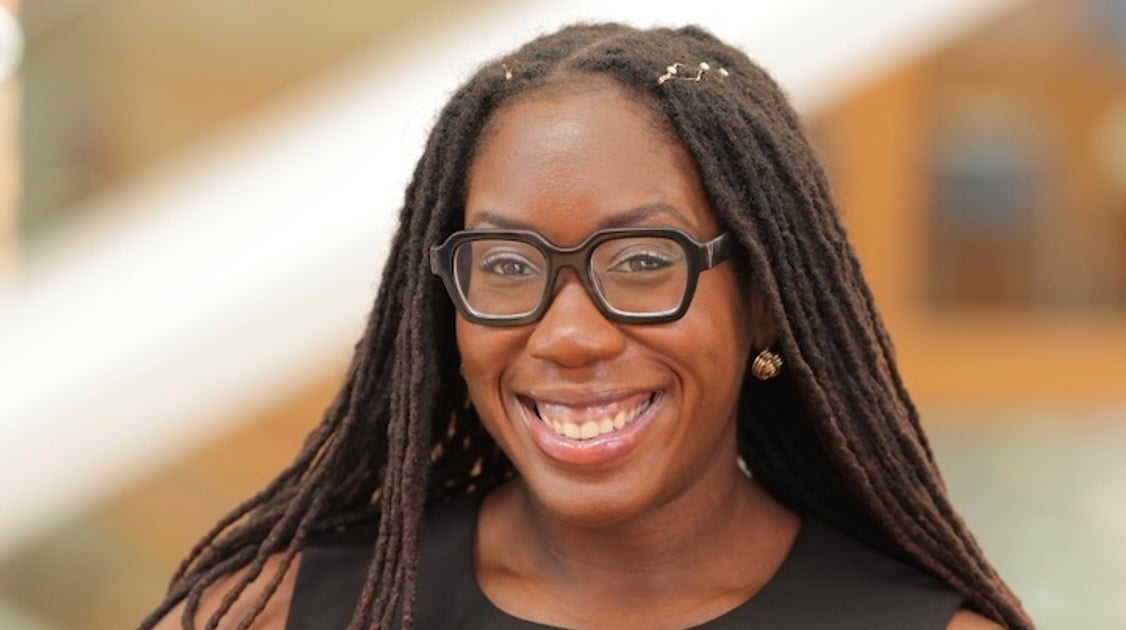
Photo Courtesy Of Adia R. Louden
They make their hopes for me sound so simple. As if the mere desire for motherhood will shield me from the racism, pain and dismissal that my body may endure. As if my decision is just that — a personal decision.
In a country where reproduction is coupled with risk, options increasingly cease to exist and survival is a question mark, whether or not to choose motherhood is one of the most political decisions I can make.
I hope for a baby I’ll survive to greet, meet and hold against my chest. I hope for the long nights, ordinary days with extraordinary joy and stress. I hope to mother in a way that makes life a jubilant spectacle instead of an everyday terror.
But even my hope often feels riddled with fear.

Because I study maternal health, I’ve followed the political attacks against the vaccine recommendations by the Centers for Disease Control and Prevention, recommendations meant to protect birthing people during pregnancy and children during their fragile beginnings.
Since 2025, federal officials have launched major assaults on previously established vaccine policies and public health recommendations. As a result, I’m left with diminished trust in a government that I never fully trusted anyway.
Like gospel singer Tamela Mann said, truth is … I’m tired.
Tired of incessantly dreaming and wishing in a country that never wants to see me wake up. Tired of advocating for all the things at stake. Tired of being asked, “Are you ever gonna get married and have a baby?”
To which I’m forced yet again to shrug and say, “Maybe.”
With my 30th birthday less than three months away, that is still my answer. Because I don’t yet know whether I will become a mother. When I posed the question of egg-freezing to my grandmother and aunt a few months ago, they told me not to worry. That I have plenty of time. And perhaps they’re right.
I don’t know if I’ll actually broach the topic of freezing my eggs at my next well woman exam.
But I do know one thing: Black women’s maternal autonomy and health deserve more than slogans and commemorative weeks. We deserve care. We deserve safety. We deserve support — not martyrdom.
Adia R. Louden has a Ph.D. in maternal and child health from the University of North Carolina at Chapel Hill and is a Public Voices Fellow of The OpEd Project in partnership with the National Black Child Development Institute.
Do you have a compelling personal story you’d like to see published on HuffPost? Find out what we’re looking for here and send us a pitch at [email protected].