
Planning an international trip is exciting, but the packing and preparation that come with it can feel overwhelming. Between figuring out what goes in your carry-on bag and making sure your travel documents are in order, it’s easy to forget something important until you’re already at the airport.
This international travel checklist covers everything you need to pack, plan, and prepare before your next trip abroad. Whether you’re a first-time traveler or someone who flies internationally several times a year, having a solid packing list makes the entire process smoother.
Before you leave: planning and documents
The preparation you do before traveling abroad matters just as much as what you pack in your bag. Rushing through the planning stage is how travelers end up at the airport without the right visa, or in a foreign country without access to their bank account. Give yourself at least two weeks before departure to handle the essentials below.
Passport, visa, and travel documents
Your passport is the single most important item for any international trip. Check the expiration date well before your departure. Many countries require your passport to be valid for at least six months beyond your travel dates, so don’t assume it’s fine just because it hasn’t technically expired.
Research whether your destination country requires a visa. Some countries offer visa-on-arrival or electronic travel authorizations, while others need you to apply weeks or even months in advance. Keep digital and physical copies of your passport, visa, and any other travel documents in separate locations. If your passport gets lost or stolen in a foreign country, having copies makes the replacement process at your home country’s embassy significantly easier.
Other travel documents to have ready include your flight itineraries, hotel reservation confirmations, travel insurance policy details, and any vaccination certificates that your destination country requires.
Before you leave, confirm you have:
- Passport valid at least six months beyond your travel dates
- Visa or electronic travel authorization, if your destination requires one
- Digital and physical copies of your passport and visa, stored separately
- Flight, hotel, and insurance confirmation numbers saved offline
Travel insurance and confirmation numbers
Travel insurance is one of those things that feels unnecessary until you actually need it. A cancelled flight, a medical emergency abroad, or lost luggage can turn an exciting trip into a stressful and expensive ordeal. Good travel insurance covers all of these scenarios and gives you peace of mind throughout your entire trip.
Keep all your confirmation numbers organized in one place. This includes flight bookings, hotel reservations, car rentals, and any tours or activities you’ve booked in advance. A simple notes app on your phone works, but having printed backups is smart for destinations where internet access might be unreliable.
Research your destination country
Every destination has its own quirks when it comes to weather, customs, electrical outlets, and local laws. Spend some time researching what to expect before you arrive. Knowing whether your destination country requires specific vaccinations, has dress codes for religious sites, or uses a different electrical standard will save you from unpleasant surprises.
Download offline maps through Google Maps for your destination before you leave. This is a non-negotiable travel tip that too many people skip. Having offline access to navigation means you won’t be stranded even if your phone loses connection in a foreign country.
Packing your carry on bag
Your carry on bag is your lifeline during international travel. If your checked luggage gets delayed or lost, everything in your carry on is all you’ll have for the first day or two. Pack it strategically.

Carry on essentials for long flights
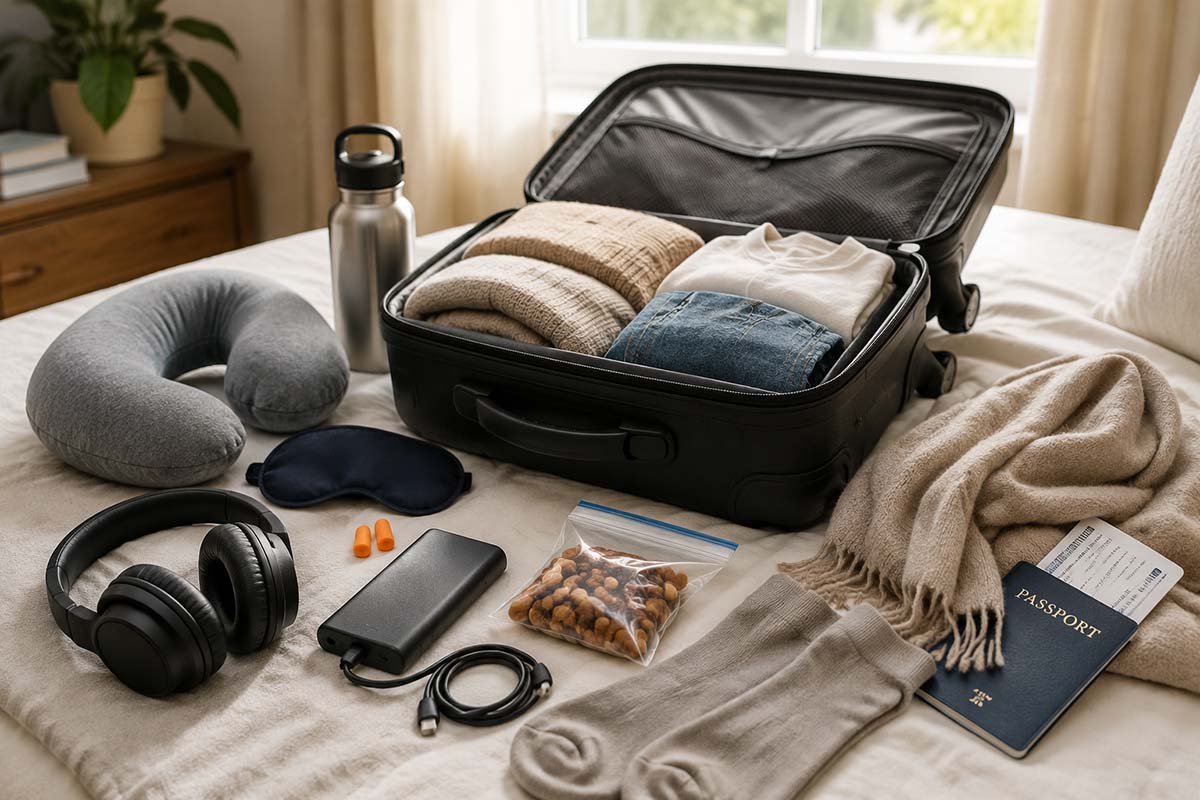
Long flights are a reality of traveling internationally, and being comfortable on the plane makes a huge difference in how you feel when you arrive. Here are the carry on essentials that experienced travelers never leave behind:
An eye mask and ear plugs are small items that take up almost no space but completely change your ability to sleep on a plane. Noise canceling headphones are even better if you have the room. They block out engine noise, crying babies, and chatty seatmates, making long flights significantly more bearable.
Compression socks help with circulation during extended periods of sitting and reduce swelling in your feet and ankles. They’re especially important on flights longer than four or five hours, and they’re a must-have if you’re taking multiple flights in a row.
Pack a refillable water bottle in your carry on. You can’t bring it through security full, but you can fill it up at a water fountain once you’re past the checkpoint. Staying hydrated on long flights is essential because cabin air is extremely dry, and dehydration makes jet lag worse.
A travel pillow, a lightweight blanket or large scarf, and some snacks round out your in-flight comfort kit.
Carry-on essentials at a glance:
- Eye mask, ear plugs, or noise canceling headphones
- Compression socks for flights longer than four to five hours
- Empty refillable water bottle to fill after security
- Travel pillow, light blanket or scarf, and snacks
- Portable charger and the right cables for every device
Tech and electronics
Your cell phone is probably the most used travel tool you own. It handles navigation, translation, boarding passes, restaurant recommendations, and communication with people back home. Make sure it’s fully charged before you leave for the airport, and pack a portable charger in your carry on so you’re never caught with a dead battery. Look for one that’s super compact so it doesn’t take up too much space in your bag.
A phone charger with the right adapter for your destination is obviously non negotiable, but don’t forget charging cables for other devices too. If you’re bringing a laptop, tablet, camera, or e-reader, make sure you have chargers and cables for each one. A universal power adapter is a smart investment if you travel to other countries regularly, since outlet types vary widely around the world.
Bring extra memory cards for your camera if you plan on taking a lot of photos or video. Running out of storage on day three of a two-week trip is frustrating and completely avoidable.
Comfort items for the plane
Beyond the basics, consider packing a few extra comfort items for the plane. Lip balm and a small tube of moisturizer help combat the dry cabin air that leaves your skin feeling parched. You’ll want to reapply moisturizer a few times during a long flight to prevent dry skin from getting uncomfortable. Hand sanitizer and disinfecting wipes are practical additions for keeping your seat area and tray table clean.
A good book, a downloaded playlist, or a few episodes of a show on your tablet give you entertainment options that don’t rely on the airline’s in-flight system. Some planes still have limited or broken screens, so having your own content is a smart backup plan.
What to pack in your checked luggage
Clothes and layering strategy
Packing clothes for an international trip is where most people go wrong. The temptation is to pack for every possible scenario, but overpacking creates problems. Heavy suitcases are harder to move through airports, trains, and cobblestone streets, and all the airlines have weight limits that can result in expensive fees.
The trick is to pack versatile pieces that work in multiple combinations. Neutral colors that mix and match easily let you create different outfits from fewer items. Plan your outfits by day, and then remove at least two items you probably won’t wear. You almost certainly need fewer clothes than you think.
If you’re heading to a destination with unpredictable weather or traveling through multiple climates, layering is your best strategy. A lightweight jacket, a sweater, and a rain shell take up less space than bulkier clothing like heavy coats, and they cover a wider range of temperatures. For winter travel specifically, wearing your heaviest items on the plane instead of packing them saves significant suitcase space.
Packing cubes are one of the best investments you can make for international travel. They keep your clothes organized, compressed, and easy to find without dumping your entire suitcase onto the hotel bed. Most travelers who try packing cubes for the first time wonder how they ever traveled without them.
Don’t forget a bathing suit even if your trip isn’t a beach vacation. Hotels often have pools, and you might find a hot spring, lake, or unexpected beach day along the way.
Toiletries and personal care
Pack travel-sized toiletries in your checked luggage and keep a small selection in your carry on for freshening up during long flights. Essentials include toothbrush, toothpaste, deodorant, shampoo, conditioner, sunscreen, and any prescription medications you take regularly.
A basic first aid kit with band-aids, pain relievers, anti-diarrheal medication, antiseptic wipes, and any allergy medications is one of those travel essentials that most people forget but always wish they had. Getting sick or injured in a foreign country where you don’t speak the language or know the pharmacy system is stressful enough without having to track down basic supplies.
If you use contact lenses, bring extra pairs and a backup pair of glasses. A small travel umbrella is worth the space if you’re headed somewhere with unpredictable weather. There are plenty of super compact options that fold down small enough to fit inside a daypack without adding noticeable weight.
Shoes and accessories
Shoes are the trickiest items to pack because they take up so much space in your suitcase. Bring no more than three pairs: comfortable walking shoes for sightseeing, a dressier option for restaurants or events, and flip-flops or sandals for the hotel and casual settings. Wear your bulkiest pair on the plane to save room in your luggage.
A lightweight shoulder bag or daypack is essential for daily exploring. It should be big enough to carry your phone, water bottle, sunscreen, a snack, and a light layer, but small enough to be comfortable all day. Look for one with a zipper closure for extra safety against pickpockets, which are common in tourist-heavy areas of many countries.
Other small but important accessories include a packable hat for sun protection, sunglasses, and a small padlock for hostel lockers or securing your luggage.
Staying connected while traveling abroad
See also

Cell phone setup and international plans
One of the biggest headaches of traveling internationally is figuring out how to use your phone abroad without racking up massive roaming charges. Your phone is essential for navigation, translation, ride-hailing apps, and staying in touch, so going without service isn’t really an option for most travelers.
The traditional approach was buying a local SIM card at the airport when you arrive, but that means dealing with language barriers, finding the right vendor, and swapping out your home SIM. It’s time-consuming and inconvenient, especially when you’re tired after a long flight and just want to get to your hotel.
A much simpler option is using an eSIM, which is a digital SIM card that you download and activate directly on your phone. There’s no physical card to swap, no packaging waste, and you can set it up before you even board your plane. Services like Roambit eSIM offer travel eSIM plans for Asia and dozens of other destinations, so you land with data already working on your phone. It’s one of those travel essentials that saves you time and hassle at the start of every international trip.
Useful apps for international travel
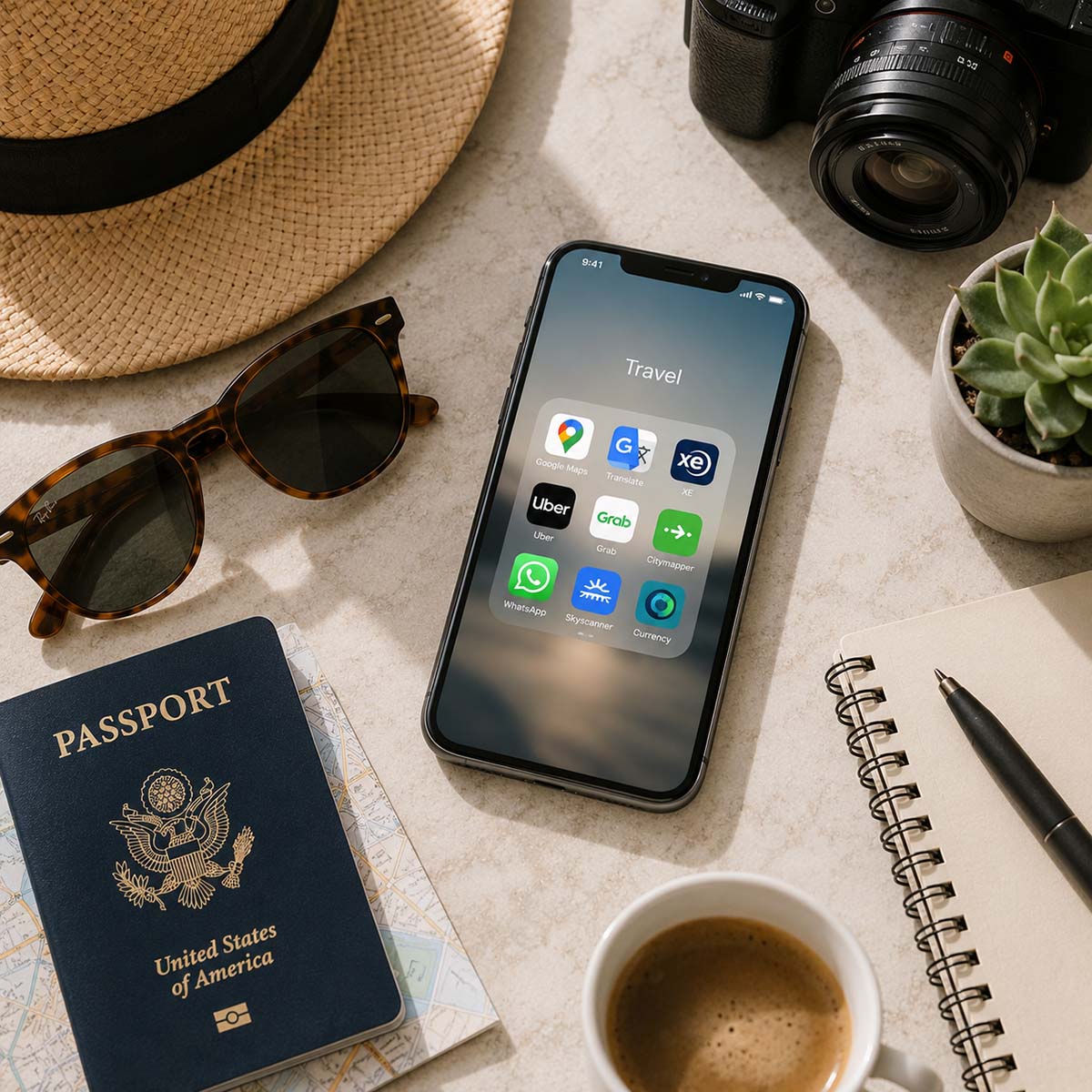
Beyond getting connected, a few key apps make traveling abroad significantly easier. A translation app with offline capabilities is invaluable in countries where you don’t speak the language. Currency converter apps help you quickly understand local prices without doing mental math at every shop and restaurant.
Check if your destination has popular local apps for transportation. Many countries have their own ride-hailing or transit apps that work better than international options. Having these downloaded and set up before you arrive saves time and confusion when you’re navigating an unfamiliar city for the first time.
Keep a simple digital folder on your phone with screenshots of your booking confirmations, travel insurance details, and emergency contacts for your destination country. Having everything accessible offline means you’re covered even without an internet connection.
Health and safety essentials
First aid kit and medications
Beyond the basic aid kit mentioned earlier, make sure you pack enough of any prescription medications to last your entire trip plus a few extra days in case of travel delays. Keep medications in their original packaging with labels visible. Some countries have strict rules about bringing specific items like certain medications across borders, so check the regulations of your destination in advance.
Staying hydrated and healthy on the road
Staying hydrated is even more important when you’re traveling abroad than at home. Climate changes, higher activity levels, and long flights all dehydrate you faster than usual. Carry your water bottle everywhere, and in countries where tap water isn’t safe to drink, stick to sealed bottled water or use a portable water filter.
Be mindful of food safety when traveling abroad. Street food is one of the best parts of exploring a new country, but make sure you’re eating at stalls with high turnover and freshly prepared meals. Avoid raw produce washed in local water if the tap water isn’t safe, and be cautious with ice in drinks.
Jet lag hits harder on trips abroad that cross multiple time zones. Start adjusting your sleep schedule a few days before departure, stay hydrated during the flight, and try to adapt to local time as quickly as possible after you arrive. Getting sunlight during the day at your destination helps reset your body clock faster than anything else, and building that recovery into your itinerary is part of staying fit and healthy while traveling.
Money and financial prep
Cards, cash, and local currency
Notify your bank and credit card companies about your travel plans before you leave your home country. Nothing is worse than having your card blocked for suspicious activity while you’re standing at a checkout counter abroad. Ask your local bank about international transaction fees and consider getting a travel-friendly card with no foreign transaction fees if you travel to other countries frequently.
Carry a small amount of local currency for your destination. Not every place accepts credit cards, and you’ll need cash for taxis, street food, tips, and small shops. Exchange a small amount before you leave or withdraw from an ATM when you arrive. Avoid currency exchange counters at the airport; they almost always have the worst rates, and they’re one of several hidden travel costs worth planning around before you go.
Keeping all your money and cards in one wallet or bag is a bad idea because losing it or having it stolen means losing access to all your funds at once. Split your cash and cards between your carry on, your checked luggage, and your person for extra safety.
Final packing list tips
Start your packing list at least a week before your trip and add to it as things come to mind. Trying to pack all the items the night before almost guarantees you’ll forget something important.
Lay out everything you want to bring, and then challenge yourself to remove a few things. Every experienced traveler will tell you the same thing: you pack too much on your first few trips abroad. The best strategy is to pack light and buy anything you forgot at your destination. Most essentials are available in other countries, often at lower prices than at home.
If you’re traveling to a country where you’ll need specific items like plug adapters, voltage converters, or mosquito repellent, add those to your packing list early. These are easy to forget because they’re not part of your everyday routine at home, but they can be hard to find once you’re abroad depending on where you’re traveling.
Roll your clothes instead of folding them to save space in your suitcase and reduce wrinkles. Use the inside of your shoes to store small items like socks, chargers, or jewelry. Place heavier items at the bottom of your bag near the wheels so it rolls smoothly through the airport.
Finally, take a photo of all your packed items spread out before closing your suitcase. If anything gets lost or your luggage is delayed, you’ll have a visual record of exactly what was inside. It also makes filing an insurance claim much easier.
The key to stress-free international travel isn’t packing everything you could possibly need. It’s packing the right essentials and having a solid plan for everything else.
The key to stress-free international travel isn’t packing everything you could possibly need. It’s packing the right essentials and having a solid plan for everything else. Every trip abroad teaches you something new about what you actually use and what just takes up space. With this international travel checklist as your starting point, you’ll be well prepared for whatever your next adventure throws at you.
Better Living may earn commissions through affiliate links and may occasionally feature sponsored or partner content. If you make a purchase through our links, we may receive a small commission at no cost to you.