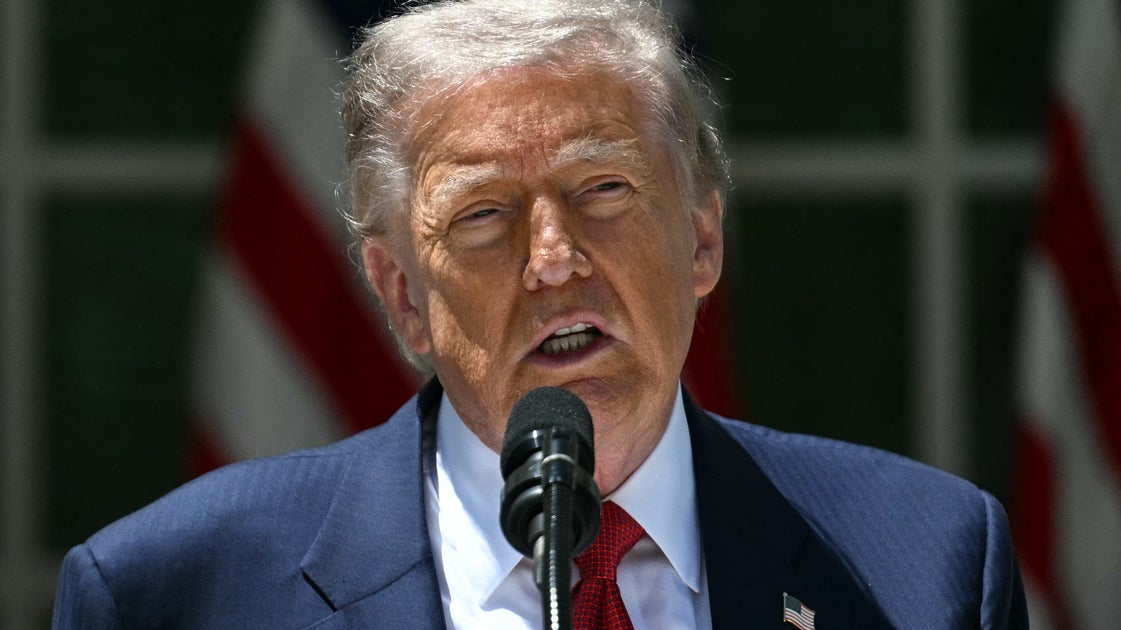

Even as Trump’s second term as president has been aggressively anti-immigrant, his administration has claimed it’s all about law and order. It’s not that they’re against immigration, they say, it’s just that they want people to enter the country legally.
“In the past nine months, zero illegal aliens have been admitted to the United States,” Trump said at the State of the Union in February. “But we will always allow people to come in legally, people that will love our country and will work hard to maintain our country.”
But in practice, that doesn’t seem to be the case. For the last several months, the Trump administration has been dismantling legal pathways for immigrants to live and work in the United States permanently, including by pausing applications for legal permanent residency and citizenship. And even darker, the administration has begun taking steps to denaturalize citizens — removing citizenship from immigrants who have gone through the long, arduous, invasive, and well-documented legal process to earn it.
“Previous administrations did not have this same legal attack on legal immigration in the way that we’re seeing now,” said Zachary New, a Colorado-based immigration attorney.
Even in Trump’s first term, he said, it wasn’t like this. “It has been an ongoing thing that we’ve seen in this administration, and the second Trump administration in particular,” he said.
This past December, U.S. Customs and Immigration Services, the federal agency that handles immigration benefits and applications, issued a new policy memo that halted asylum requests broadly and put a “hold” on any type of immigration process for people from over a dozen countries. USCIS added 20 more countries in January, bringing the total number of effectively banned countries to 39.
The reason, the memos claimed, was concern for national security. “This order aims to safeguard U.S. citizens from aliens who may seek to commit terrorist acts, pose threats to national security, promote hateful ideologies, or exploit immigration laws for malicious purposes,” the December 2025 memo said.
But the countries listed are mainly ones with Black and brown populations, including Somalia and Haiti — nations that Trump has referred to as “garbage” and a “shithole,” respectively. Iran, Cuba, Afghanistan, Venezuela and Yemen are also on the list.
“People from those countries, they have no chance right now of getting citizenship,” said Julia Gelatt, the associate director of the U.S. immigration policy program at the Migration Policy Institute. “It’s framed as a pause, but there’s no indication from the government when the pause might end.”
The final and official number of people naturalized in 2025 is not yet available, but it appears to be dramatically less than in prior years. In April 2025, according to an NPR report, more than 88,000 people became U.S. citizens. In January 2026, approximately 33,000 people did. There are currently 12 million pending applications for green cards, work visas and naturalization, per NPR, an increase of 2 million since Trump returned to office last year. By comparison, the backlog grew by more than 3 million during Biden’s entire four years in office.
“They’re moving really slowly, they’ve seen staffing cuts last year under DOGE and they have taken it upon themselves to re-adjudicate all kinds of applications from people from those 39 travel ban countries,” Gelatt said. “They seem to be getting more and more behind on processing new applications coming in.”
In a statement to HuffPost, the Department of Homeland Security said the pauses were necessary for safety and that the Biden administration had failed to properly vet immigrants, putting Americans at risk. “Verifying identities and personal histories from various countries requires a rigorous process – one that prioritizes the safety of the American people,” a spokesperson said. “USCIS has paused adjudications for aliens from President Trump’s designated high-risk countries while we work to ensure they are vetted and screened to the maximum degree possible.”
New, who has clients dealing with the pause, said the new policy has blocked immigrants who had already gone through the yearslong process of becoming a citizen from crossing the finish line.
“We’ve had folks who are scheduled for oath ceremonies to swear their allegiance to the United States,” he said. “Now, they aren’t able to take that final step, they’re not able to take advantage of the rights and benefits that come with citizenship.”

Meanwhile, the Department of Justice is planning on filing denaturalization cases against at least 384 U.S. citizens for unclear reasons, according to a report from The New York Times. The paper also reported in December of last year that the administration wants to denaturalize between 100 and 200 people each month in 2026. It’s a huge leap from the average numbers. Between 1990 and 2017, the federal government filed 305 denaturalization cases, according to Northwestern University. Since 2017, there have been 120 more filed cases, according to the Department of Justice.
“The Department of Justice is laser-focused on rooting out criminal aliens defrauding the naturalization process,” Matthew Tragesser, the DOJ’s deputy director for communications, told HuffPost in a statement. “The Department is pursuing the highest volume of denaturalization referrals in history, thanks to close partnerships with DHS and USCIS.”
The federal government rarely succeeds in denaturalization cases. Between 1979 and 2011, the DOJ stripped 107 people of their citizenship for collaborating with Nazis. The Times’ report noted that the Trump administration had filed 13 denaturalization cases in 2025 and succeeded at stripping eight Americans of their citizenship.
The low success rate is partially because of how difficult it is to become a naturalized citizen in the first place.
“The standard for denaturalization is really high,” Gelatt said. In order to be stripped of your citizenship, the government must prove that you’ve deliberately misled it about something major, like your identity or a serious crime. “These cases have to go through a federal court, and the government has to prove that somebody either concealed some really important fact or misrepresented a fact in their application,” she said.
Becoming a naturalized U.S. citizen is a strict process. Before an immigrant can apply for citizenship, they first have to apply for, and be granted, legal permanent residency — colloquially known as a “green card,” in reference to the color of the document they receive as proof of legal status.
The process to get a green card is intense. Applicants must first prove eligibility, including through being sponsored by family or an employer or having refugee status. Legal permanent residency has to be renewed every 10 years, but allows a person to live and work in the U.S. permanently. After five years of legal permanent residency (or three if the green card holder is married to a U.S. citizen), a green card holder is eligible to apply for citizenship.
From there, it’s a new process with even stricter requirements. The applicant must reside in the U.S., pass a civics test that covers American history and government, and show “good moral character” by being a law-abiding person. The average time it takes a green card holder to become a naturalized citizen can vary, depending on country of origin and legal status, but for some, it can take decades.
But the grueling process has benefits. A naturalized citizen has the same rights as any citizen by birth, including the fundamental right to live and work in the United States. A citizen can vote in elections, travel internationally without fear of not being able to return to the U.S., access federal benefits, and more easily sponsor family members for their own immigration applications. (One of the only things they can’t do is run for president.) Naturalized citizens also have the same responsibilities as any other citizen, such as serving on juries, defending the nation if called upon and paying taxes.
Revoking citizenship, or blocking people from obtaining it in the first place, seriously limits people’s ability to engage in public life in America. “Losing citizenship means that somebody’s not able to fully participate in our political system,” said Gelatt.
“We’ve had folks who are scheduled for oath ceremonies to swear their allegiance to the United States. Now, they aren’t able to take that final step.”
– Zachary New, Colorado-based immigration attorney
Brendan Shanahan, a researcher at Yale University who specializes in the history of citizenship, points out that restricting or removing citizenship has been used as a political tool in the past.
“There are histories of [citizenship] stripping, and its effects are especially felt by the already marginalized groups,” Shanahan said. “At different moments, denaturalization is used to target particularly vulnerable population[s].”
In the early 20th century, the Expatriation Act of 1907 stripped American women of their citizenship when they married noncitizen men. (Men who married foreign women were not subject to this policy.) In 1922, just a few years after women were granted the right to vote, the law was repealed — unless a woman married a man who was ineligible to become a citizen because of his country of origin.
“That was basically a racist proxy for East and South Asian immigrants,” Shanahan said.
The Chinese Exclusion Act, a federal law that resulted from decades of anti-Chinese sentiment, prohibited Chinese people from immigrating to the U.S. and banned Chinese immigrants already in the country from becoming citizens until it was repealed in 1943. Subsequent immigration policies excluded people from other Asian countries from immigration and citizenship, and were not repealed until 1952, though restrictive national origin quotas remained in place until 1965.
These histories of instrumental denaturalization tie into political motivations to punish immigrants who want to become citizens, Shanahan said, “either for individual instances of fraud or more broadly, target people because of political beliefs [and] questions of supposed — and I [put] emphasis on supposed — dual loyalties, or, simply racism. And in the case of American-born women, sexism.”
Ironically, suggestions of dual loyalty are part of another Trump administration bid to challenge citizenship rights this year. In the Supreme Court case Trump v. Barbara, over the Trump administration’s executive order seeking to bar children of undocumented immigrants from birthright citizenship, the administration argued that the children of undocumented immigrants did not owe “allegiance” to the United States, and therefore were not entitled to citizenship.
Even if denaturalization isn’t a new concept, the scale at which the administration is seeking to revoke citizenship is unparalleled in the United States.
“I can’t think of another time where it is developed as a stated policy goal on the scale that is being considered and undertaken here,” Shanahan said.
Being denaturalized has dire consequences. People stripped of their U.S. citizenship will lose their passports and will not be able to leave the U.S. with a guarantee that they’ll be allowed to return. Their immigration status after denaturalization could vary, but ultimately, they could end up without any legal status at all.
“There could be further attempts to take away all of their legal status and deport them,” Gelatt said. For those whose immigration processes are stopped at an earlier step, things are even more uncertain, and there are very few options for those whose immigration applications are in indefinite pause. New said that, faced with the uncertainty, some people may choose to simply self-deport — one of the immigration policies the administration has been seeking to promote.
“One of the things that folks are forced to do when they’re in these pauses is make a decision on if they’re going to remain in the United States or if they’re going to leave,” said New. If people’s temporary documentation expires — work authorization permits or student visas, for example — they may have no option for staying legally.
Even if the pause is lifted and the federal government begins processing applications, the damage is already done. “It’s not like this is a light switch where you just flip processing back on, everybody gets their work permits, they get their savings back. They’re back to their research,” New added. And that is likely not an accident.
“This administration has shown itself to be skeptical that any immigration brings any value to the United States,” Gelatt said. “Limiting the opportunities available to immigrants of all kinds is part of sending a message around the world that the United States is not eager to accept more immigrants or welcome them into the fabric of the country.”