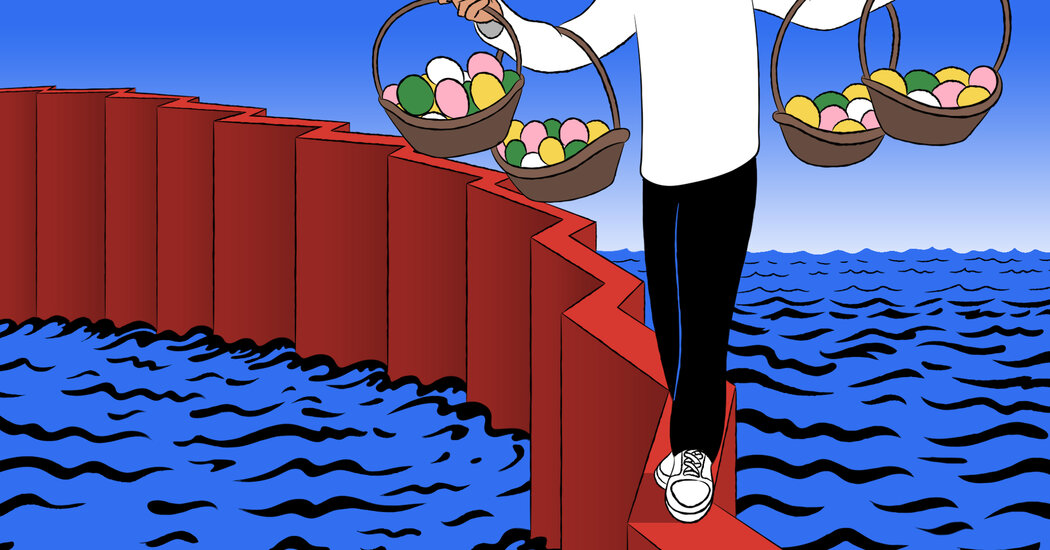

The mood has darkened in the U.S. stock market, and no wonder. Pessimism about the Trump tariffs has set off painful declines.
But the picture has been less dire for people with investments outside the U.S. stock market. Holding plenty of bonds and including stakes in international stock markets were keys to stability and, maybe, even modestly positive returns in the first three months of the year. While there is no guarantee that this approach will work as well in the future, it has held its own over many years and is, I think, a sound strategy for most people.
Just look at what we’ve recently experienced. The quarterly numbers from Morningstar, a financial markets research firm, show that old-fashioned diversified investments like those favored in retirement accounts posted much better returns than the big-name tech stocks, like Tesla and Nvidia, that had buoyed the U.S. stock market over much of the previous couple of years. Tesla, whose chief executive, Elon Musk, has become a lightning rod for critics of the Trump administration, lost more than 35 percent in the three months that ended on Monday. Nvidia, a star of the artificial intelligence boom, lost nearly 19 percent.
There were gains in the first quarter in many markets in Europe, Latin America and Asia, though stocks in those regions have joined in worldwide market declines lately, as the potential for grave global damage from tariffs has sunk in.
Pessimism in the markets is often a contrarian signal — an indication that it’s time for traders to start buying because, at least in comparison with prices before a market fall, bargains are out there. Certainly, sentiment about the U.S. stock market has worsened, both among rank-and-file investors and among people who view themselves as market experts.
But timing the market on this or any other basis is hazardous. While it’s possible that the latest declines will turn out to be a market bottom, stocks may still have a long way to fall, especially if President Trump’s tariff policy leads to a protracted trade war and a domestic recession. The chances of bad outcomes have increased appreciably in the eyes of erstwhile market and economic bulls.
But for truly diversified, long-term investors, market timing is usually a mistake. I’m always invested in global stocks and bonds, and intend to keep buying regardless of the latest news on tariffs.
The Tariff Problem
Mr. Trump imposed his latest series of tariffs on Wednesday, which he called Liberation Day. The enormous size of these tariffs, levied on a wide range of countries simply because they have run trade surpluses with the United States, startled the markets.
Depending on how the tariffs are carried out and whether they stand, the effective U.S. tariff rate could rise from 18 percent, according to a Goldman Sachs estimate, to around 24 percent, according to Capital Economics. That would be the highest level in 125 years. Recall that a rush around the world to raise tariffs in the 1930s made the Great Depression much worse.
The president says tariffs will help rebuild the U.S. manufacturing base and level the playing field for trade worldwide. In addition, he says tariffs will raise substantial revenue — which could allow him and his Republican supporters to cut taxes without unduly increasing the budget deficit.
My colleagues are reporting on the overall toll of the Trump tariffs, and I won’t duplicate that effort here. But in general terms, economists overwhelmingly say the net effect of tariffs is destructive, both for the United States and for many other countries, including its allies and neighbors.
The University of Chicago regularly surveys more than 80 eminent economists on important issues. In September, it asked them to respond to this statement: “Imposing tariffs results in a substantial portion of the tariffs being borne by consumers of the country that enacts the tariffs, through price increases.” Economists tend to have many different opinions, but the degree of consensus on this issue was startling: 95 percent said they “strongly agree” or “agree,” and 2 percent were “uncertain.” Only 2 percent disagreed.
The few dissenters are well represented in the Trump administration.
The higher the effective tariffs turn out to be, the greater the odds that the economy will slow and, perhaps, fall into a recession, many economists say. Recessions usually mean layoffs, wage freezes, households in distress and shriveling stock portfolios.

So of course there’s gloom in the markets. With global alliances fraying and trade conflicts erupting, is this a good time to buy stocks — or is it smarter to prepare for much bigger trouble ahead? Part of the answer will depend on Mr. Trump.
I’m hedging my bets, as I indicated in last week’s column — with a well-diversified portfolio containing low-cost index funds that track just about all tradable global stock and bond markets. That kind of portfolio did rather well in the last quarter, at least compared with domestic stock funds.
The Returns
Here are some of the average numbers for the quarter, reported by Morningstar:
Taxable bond funds: Up 1.9 percent.
Municipal bond funds: Down 0.2 percent.
International stock funds: Up 4.7 percent.
Diversified asset allocation funds with 30 to 50 percent stock and most of the remainder in bonds: Up 1 percent.
And here’s how target-date retirement funds, of various vintages, did on average. Those with longer maturities tend to hold more stocks, which hindered performance this year.
2025 funds, which contain large dollops of bonds: Up 1.2 percent.
2030 funds, with a little bit less in bonds: Up 0.7 percent.
2060 funds, which mainly hold stock: Down 0.8 percent.
Diversification reduced portfolio risk in the last quarter, though diversified strategies don’t produce the best returns.
Nvidia over the last 20 years returned an annual average of 37.8 percent. And in the first quarter, stock funds that were focused on Latin America returned an average 12.1 percent, while precious-metal funds, fueled by rising gold prices, rose 32.8 percent.
Diversified portfolios can never match the absolute best returns in any given period. But they have other virtues.
The past doesn’t predict the future, and we don’t know what will produce eye-popping returns in the years ahead. Are you willing to take the risk that you will place your bet on the wrong horse? Betting may be fun for an afternoon at the track, but it seems foolhardy for the money I’ll need down the road. So I expect to continue with the boring but effective approach that most academic research suggests is wise — broad investments in cheap index funds, divided among different categories of assets.
Hold Treasury bills or money market funds for cash that you need soon. You can get more than 4 percent on those short-term holdings now. I find that if I have enough stashed away in an easy-to-liquidate form, I am calmer, knowing that I can ride out a stock market downturn without touching the core of my portfolio.
Safeguarding your money is even more critical for people who are already in retirement or approaching the end of a regular working paycheck. High-quality bonds, taxable or municipal, depending on your own situation, are likely to be far more dependable than stocks — even dividend-paying stocks — if you need to rely on your investments for day-to-day living.
But despite their shortcomings, which are all too obvious in the middle of big market declines, stocks over the long run have been able to earn inflation-beating returns. Bonds and cash holdings won’t do that. That’s why diversified stock investments make sense for people with decades ahead of them.
These are difficult decisions, and they are especially challenging when the markets are rocky and government policies may be contrary to your own best interests.
Caution is more important than risk-taking for many people now. So check your returns, correct your course if need be and then hang on for a turbulent ride.