

As the UN prepares to sign a major treaty on plastic pollution, are we on the brink of unstoppable positive change?
It’s all over our homes, in the clothes on our backs, and is vital to the operation of global trade, including the food system. Yet plastic – once hailed as a miracle material – is now causing enormous damage to the environment, not only through the carbon required to produce it, but also via the pollution it creates.
On 25 November, members of the United Nation’s environment committee will meet in South Korea to finalise the Global Plastic Treaty, with the document due to be signed in 2025. This legally binding agreement follows on from the end plastic pollution resolution, which was adopted in 2022, and will cover all stages of plastic production, use and waste management.
The treaty’s focus on better product design, comprehensive recycling and eliminating all non-essential single-use plastics will require innovative solutions. Luckily, many new ideas developed by scientists, designers and engineers are already in the pipeline.
Novel technologies that rely on unlikely ingredients such as food waste, fungus and friendly bacteria have the potential to revolutionise industries such as packaging and textiles. Which is fortunate, because there’s no time to waste – the world currently produces around 435m metric tonnes of plastic each year, according to a recent report by the Organisation for Economic Co-operation and Development (OECD), with production projected to rise to 736m metric tonnes by 2040 if we continue at current rates. Of this total, around half are single-use.
Circular solutions
“The need for high quality, functional packaging is only going to grow, not only because the population is increasing, but because countries are becoming wealthier and want more pre-packaged items,” says Lori Goff, founder and CEO of Netherlands-based Outlander Materials, who created biodegradable plastic alternatives.
“But single-use plastics are not being recycled. They’re ending up in landfill or incineration, if we’re lucky. A lot of it is just going directly into the environment, breaking down into microplastics.”

Many new ideas developed by scientists, designers and engineers to eliminate single-use plastics are already in the pipeline
Goff’s solution is UnPlastic, a fully home compostable, food-safe wrap made from a material called bacterial nanocellulose. Outlander synthesises bacterial nanocellulose through the fermentation of organic waste that’s left over from the production of beer, making UnPlastic a truly circular product.

The company is currently in talks with investors about scaling up production of UnPlastic with a view to a commercial launch, along with partnerships with established packaging firms. “They already have the infrastructure, leverage and distribution channels to enable them to use this technology to make better materials for their packaging,” explains Goff. By licensing companies overseas to produce bacterial nanocellulose from local organic waste streams, Outlander also avoids the emissions that are associated with global shipping.
A lot of it is just going directly into the environment, breaking down into microplastics
A similar model is available when it comes to producing mycelium packaging, a compostable replacement for Styrofoam made from the root structure of fungi and waste hemp fibres. Grown bio, also based in the Netherlands, uses technology developed by Ecovative Design LLC in the US, “sourcing as locally as possible to prevent unnecessary transport”, according to spokesperson Christina Thurner.
The company’s current clients are “early adopters”, she says, but “now that the material is becoming acknowledged”, Grown bio is scaling up across Europe. Prices have fallen already due to automation of the company’s production processes and will continue to do so, thanks to economies of scale, while Goff believes that the price of plastic packaging is likely to increase as awareness grows of the environmental and health harms it causes.
Revolutionising recycling
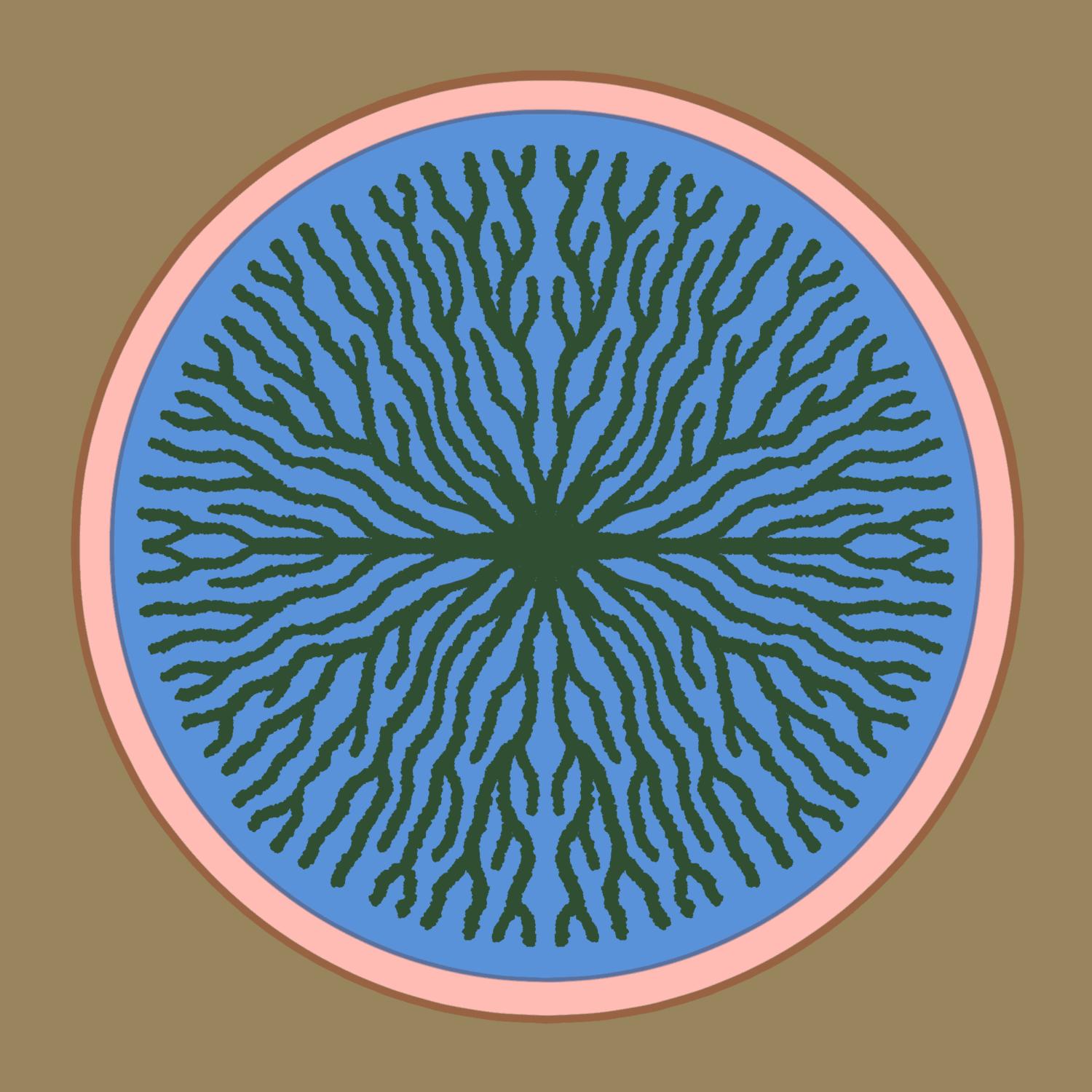
Mycelium packaging is a compostable replacement for Styrofoam, made from the root structure of fungi and waste hemp fibres
Although producing fewer plastic products, rather than recycling, should be the ambition, we still need radical improvements to recycling processes. Carbios, a French biotechnology company, offers a solution. Its process uses a ‘plastic-eating’ enzyme to break down the PET in plastic bottles, food trays and some textiles into the raw chemical ingredients used to create recycled plastic. The product is indistinguishable from so-called virgin plastic, even after multiple cycles of recycling, meaning it can be used for food packaging and cosmetics.
While traditional mechanical recycling struggles with anything other than transparent PET because of the difficulty of separating the dyes from the plastic, Carbios’s biological process can handle it all. The two technologies work side by side, rather than in competition with each other, says Bénédicte Garbil, senior vice president of corporate affairs and sustainability.
“Traditional mechanical recycling is doing a great job using the feedstock from transparent bottles, and thanks to them, we have a value chain for collection and sorting, and that’s very important,” she says. “We can recycle what is non-recyclable.”
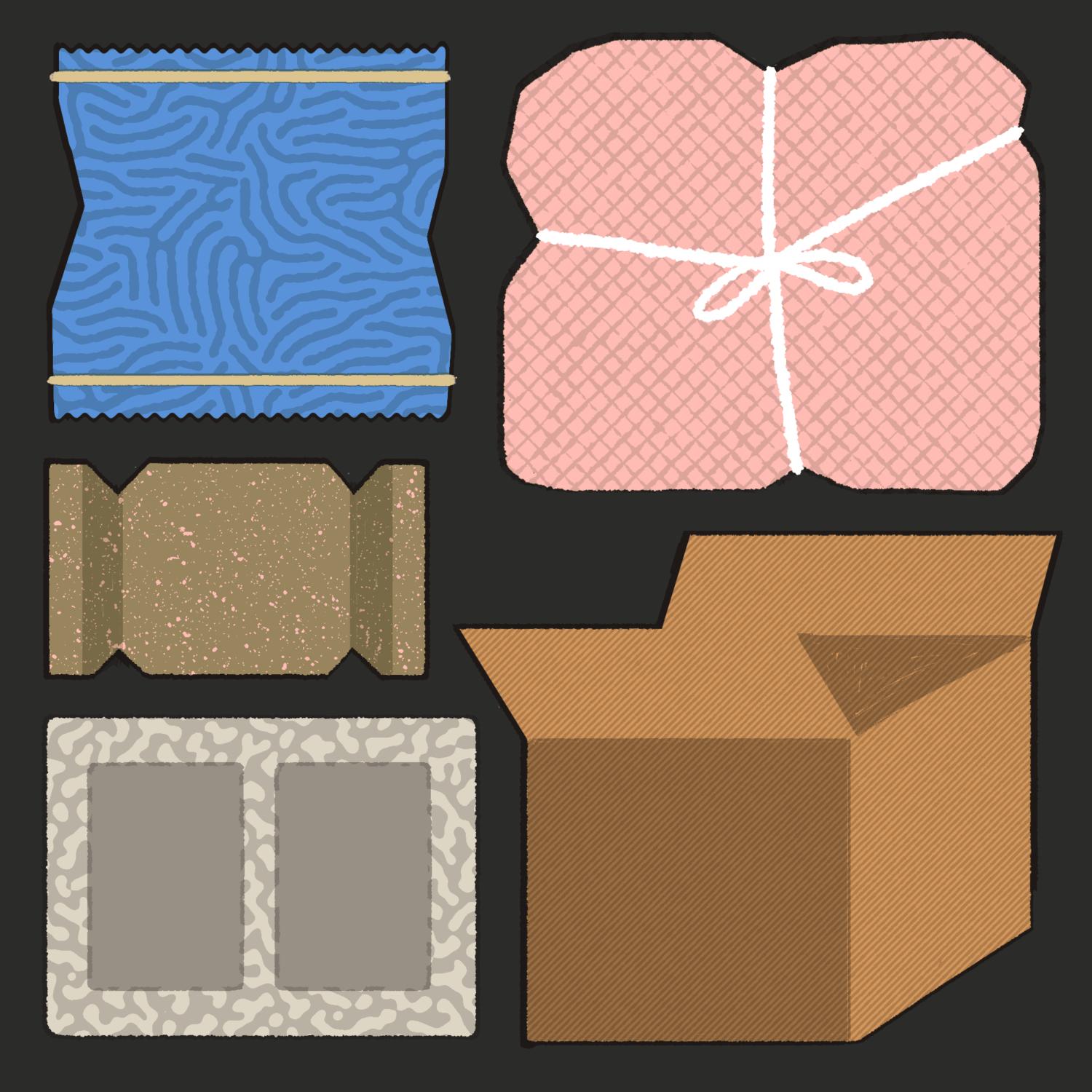
‘The need for high quality, functional packaging is only going to grow,’ predicts Lori Goff, founder of Netherlands-based Outlander Materials
Carbios is currently building its first biorecycling plant, close to the borders of Belgium, Germany and Luxembourg. When it begins operation in 2026, the company hopes to be able to process 50,000 tonnes of plastic waste a year – equivalent to 2bn bottles.
To really start to tackle the challenge of plastic waste at scale, however, Carbios is planning to go global by licensing its technology to partners in nations including China and Turkey. “We need to make sure it’s accessible in as many regions as possible,” she says.
Transforming textiles
A recent study published in the journal Nature Communications estimated that, of the 60m tonnes of plastic produced globally in 2019, up to 30%, or 12.3m tonnes, was generated by the apparel industry. This is where disrupters like Modern Synthesis, a company creating a range of different synthetic – but crucially non-plastic – fabrics for the fashion sector, come in.
Modern Synthesis grows its materials from the same bacterial nanocellulose used by Outlander Materials for its food packaging, yet is able to tweak the process to create textiles with distinct properties. They worked with the Danish fashion brand Ganni, for example, to make a one-off non-leather version of the brand’s Bou Bag. With alternative leathers typically made from plastic, Modern Syntheis’s material is a welcome arrival.
Although all of their products are not fully biodegradable, as this would mean the product deteriorated whilst being worn, the company is aiming for its materials to be fully recyclable within a closed loop system. “In some cases, composting is good in that we don’t want to harm the environment,” explains Jen Keane, the company’s co-founder and CEO. “But actually, even better is to recapture that material and make use of it.
“We’re building the ability to have circular supply chains where we can take these natural ingredients and create really high-quality, high performing materials for a variety of different applications, but then can circle back into the system.”
By turning away from plastic in textiles, we also start to address the massive challenge of microplastic shedding. Accurate figures for microplastics in the environment are hard to come by, given the global nature of the problem and the number of variables involved, but the EEA estimates that 16-25% of microplastics released into the oceans each year are shed from synthetic textiles, adding up to between 200,000 and 500,000 tonnes on an annual basis.
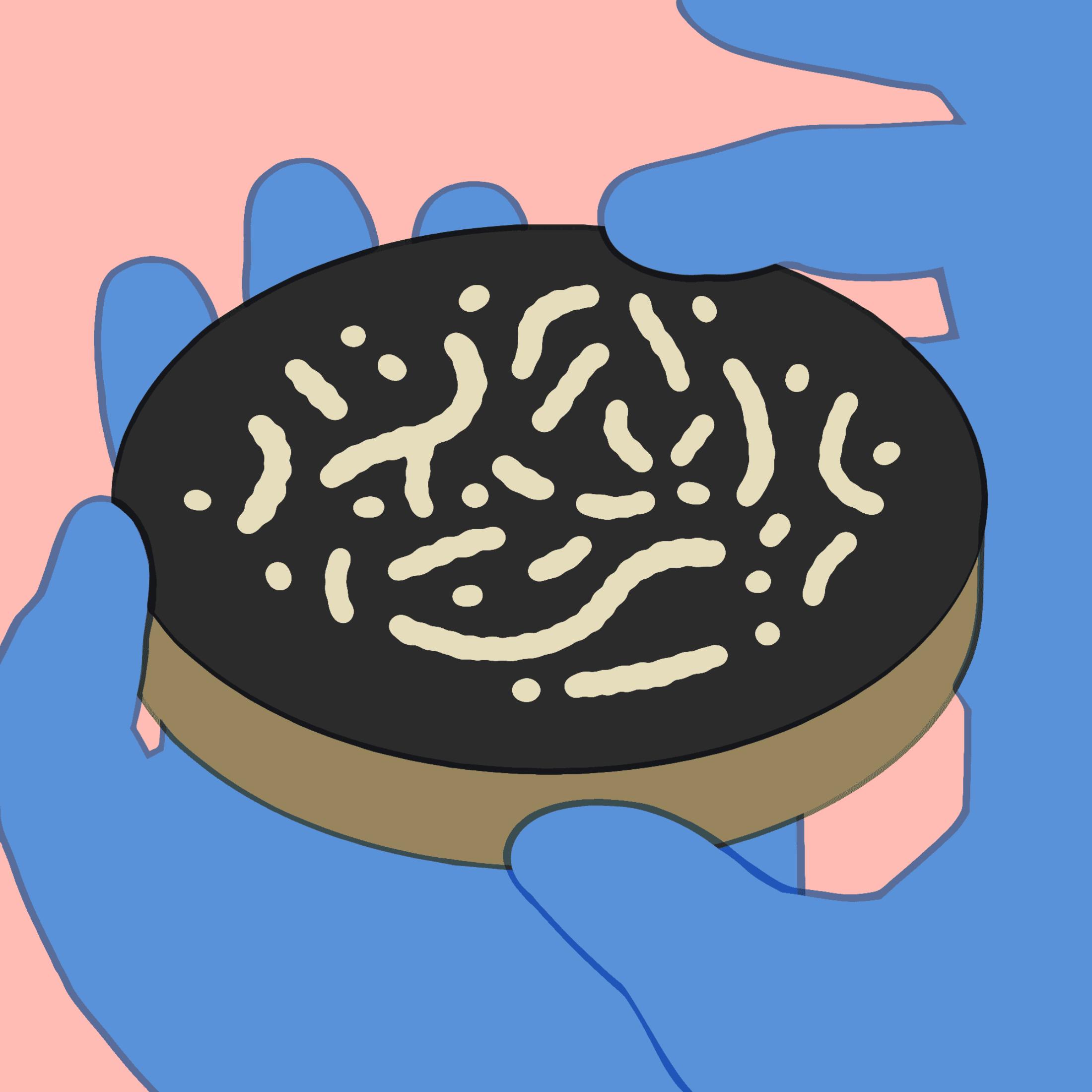
Big brands and industry players waking up to the fact that innovative plastic alternatives will be key to meeting their carbon and waste reduction targets
The negative impact of fashion on the environment is what drove Keane to leave the industry and inspired her to rethink that system, looking to nature for inspiration. “Because ultimately, the world around us is a circular economy that’s quite perfect in its own right. So how can we take those principles and apply those to the way we make materials? As a designer, I wanted to show how these technologies could create opportunities, and not just replacements.”
To address this, says Keane: “you have to build within the existing infrastructure as much as possible. So, we’ve been designing our manufacturing process so that it can work with existing machinery, and partnering to look at how we can scale without having to do everything from scratch.”
Make no mistake: the scale of the plastic challenge is considerable, whether we’re talking about packaging or textiles. But with big brands and industry players waking up to the fact that innovative plastic alternatives like those mentioned here, will be key to meeting their carbon and waste reduction targets, a tipping point might just be upon us. Especially when you consider, says Keane, that future regulation is likely to incentivise a move away from petrochemical-based products.
“There are a lot of forces that are really going to drive this. It’s just getting to that point where we can drive that change. It’s the only way forward.”
Illustrations: Elena Boils
Join the challenge to reduce plastic
Get informed about how your company uses plastic, including within its supply chains. Ask whether alternatives could be adopted.
Image: Ben Robbins
Even firms outside of industry have an impact on plastic pollution. Consider your use of single-use plastics at work and talk to your colleagues about this issue.
Image: fedcophotogrphy
It’s very hard to avoid plastic altogether, but buying loose rather than packaged produce, cooking from scratch rather than choosing ready meals, and buying non-synthetic and vintage clothing are all good places to start.
Image: Chris Liveran
This article is part of Positive Tipping Points, a series about people who are discovering ways to trigger significant and cascading positive changes within the climate crisis. Produced by Positive News in partnership with Imagine5.