
Close Menu

    Subscribe to Updates

    Get the latest creative news from FooBar about art, design and business.

    What's Hot

    Slow Living in Portugal: What a Year Actually Costs

    August 30, 2026

    What To Know About The New COVID Shots Approved By The FDA

    August 30, 2026

    AEO mentions vs. citations: Key differences explained

    August 30, 2026
    Facebook X (Twitter) Instagram
    Trending
    • Slow Living in Portugal: What a Year Actually Costs
    • What To Know About The New COVID Shots Approved By The FDA
    • AEO mentions vs. citations: Key differences explained
    • App verticals – Company Profile
    • Why Airlines Don’t Want Rechargeable Batteries In Checked Luggage
    • PLTR Price Prediction: Smart Money Is Crowding the Short Side at $186 — Pullback to $180 Before Any Run at $200
    • Kaitlan Collins Predicts What Trump Will Do If Faced With Third Impeachment Attempt
    • You’ll Never Believe Where Weight Goes When You Lose It
    Facebook X (Twitter)
    SBM Global News
    Demo
    • Home
    • Top Stories
      • Politics
    • Business
      • Small Business
      • Marketing
    • Finance
      • Investment
    • Technology

      App verticals – Company Profile

      August 30, 2026
      Read More

      Chinese automakers are following Tesla’s bet that robots are the next big profit machine

      August 29, 2026
      Read More

      Service Robot Co. – Company Profile

      August 28, 2026
      Read More

      Google’s new Fitbit Air brings Pokémon Sleep to your wrist

      August 28, 2026
      Read More

      The LegalTech AI Company Seeing Enormous Traction

      August 27, 2026
      Read More
    • Lifestyle
      • Travel
    • Feel Good
    • Get In Touch
    SBM Global News
    Demo
    Home»Top Stories»How The Watermelon Became A Symbol Of Solidarity With Palestinians Worldwide
    Top Stories

    How The Watermelon Became A Symbol Of Solidarity With Palestinians Worldwide

    By Staff WriterJanuary 20, 20249 Mins Read
    Facebook Twitter LinkedIn Reddit Email
    Share
    Facebook Twitter LinkedIn Pinterest Email

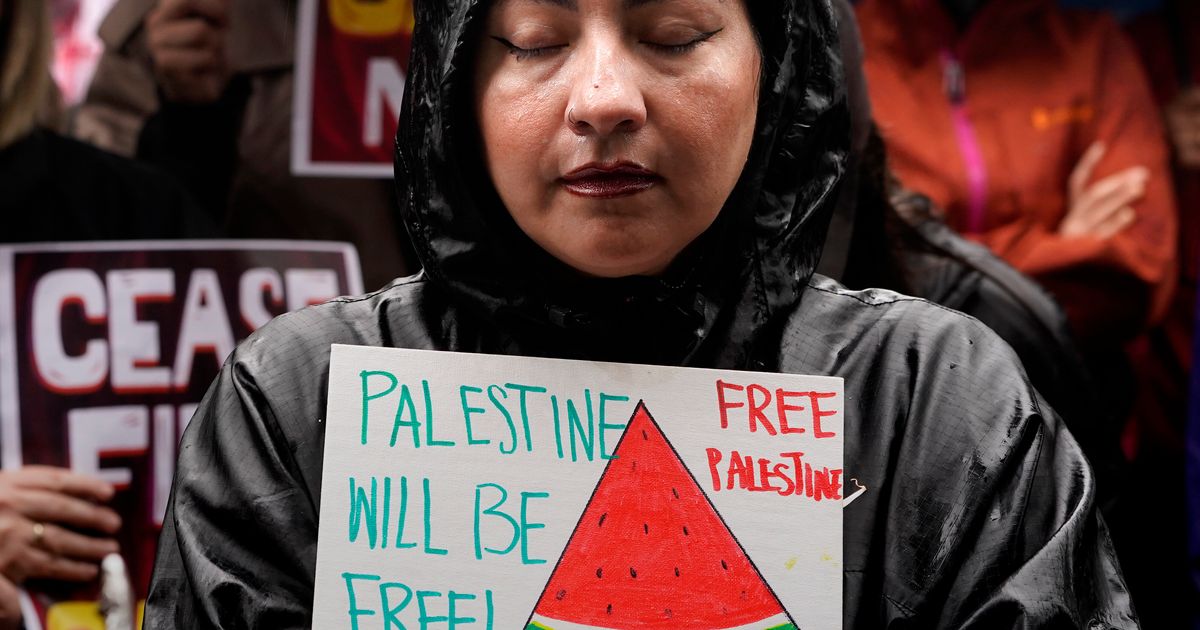
    Over the past three months, on banners and T-shirts and balloons and social media posts, one piece of imagery has emerged around the world in protests against the Israel-Hamas war: the watermelon.

    The colors of sliced watermelon — with red pulp, green-white rind and black seeds — are the same as those on the Palestinian flag.

    From New York and Tel Aviv to Dubai and Belgrade, the fruit has become a symbol of solidarity, drawing together activists who don’t speak the same language or belong to the same culture but share a common cause.

    To avoid repressive censorship, Chinese dissidents once pioneered “algospeak,” or creative shorthands that bypass content moderation, recently seen with Winnie the Pooh memes mocking Chinese President Xi Jinping.

    People around the world began using algospeak to subvert algorithmic biases on TikTok, Instagram and other platforms.

    The colors of sliced watermelon — with red pulp, green-white rind and black seeds — are the same as those on the Palestinian flag.
    The colors of sliced watermelon — with red pulp, green-white rind and black seeds — are the same as those on the Palestinian flag.

    The internet is now teeming with pictorial signs — pixelated images, emoji and other typographical codes — that signal political dissent.

    The watermelon emoji is the latest example.

    Here’s how the watermelon went from being a symbol of protest in the West Bank and Gaza to a global sign of solidarity with Palestinians online.

    After the 1967 Mideast war, the Israeli government cracked down on displays of the Palestinian flag in Gaza and the West Bank. In Ramallah in 1980, the military shut down a gallery run by three artists because they showed political art and works in the colors of the Palestinian flag — red, green, black and white.

    The trio was later summoned by an Israeli officer. According to artist and exhibit organizer Sliman Mansour, an Israeli officer told him, “It is forbidden to organize an exhibition without permission from the military, and secondly, it is forbidden to paint in the colors of the Palestinian flag.” The officer mentioned a watermelon as one example of art that would violate the army’s rules, Mansour told The Associated Press last week.

    In protest, people began to wave the fruit in public.

    “There are stories of young men who defiantly walked the streets with slices of the fruit, risking arrest from Israeli soldiers,” Jerusalem-born author Mahdi Sabbagh wrote. “When I see a watermelon, I think of the unbreakable spirit of our people.”

    From the mid-90s, when Israelis and Palestinians reached interim peace deals, until the current nationalist Israeli government took office a year ago, raising the Palestinian flag receded as a major issue. Three decades later, “it became a national symbol” again, Mansour said.

    Over the past three months, on banners and T-shirts and balloons and social media posts, one piece of imagery has emerged around the world in protests against the Israel-Hamas war: the watermelon.
    Over the past three months, on banners and T-shirts and balloons and social media posts, one piece of imagery has emerged around the world in protests against the Israel-Hamas war: the watermelon.

    A year ago, Israel’s far-right National Security Minister Itamar Ben-Gvir banned Palestinian flags in public places. This effort was met with fervent opposition. In response, Zazim, an activist group of Arab and Jewish Israelis, plastered taxis in Tel Aviv with large watermelon stickers that read: “This is not a Palestinian flag.”

    Demo

    “Our message to the government is clear,” the organization said in a written statement. “We’ll always find a way to bypass any absurd ban and we won’t stop struggling for freedom of expression and democracy — whether this involves the Pride flag or the Palestinian flag.”

    For some, embracing the colors of the flag is about striving for freedom and equality rather than necessarily statehood.

    “I’ve never cared for flags or nationalism,” says Mayssoun Sukarieh, an expert in Middle Eastern studies at King’s College London. “But when it comes to Palestine, it’s a flag of a colonized people who never saw independence. And because it has been banned, it becomes more of a symbol of resistance than it is of nationalism.”

    Watermelons have long been a staple of food in the region, with some dishes, like a popular salad in southern Gaza, originating with Bedouin Arab tribes.

    Increasingly, young activists have adopted the watermelon emoji in calling for a cease-fire in Gaza. Emoji may confuse algorithms that advocates say tech companies deploy to suppress posts with keywords like “Gaza” and even just “Palestinian.”

    “With the watermelon (emoji), I think this is actually really the first time where I’ve seen it widely used as a stand-in. And that to me marks a notable uptick in censorship of Palestinian content,” says Jillian York, the director for international freedom of expression at the Electronic Frontier Foundation.

    The Berlin-based York has analyzed Meta’s policies. While “shadow banning,” or the limited visibility of certain posts, can be difficult to discern, advocacy and nonprofit organizations studying digital rights in the Middle East say they have tracked stark biases, especially on the Meta platforms Facebook and Instagram. Meta hasn’t said much directly about this but cites a statement it released in October.

    “Censorship is somewhat obvious” on Instagram, York said. In mid-October, people began to notice that if one’s Instagram bio said “Palestinian” in English alongside the Palestinian flag emoji and “Praise be to god” in Arabic, the app translated the text to “Terrorist.” Meta released a public apology.

    The fruit has increasingly come to be recognized as a symbol of Palestinian resistance and a global sign of solidarity.
    The fruit has increasingly come to be recognized as a symbol of Palestinian resistance and a global sign of solidarity.

    Watermelons are not the only symbol to catch on with activists. Other signs of global Palestinian solidarity include keys, spoons, olives, doves, poppies and the keffiyeh scarf. In November, to connect with the peaceful message of Armistice Day, when many Brits traditionally wear red poppy pins, protesters this year passed out white poppy pins, to commemorate victims of all wars. On the holiday, scores of protesters wearing poppy pins marched across London calling for an end to the war in Gaza.

    In the United States, Jewish Voice for Peace amplified watermelon imagery in calling for a cease-fire in Gaza last month. The group held signs in New York in the colors of the Palestinian flag and with triangular watermelons, leveraging the triangle symbol of ACT UP, the historic AIDS activist group.

    Jason Rosenberg, a member of both organizations, said, “Our reinvented image shows that our fight for liberation and fight to end the epidemic is intrinsically connected to the Palestinian struggle.”

    Another reason the watermelon might resonate: It has seeds. There is a saying, often attributed to the Greek poet Dinos Christianopoulos, that is popular among activists: “They wanted to bury us; they didn’t know we were seeds.”

    “You might be able to smash a watermelon. You might be able to destroy a fruit, but the seed is a little harder to crush,” says Shawn Escarciga, an artist who created the coalition’s design. “It’s really powerful that life can come out of something so small and something so resilient — and that it can be spread so, so easily.”

    The image of a watermelon punctuated by bold, triangular seeds was held up at the groups’ protest at Manhattan’s Lincoln Center, and has since proliferated online. That often happens — art emerges from protest movements and then enters the mainstream.

    “Artists have always been at the forefront of revolution, resistance, politics, in varying degrees,” Escarciga says. “We’re doing this, using this iconic imagery, because AIDS isn’t over — and war is obviously not over.”

    Israel’s air, ground and sea assault in Gaza has killed more than 24,000 people, some 70% of them women and children, according to the Health Ministry in the Hamas-ruled territory. The count does not differentiate between civilians and combatants.

    Throughout, activists around the world have continued to call for peace and a permanent cease-fire. Israel says ending the war now, before Hamas is crushed, would give a victory to the militants who attacked southern Israel on Oct. 7 and killed some 1,200 people and took about 250 hostage.

    “We’re seeing Palestinian flags being banned, even the emoji online being flagged — and, you know, the word ‘Palestine’ being censored online,” Escarciga said. “But having this image that transcends language, that transcends culture, that transcends algorithms — can really reach people.”

    Support HuffPost

    The Stakes Have Never Been Higher

    At HuffPost, we believe that everyone needs high-quality journalism, but we understand that not everyone can afford to pay for expensive news subscriptions. That is why we are committed to providing deeply reported, carefully fact-checked news that is freely accessible to everyone.

    Our News, Politics and Culture teams invest time and care working on hard-hitting investigations and researched analyses, along with quick but robust daily takes. Our Life, Health and Shopping desks provide you with well-researched, expert-vetted information you need to live your best life, while HuffPost Personal, Voices and Opinion center real stories from real people.

    Help keep news free for everyone by giving us as little as $1. Your contribution will go a long way.

    At HuffPost, we believe that everyone needs high-quality journalism, but we understand that not everyone can afford to pay for expensive news subscriptions. That is why we are committed to providing deeply reported, carefully fact-checked news that is freely accessible to everyone.

    Help keep news free for everyone by giving us as little as $1. Your contribution will go a long way.

    As the 2024 presidential race heats up, the very foundations of our democracy are at stake. A vibrant democracy is impossible without well-informed citizens. This is why HuffPost’s journalism is free for everyone, not just those who can afford expensive paywalls.

    We cannot do this without your help. Support our newsroom by contributing as little as $1 a month.

    As the 2024 presidential race heats up, the very foundations of our democracy are at stake. At HuffPost, we believe that a vibrant democracy is impossible without well-informed citizens. This is why we keep our journalism free for everyone, even as most other newsrooms have retreated behind expensive paywalls.

    Our newsroom continues to bring you hard-hitting investigations, well-researched analysis and timely takes on one of the most consequential elections in recent history. Reporting on the current political climate is a responsibility we do not take lightly — and we need your help.

    Support our newsroom by contributing as little as $1 a month.


    View original article here

    Share. Facebook Twitter LinkedIn Email Reddit
    Previous ArticleSeoul Police Chief Charged in South Korea Crowd Crush
    Next Article Investors are starting to worry about the economy

    Related Posts

    Opinion | And the Award for Best Performance at the State of the Union Goes to …

    March 11, 2024
    Read More

    Ramadan 2024: Crescent Moon Sightings Determine Start Times

    March 11, 2024
    Read More

    The Blue Waters of San Andres, an Island Belonging to Colombia, Are Stunning

    March 11, 2024
    Read More
    Add A Comment

    Leave A Reply Cancel Reply

    Demo
    Top Posts

    Former FBI, CIA Head Has ‘Serious Concerns’ With Trump Cabinet Picks

    December 28, 2024435

    Emirates to operate next-gen A350 on the third daily service to Cape Town

    January 14, 2026256

    AAVE Price Prediction: Target $215-225 by Mid-January 2025 as Technical Indicators Signal Bullish Momentum

    December 15, 2025240

    Ventive Hospitality Joins Green Fins: Strong ESG Lift

    February 17, 2026211
    Don't Miss
    Lifestyle

    Slow Living in Portugal: What a Year Actually Costs

    By Staff WriterAugust 30, 20268 Mins Read

    Slow living has become shorthand for a particular kind of move: fewer hours, smaller rooms,…

    Read More

    What To Know About The New COVID Shots Approved By The FDA

    August 30, 2026

    AEO mentions vs. citations: Key differences explained

    August 30, 2026

    App verticals – Company Profile

    August 30, 2026
    Stay In Touch
    • Facebook
    • Twitter
    Demo
    About Us

    Small Business Minder brings together business and related news from around the world in one place. Follow us for all the business news you'll need.

    Facebook X (Twitter)
    Our Picks

    Slow Living in Portugal: What a Year Actually Costs

    August 30, 2026

    What To Know About The New COVID Shots Approved By The FDA

    August 30, 2026
    Most Popular

    Former FBI, CIA Head Has ‘Serious Concerns’ With Trump Cabinet Picks

    December 28, 2024435

    Emirates to operate next-gen A350 on the third daily service to Cape Town

    January 14, 2026256
    © 2026 Small Business Minder
    • Home
    • Get In Touch

    Type above and press Enter to search. Press Esc to cancel.

    Ad Blocker Enabled!
    Ad Blocker Enabled!
    Our website is made possible by displaying online advertisements to our visitors. To get the most from our site, please disable your Ad Blocker.