
Close Menu

    Subscribe to Updates

    Get the latest creative news from FooBar about art, design and business.

    What's Hot

    Is Your Washing Machine Growing Mold? Here’s How To Tell

    September 29, 2026

    How Much Money Each Generation Is Spending on Fun, Hobbies

    September 29, 2026

    Systech Corp – Company Profile

    September 29, 2026
    Facebook X (Twitter) Instagram
    Trending
    • Is Your Washing Machine Growing Mold? Here’s How To Tell
    • How Much Money Each Generation Is Spending on Fun, Hobbies
    • Systech Corp – Company Profile
    • META Price Prediction: Overbought Rocket Needs Fuel — $674 Break or $633 Flush
    • Wall Street Journal Has 2 Withering Words For Trump’s Latest Putin Move
    • Strange Times – A Wealth of Common Sense
    • Everything You Need to Know About the October 2026 Prime Day Sale
    • HubSpot AEO vs. Ahrefs Brand Radar: Features compared [2026]
    Facebook X (Twitter)
    SBM Global News
    Demo
    • Home
    • Top Stories
      • Politics
    • Business
      • Small Business
      • Marketing
    • Finance
      • Investment
    • Technology

      Systech Corp – Company Profile

      September 29, 2026
      Read More

      Truecaller takes its scam intelligence to the open web as it looks beyond caller ID

      September 28, 2026
      Read More

      SMARTLINEN – Company Profile – AllBusiness.com

      September 27, 2026
      Read More

      Meta says it will run ads for ‘Musk’ documentary after all

      September 27, 2026
      Read More

      tapistro – Company Profile – AllBusiness.com

      September 26, 2026
      Read More
    • Lifestyle
      • Travel
    • Feel Good
    • Get In Touch
    SBM Global News
    Demo
    Home»Lifestyle»Is Your Washing Machine Growing Mold? Here’s How To Tell
    Lifestyle

    Is Your Washing Machine Growing Mold? Here’s How To Tell

    By Staff WriterSeptember 29, 20266 Mins Read
    Facebook Twitter LinkedIn Reddit Email
    #image_title
    Share
    Facebook Twitter LinkedIn Pinterest Email

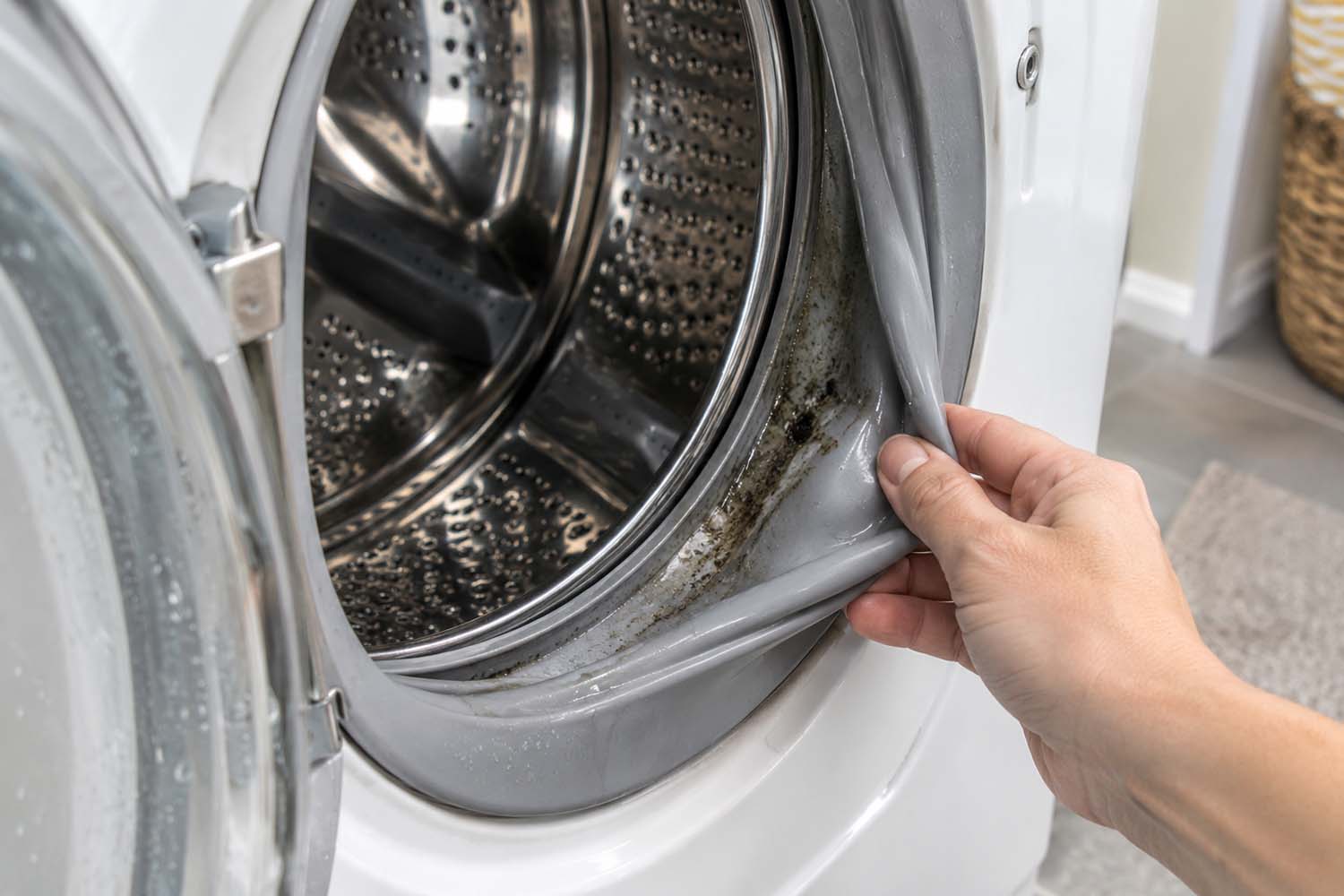
    You run a hot cycle, add detergent, and pull out towels that smell like a damp basement. If that sounds familiar, there may be mold in your washing machine, or at least some other microbial buildup, quietly growing in the warm, wet spots you never see.

    It’s not as rare as it sounds. In a 2015 study of 70 household washing machines in Slovenia, 79% tested positive for fungi, with samples taken from detergent drawers and rubber door seals. A 2021 review in Applied and Environmental Microbiology cites the study. That doesn’t mean 79% of washers have visible mold, but it shows how readily fungi settle into the damp parts of a machine.

    Here’s how to tell what you’re dealing with, how to clean it without damaging your machine or your lungs, and how to keep it from coming back.

    How to tell if your washer has mold

    • Check the door seal. On a front-loader, pull back the rubber gasket and look in the folds for black, green or brown spots and a slimy film. Water and lint collect there after every load.
    • Look at the detergent drawer. Slide it out if it comes free and check the cavity behind it too. Dark spots and gunk in there are common.
    • Look under the lid. On a top-loader, check the underside of the lid, the rim of the tub and any dispensers.
    • Use your nose, but don’t stop there. A musty or sour smell coming from the machine, or from clothes that just came out of it, is the classic warning sign.
    A smell isn’t proof of mold. Bacteria and fungi both produce laundry odors, according to the same review, and soap and detergent residue can build up in the same spots. Look before you assume. For smells that linger elsewhere in the house, here’s how to remove odors from your home.

    The same 2015 study found that machines with fungi were most often run at 40°C (104°F), while fungus-free machines were most often run at 60°C (140°F). Detergent and softener residue and wash temperature were the most important factors the researchers identified. That’s an association, not proof that a hot wash prevents mold, but it’s one reason a regular hot cleaning cycle is worth it.

    Before you clean: check what your manual says about bleach

    Here’s what most cleaning guides skip. Appliance brands don’t agree on bleach.

    • Whirlpool: for stubborn mold or mildew on the gasket, its guide calls for 3/4 cup of liquid chlorine bleach in 1 gallon of warm water, left on for about 5 minutes before scrubbing.
    • LG: its support page says to avoid chlorine-based or acidic washer cleaners because they may cause discoloration or corrosion, and recommends an oxygen-based washing machine cleaner instead.

    Look up your model in the manual or on the manufacturer’s support site before you pick a product. If you can’t find guidance, start with the manufacturer’s recommended cleaner or cleaning cycle, if one is specified for your model.

    Never mix bleach with other cleaners. The Washington State Department of Health says bleach plus ammonia makes toxic chloramines, and bleach plus acids, including vinegar, toilet bowl cleaner and rust remover, releases chlorine gas. If you’ve recently used another cleaner in the machine, follow the manufacturer’s instructions for rinsing it out completely before using bleach. If anyone feels sick after exposure, call a health care provider or 911.

    How to clean mold from your washing machine

    Start with the gentlest option that works and move up only if you need to.

    1. Empty the drum and protect yourself. Take out all laundry and put on gloves and eye protection. The CDC recommends at least an N95 respirator, gloves and goggles for mold cleanup, so consider a respirator if you’re disturbing visible mold. Ventilate the room while you clean.
    2. Scrub the easy spots first. Wipe the gasket folds, the door glass and the drawer cavity with warm water and detergent, then pull the drawer and scrub it in the sink. The EPA’s advice for mold on hard surfaces is the same: scrub with detergent and water, then dry completely.
    3. Treat what’s left, the way your manual says. Use the bleach solution your manufacturer specifies, or an oxygen-based washer cleaner if that’s what it recommends. Never both at once.
    4. Run the cleaning cycle. Use the tub clean or self-clean setting if your machine has one. If not, use the hottest wash your manual allows, with the cleaner where the manual says to put it.
    5. Rinse, wipe and dry. Add an extra rinse if your machine offers one, wipe the gasket and the rim of the drum dry, and leave the door and drawer open.

    If you have allergies, asthma, lung disease or a weakened immune system, consider having someone else do the cleanup. The CDC lists those groups as being at greater risk from mold exposure.

    Mold that keeps returning after a thorough cleaning may need a service technician. Look around the machine too. A slow leak from a hose or drain can grow mold on the wall or floor behind it. For general household mold cleanup, the EPA says a moldy patch smaller than about 10 square feet, roughly 3 feet by 3 feet, is usually manageable on your own, while larger areas or water damage call for professional advice. Our guide to ways to make your home less prone to damage covers catching leaks early.

    See also

    Warm dining room with two colorful floral arrangements on a linen-covered table, as a person adjusts one vase while a second bouquet sits nearby. A basket of loose flowers and an entryway arrangement are visible in the background.Warm dining room with two colorful floral arrangements on a linen-covered table, as a person adjusts one vase while a second bouquet sits nearby. A basket of loose flowers and an entryway arrangement are visible in the background.

    The fix most people skip: let it dry

    Mold needs moisture. A washer that’s shut tight and damp is the ideal home for it. A dry one isn’t.

    • Leave the door and drawer open after every load. Whirlpool and LG both recommend it so air can circulate and the inside can dry.
    • Wipe the gasket. Whirlpool suggests a dry cloth after each load and a damp one every few loads.
    • Unload promptly. Wet clothes left sitting in a closed drum are a recipe for musty laundry.
    • Use the right detergent, in the right amount. Check your manual for the type your machine needs and the dose for your load size.
    • Clean on a schedule. Whirlpool suggests a deep clean about once a month or every 30 cycles, and LG suggests running Tub Clean every 30 uses.
    • Consider a dehumidifier. Whirlpool suggests one if your laundry room stays damp.

    More routines that keep the whole house fresh are in our spring cleaning tips.

    The bottom line

    Musty laundry is a signal, not a diagnosis. Look for visible mold in the gasket, drawer and under the lid, check what your manufacturer says before reaching for bleach, and never mix cleaners. Then keep the door open, wipe the seal and clean on a schedule, and the smell has a hard time coming back.

    Demo

    Better Living may earn commissions through affiliate links and may occasionally feature sponsored or partner content. If you make a purchase through our links, we may receive a small commission at no cost to you.


    View original article here

    Share. Facebook Twitter LinkedIn Email Reddit
    Previous ArticleHow Much Money Each Generation Is Spending on Fun, Hobbies

    Related Posts

    Everything You Need to Know About the October 2026 Prime Day Sale

    September 28, 2026
    Read More

    Beyond the Big Five: Discover the Wider World of Wildlife

    September 27, 2026
    Read More

    Five Game-Changing Features on Garmin’s Fenix 9 Pro

    September 26, 2026
    Read More
    Add A Comment

    Leave A Reply Cancel Reply

    Demo
    Top Posts

    Former FBI, CIA Head Has ‘Serious Concerns’ With Trump Cabinet Picks

    December 28, 2024435

    Emirates to operate next-gen A350 on the third daily service to Cape Town

    January 14, 2026256

    AAVE Price Prediction: Target $215-225 by Mid-January 2025 as Technical Indicators Signal Bullish Momentum

    December 15, 2025240

    Wall Street Slumps As Alphabet, Qualcomm And Other Tech Stocks Fall

    February 7, 2026212
    Don't Miss
    Lifestyle

    Is Your Washing Machine Growing Mold? Here’s How To Tell

    By Staff WriterSeptember 29, 20266 Mins Read

    You run a hot cycle, add detergent, and pull out towels that smell like a…

    Read More

    How Much Money Each Generation Is Spending on Fun, Hobbies

    September 29, 2026

    Systech Corp – Company Profile

    September 29, 2026

    META Price Prediction: Overbought Rocket Needs Fuel — $674 Break or $633 Flush

    September 29, 2026
    Stay In Touch
    • Facebook
    • Twitter
    Demo
    About Us

    Small Business Minder brings together business and related news from around the world in one place. Follow us for all the business news you'll need.

    Facebook X (Twitter)
    Our Picks

    Is Your Washing Machine Growing Mold? Here’s How To Tell

    September 29, 2026

    How Much Money Each Generation Is Spending on Fun, Hobbies

    September 29, 2026
    Most Popular

    Former FBI, CIA Head Has ‘Serious Concerns’ With Trump Cabinet Picks

    December 28, 2024435

    Emirates to operate next-gen A350 on the third daily service to Cape Town

    January 14, 2026256
    © 2026 Small Business Minder
    • Home
    • Get In Touch

    Type above and press Enter to search. Press Esc to cancel.

    Ad Blocker Enabled!
    Ad Blocker Enabled!
    Our website is made possible by displaying online advertisements to our visitors. To get the most from our site, please disable your Ad Blocker.