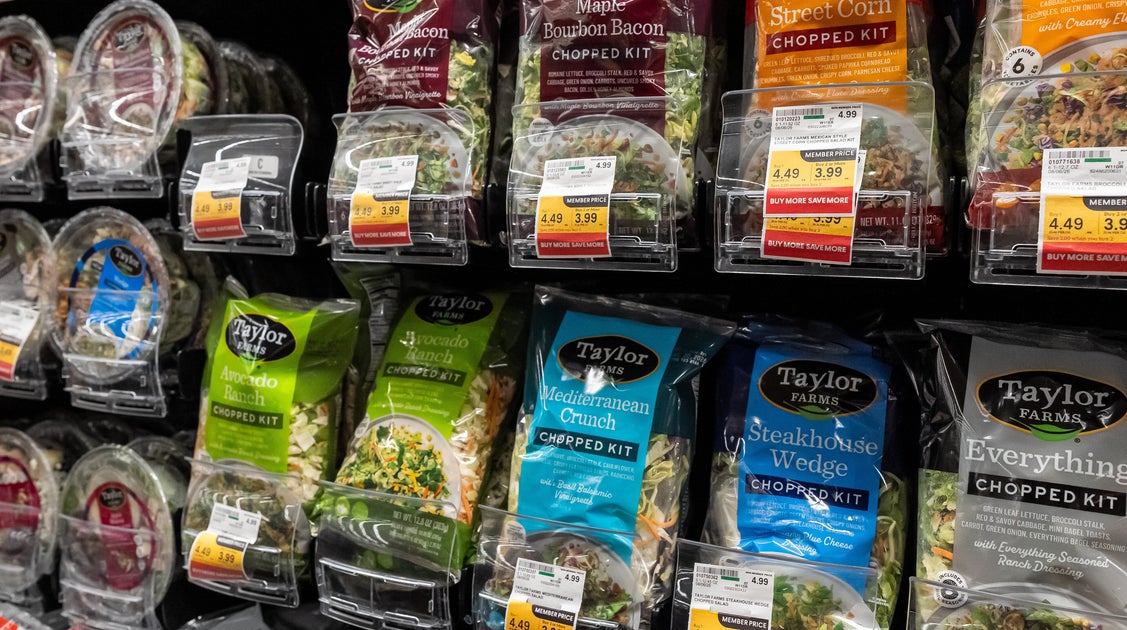

This summer has sparked fears about cyclosporiasis, a diarrhea-causing foodborne illness that spreads when fresh produce is contaminated with fecal matter.
Iceberg lettuce from Taylor Farms de Mexico was identified as one source, but the sources of additional, concurrent cyclosporiasis outbreaks are unknown.
Thousands and thousands of people have gotten sick this summer, but recent data out of Michigan — which was hit hardest by this outbreak — suggests that cases are slowing down.
This week, the Michigan Department of Health and Human Services dropped its lettuce warning, which advised people against buying bagged salad mixes.
“The Michigan Department of Health and Human Services has been doing a great job throughout this workup, and they’re just trying to give people the most up-to-date information,” said Dr. Rebecca Schein, an assistant professor in the department of pediatrics and human development at Michigan State University’s College of Human Medicine.
“So, what they said is that you don’t need to avoid lettuce anymore, but they didn’t change the recommendations on continuing to wash the lettuce,” added Schein.
They’re making this recommendation because rates of cyclosporiasis have “basically plateaued,” she said. “The number of cases is only increasing slightly, so the thought is that we’re maybe past the worst of the outbreak, and therefore it’s OK to eat the lettuce again,” Schein said.
“There is one caveat to that, which is because the outbreak was so intense with so many cases, it is possible that people were just being treated and not being tested [by their doctor],” she said.
This means it’s possible that health departments are missing new cases of cyclosporiasis because doctors recognize the symptoms and treat patients without testing for the illness.
“The lifting of the advisory is good news, but it doesn’t mean all risk has disappeared,” said Dr. Katrine Wallace, an epidemiologist at the University of Illinois Chicago.
“It means public health officials believe the immediate risk to the general public has fallen substantially because the suspected contaminated products have been recalled, removed from distribution and new illnesses appear to be declining,” Wallace added.
If you have any of the recalled Taylor Farms lettuce, you should throw it away or return it to the store, but you don’t need to avoid lettuce.
Again, “you should continue to wash it,” Schein said. “The biggest recommendation … was to avoid lettuce that comes pre-packaged in bags or boxes, because that kind of environment allows bacteria and parasites to multiply and feel at home,” noted Schein.
This means you should wash bagged and boxed lettuce, even if it says “pre-washed,” she said.


Bloomberg via Getty Images
No matter what, washing produce is always recommended.
Whether or not there is a current foodborne illness outbreak, you should take certain safety precautions when it comes to raw produce.
“Washing produce is always recommended to reduce dirt and some microbes, although it’s important to note that washing alone is not considered reliably effective at removing cyclospora once produce is contaminated,” Wallace said,
”That’s why recalls are so important.”
“I miss salads” has been a common refrain throughout the cyclosporiasis outbreak as many people have decided to completely avoid any kind of salad greens, whether romaine, iceberg lettuce, arugula or spinach.
But you don’t need to say goodbye to salad or be afraid of all types of raw produce during an outbreak.
Consumers are better served by following official recall notices than by avoiding an entire food category.
– Katrine Wallace
“Pay attention to recalls, not rumors. This outbreak was linked to specific recalled products, not lettuce in general,” said Wallace.
Lettuce, and produce as a whole, are full of necessary nutrients and vitamins. Cutting them out isn’t a healthy or enjoyable choice.
“Consumers are better served by following official recall notices than by avoiding an entire food category,” said Wallace.
“There wasn’t ever a recommendation to avoid all produce,” Schein added.
Beyond the recalled iceberg lettuce, leafy greens and fresh herbs were considered more high-risk. “But now we’re taking away that you should avoid them. Feel free to eat them, but still remember to wash them,” said Schein.
There are other ongoing foodborne illness outbreaks, so you need to be careful.
Again, all of the sources of the current cyclosporiasis outbreaks were never identified, “so, absolutely, we should be continuing to wash our produce,” Schein said. Cooking your produce is the only way to kill the cyclospora parasite, though.
Beyond cyclosporiasis, there are other produce-borne outbreaks happening right now, said Schein.
“There is a salmonella outbreak that is in multiple states as well,” she said. The current salmonella outbreak is linked to jalapeños. There is also an E. coli outbreak linked to frozen blueberries.
“General precautions to take are always to wash hands before preparing food, after going to the bathroom and before eating,” Schein said. “Also, not to put things on countertops where food is going to be prepared that are contaminated or dirty, like your sneakers or the baby’s dirty diapers.”
It’s also important to clean off countertops after they’ve become contaminated with things like raw meat and raw egg, Schein said.
“You want to wipe it with something that’s antiseptic, like a Clorox wipe or a bleach wipe, something that will kill the bacteria, not just water,” noted Schein.
“And then all fruits and vegetables, no matter where you get them from, should always be washed,” Schein said.
Produce like leafy greens, raspberries and herbs are harder to wash because of their folds, so washing them multiple times is a good idea, said Schein.
The good news is that cyclosporiasis cases look to be slowing down throughout the country, but the illness is still here, along with other foodborne illnesses that live on raw produce.
Unless you are told by a doctor that you shouldn’t be eating raw salad greens right now, it is safe to eat salads — full stop. Just be sure to wash all of the raw produce in the meal.
“This is an example of how outbreak response is supposed to work. Public health officials identified a likely source, contaminated products were recalled, exposures declined and now we’re seeing fewer new cases,” said Wallace.
“That’s encouraging, but consumers should continue following recall notices and seek medical care if they develop persistent diarrheal illness after eating fresh produce,” noted Wallace.