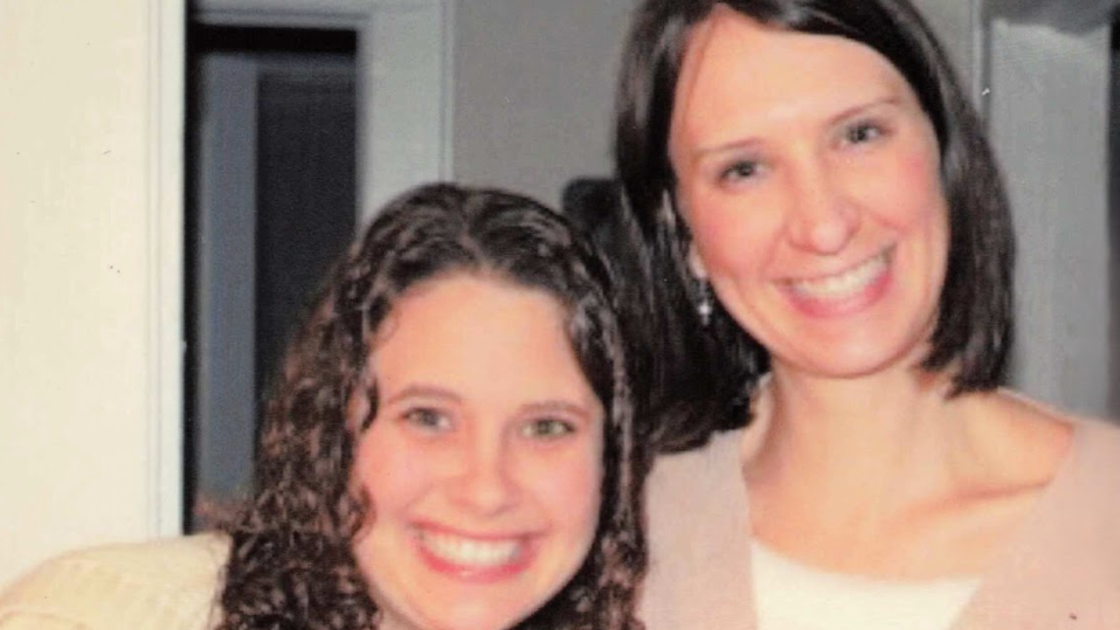

When my phone buzzes me awake in the middle of the night, I know it is going to be bad news. The drunk dials of my 20s have been replaced by frantic revelations of cheating spouses, sick children ― and new cancer diagnoses.
In middle age, nothing good happens after midnight.
Yawning, I shuffle to our kitchen, leaving my sleeping husband behind. By the time I fill a glass with water, I am alert, awake and oriented. I reread Chrissy’s words. There it is: Acute Myeloid Leukemia.
“Got any tricks to cure acute leukemia, Dr. Wentworth?” my friend jokes.
Instead of responding to her humor, I demand her hospital room number. I’ll stop by on my way to work.
Immediately after hitting send, I sense my overreach and text again, apologizing.
“I love that you didn’t ask,” Chrissy replies immediately. “I would have told you no.”

Courtesy of Stacy Wentworth, M.D.
Professionally speaking, I know that a patient with AML has a less than a one in four chance of surviving. As a radiation oncologist, I am wary of early optimism. As her friend, I cannot consider anything else.
The medical center is still sleeping as I turn into the visitor’s parking deck. An ambulance’s red lights sweep silently across the wet pavement in front of the Emergency Department. A man wearing a white coat leans against the wall next to the trauma bay, a glowing cigarette clutched between two of his fingers.
I run by the cafeteria to pick up black coffee for me, and breakfast for Chrissy’s husband, Robert. The elevator doors open on the sixth floor, and I swipe my employee badge to enter the bone marrow transplant unit. It’s a slight breach of protocol, but I’m OK with that.
I am a doctor here to see a patient. I am a visitor here to see my loved one.
At the nursing station, a weary coordinator directs me to Chrissy’s room. I pause in the antechamber to don a sticky, blue plastic gown. I press an N-95 mask tightly against the bridge of my nose. I struggle to put on gloves before the squirt of antibacterial gel has time to dry.
The positive pressure ventilation emits a soft whoosh as I enter. Chrissy teases me for bringing food for Robert when she knows my own house is probably out of milk. Robert rubs his eyes and reaches for the brown bag, thanking me for this small kindness. He returns to his makeshift bed under the window and opens a fruit cup.

A terrible story tumbles out of my friend’s mouth, the bones of which I have heard a thousand times before: The doctors thought her fatigue and shortness of breath were caused by one thing (COVID infection), but it turns out the cause was another, more frightening thing (anemia caused by leukemia). When her true diagnosis is uncovered, Chrissy is transferred to the large medical center where I work. The group email that I read earlier contained these details followed by Chrissy’s violent optimism: “Don’t worry! Please pray! More updates soon!”
Chrissy finishes her narrative, picks up a pen and looks at me expectantly. Our eyes meet over her notebook. My brain sizzles trying to decide what, of my limited knowledge, I should share. My heart thumps in the in-between space of love for my friend and the boundary defined by the white coat that I left in the car. Death moves through the room like a fog.
“Thank God she got COVID,” Robert offers, breaking the tension.
“As everyone ALWAYS says,” I reply. “Thank God for COVID.” And we laugh.
This banter is easy. If I close my eyes and turn around now, maybe I can forget the reason I came. Instead, I scoot the large pink visitor’s chair closer to Chrissy’s bed and sit down.
My mind wanders as Chrissy continues talking. Over her shoulder, the NICU’s bright windows cut through the darkness. Chrissy and Robert’s oldest daughter spent almost a year there after she was born with her intestines where her lung should have been.
Chrissy now debates whether that daughter, who is about to turn 12, should get a cellphone.
“What do you think,” Chrissy looks up from her computer.
“About what?” I reply, coming back to the moment.
Should Clara have a phone? Or will Chrissy be alive to enforce the rules she is considering?
A cellphone pings. Chrissy turns away to answer.
How will she tell her girls? I wonder as I remove my PPE outside her room and exit the unit.

Courtesy of Stacy Wentworth, M.D.
My boss recently instructed all employees to treat our patients using “the loved one standard.” Similar to “The Golden Rule,” in medicine, the loved one standard calls us to treat patients and families the way that we would want our loved ones to be treated in similar circumstances. The loved one standard, our leader said, should drive every decision we make. I’d nodded my head in fierce agreement.
At the time, this aspirational goal seemed possible. The doctor-patient boundary seemed clear. Confronted with Chrissy, it blurs. Cancer has become incarnate and entered my life. I am not sure where I belong. The gap between the loved one standard, and MY loved one has become infinitesimally small. My ingrained objectivity battles a rising panic that my friend will die.
Exiting the parking garage, I consider how my patients’ diagnoses arrive in their loved ones’ phones. I don’t know who sat beside them as they contemplated a future minus one parent or if a physician friend dashed out of bed to be by their side.
In my clinic, farmers with prostate cancer wearing John Deere trucker hats remind me of my uncles; a young artist with lymphoma could be my stepdaughter; a busy mother who deftly manages her metastatic breast cancer wears the same exhausted smile that I’ve seen on Chrissy’s face. I’ve tried, sometimes desperately, to provide the loved one standard to each of them.
And yet, I know that they are not my loved ones. I do not rub their backs as they vomit or wait anxiously with them for the results of a test. I do not wonder how they will tell their daughters that mom might die.
I’ve broken so many promises to return patient phone calls “as soon as I hear something” — these earnest pledges forgotten when the chaos of home greets me at the back door. I have forsaken shattered families, rushing out of a room to my child’s softball game.
Am I even capable of providing the loved one standard? I wonder.
Dr. Erik Fromme suggested that physician–family members ask themselves, “What could I do in this situation if I did not have a medical degree?” and consider avoiding acts that require a medical license. I like Fromme’s well-demarcated approach, but is this really the time to abandon the most relevant skill that I bring to my friend’s deadly diagnosis?
After an hour on the road, I arrive at my own clinic parking lot and pull into a space marked for physicians. I switch off the ignition and pause, resting my head on the steering wheel. The “loved one standard” is what I pray for as Chrissy’s doctors choose the difficult treatment which must save her life.
I want her doctors to push away fatigue, burnout and their personal concerns to focus on my friend. I want them to wake up in the morning thinking of her girls, and go to bed at night worrying about a new bruise on her arm. I want Chrissy to be their loved one.
My cellphone chirps, summoning me back to the morning.
The text is from my nurse.
“ES in Exam Room #3.”
I grab my white coat from the back seat. Please take care of MY loved one, I beg God, as I close the car door and walk toward my waiting patient. And I promise to try and do the same.

Courtesy of Stacy Wentworth, M.D.
I visit Chrissy several more times over the next two weeks. Then, one night, I am digging through my pillows, trying to find my phone. I am once again awake in the dark. I miss the call, but a text soon appears:
Transferred to the ICU. Doctors suspect intracranial hemorrhage. Low platelets. Robert on his way. Pray.
The intensive care unit where Chrissy dies has one of the best views of our city. I have stared out its windows many times. Below and far removed from its heartbreaking jurisdiction, oblivious drivers hurl down a gray ribbon of highway. Near the park, friends share good news and glasses of wine outside cozy cafés. Downtown, low clouds wrap around the tops of a respectable number of tall office buildings. In the distance, the white spire of a chapel pierces the grey sky.
I lie in bed summoning this landscape while my husband’s chest slowly rises and falls next to me. A few miles away, Robert embraces his intubated wife and nods his head to a waiting nurse. The beeping monitors slowly fade to silence.
Chrissy’s heart stops beating while I cry silently, still desperately praying that my loved one will beat the odds and live.
Stacy Wentworth, M.D., is a board-certified radiation oncologist and internationally recognized cancer survivorship expert. Her two time Webby-nominated podcast, ”Less Radical,” covered the forgotten history of breast cancer treatment. Dr. Wentworth’s Substack newsletter, Cancer Culture, explores past, present and future approaches to cancer care.
Do you have a compelling personal story you’d like to see published on HuffPost? Find out what we’re looking for here and send us a pitch at [email protected].