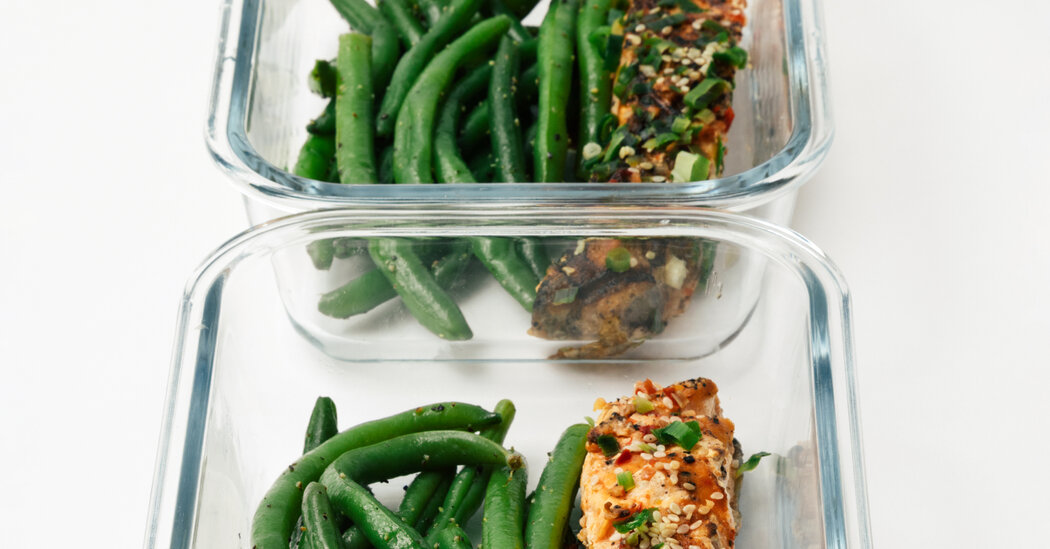

Q: I eat the same foods every day. Is that bad for my health?
Eating one or more of the same meals every day, a practice often called “food monotony,” can be an efficient way to simplify your daily routine, manage your weight and eliminate the “decision fatigue” that can result from having to plan menus, shop and cook.
But there can also be a downside, including a risk of nutritional deficiencies if your daily meals consist mostly of ultraprocessed foods or high fat, salty or sugary snacks, instead of healthy, wholesome foods, nutrition experts say.
“I can think of worse things than eating the same meal over and over again, if it’s balanced and healthy,” said Marion Nestle, a professor emerita of nutrition, food studies and public health at New York University.
By “balance,” nutrition experts mean meals that include a protein, a carbohydrate and a healthy fat, making them “nutrient dense,” said Julia Zumpano, a registered dietitian at the Cleveland Clinic, even “if you are adamant about eating the same foods every day.”
“That balance is important,” she added.
For example, a daily breakfast of yogurt or oatmeal with fresh fruit is healthier than bacon, eggs and hash browns, said Dr. Donald Hensrud, an associate professor of nutrition and preventive medicine at the Mayo Clinic College of Medicine. And a lunchtime salad with olive oil and vinegar is better than eating a ham sandwich on white bread: Processed meats are tied to an increased risk of heart disease, stroke and certain cancers, and white bread contains little beneficial fiber.
For dinner, grilled chicken or fish every night with vegetables and brown rice beats a burger and fries, Dr. Hensrud said.
Look to healthy diets such as the Mediterranean or DASH diets “and make your choices from them,” he said.
Why would someone eat the same foods every day?
Sometimes, it’s simply because they prefer those foods. “It may be nothing more complicated than that,” Dr. Nestle said.
Others use repetitive eating as a way to lose or control weight. One recent study by Drexel University researchers found that adults who ate the same meals every day lost more weight over 12 weeks than those who followed a more varied diet.
With repetitive eating, “you don’t have to count calories,” Dr. Hensrud said. “Increasing your food choices, such as eating at a buffet, usually increases calories.”
Decision fatigue is another factor. It can be tiring to constantly create menus, shop and cook. “Decision fatigue is real, especially if you are planning meals for others,” Ms. Zumpano said.
To keep your diet healthy, some experts recommend that you add a little variety to your meal. “If you have blueberries in your yogurt one morning, have strawberries or a banana the next, or mix in some oats or nuts,” Dr. Hensrud said. “Have spinach one night and carrots the next.”

Ms. Zumpano added that if you always have a sandwich for lunch “you can build off that concept but still add variety.”
“Have a peanut butter and jelly sandwich one day and grilled cheese or turkey the next day,” she said. But don’t eat too much of a single food, which could lead to excessive exposure to harmful substances, like mercury in fish, for example, or to nutrients considered unhealthy in large amounts, like salt or saturated fats. And don’t sacrifice healthy foods for variety. “Healthy always beats variety,” Dr. Hensrud said.
Can I repeat all three meals every day?
Ms. Zumpano said maybe not. Eating one or two different meals every day helps avoid nutrient and vitamin deficiencies, she said. “Your microbiome likes a lot of diversity.”
A 2022 study suggested that breakfast is the meal people are most likely to repeat. The first meal of the day tends to be more functional or utilitarian than social, in part because people often need to get to work or school, and it’s easy to eat the same breakfast every day, said Carey Morewedge, a professor of marketing at Boston University and one of the study’s authors.
As the day goes on, though, people are likely to seek more food variety and dining social interaction, he said. “A meal at breakfast is a step in your morning on your way to doing other things, a box to check, a means to an end,” Dr. Morewedge said, “whereas lunch and dinner are an end, not a means to some other goal.”
Dr. Morewedge said that his breakfast — a smoothie of vanilla protein powder, a banana, spinach and avocado — had been the same for several years and that he hadn’t tired of it.
Dr. Nestle says she also eats the same breakfast every morning, although she varies her lunches and dinners.
She has a bowl of shredded wheat, with a teaspoon of sugar and skim milk, topped with blueberries or strawberries that she grows on her terrace. “It’s simple,” she said. “I like the texture. It’s crunchy. And it’s a great way to start the day.”