
What’s Elon Musk’s credit score? It can’t be good.
Tapped out, he ran up a tab to buy Twitter. The floating interest rate he’s paying is 10.4%. That’s more than what Donald Trump considers a tolerable interest rate on credit cards.
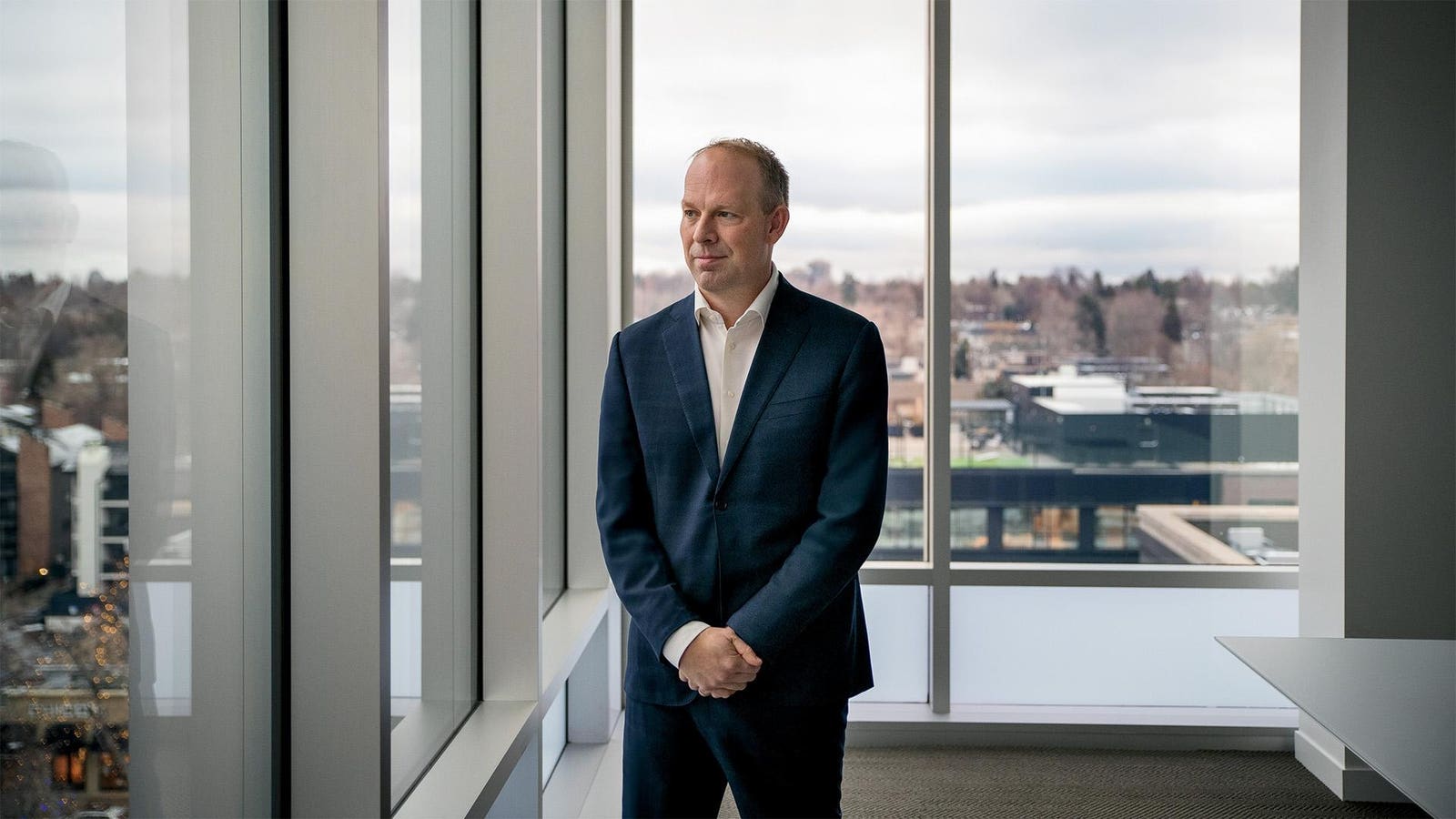
Musk is the richest person in the solar system. And yet X Corporation, as the company is now styled, is paying through the nose for a loan. Understanding this paradox is the job of Bryan C. Krug, evaluator extraordinaire of creditworthiness.
Krug runs the Artisan Partners High Income fund, a collection of junk bonds and syndicated bank loans from 133 somewhat sketchy companies. His aim: to buy paper that looks worse than it is. X debt is in the collection.
By conventional measures, corporate debt looks bad if the ratio of operating income to interest is low. The other tell is a high ratio of debt to equity. This is the same way you are judged on a mortgage application. The bank compares your income to your mortgage payments and the loan balance to your equity.
What are the numbers for X, a private corporation? Krug joined an invitation-only, top-secret review, personally orchestrated by Musk, of the company’s financial statements. Whatever they were, they obliged Musk to offer a very stiff coupon, but they didn’t stop Krug.
To go with the flow of conventional measures means to end up with a conventional return. Krug aims to do better than that. His angle: Put aside the numbers and think about the prospects for the business. On this score Krug gives X a lot of credit. He is an avid user of the platform, following 648 contributors, and sees the arc of news gathering bending in X’s direction.
And then there is Musk. Says Krug: “Elon has a strong history of taking companies and doing great things with them.”
Krug has a strong history of avoiding deadbeats. The usual strategy in lending to weak borrowers is to reach for yield and pray that the coupons will be high enough to offset any damage from defaults. Thus, over the not quite 12 years since Krug opened Artisan High Income, the passively managed State Street SPDR Bloomberg junk fund has collected a lot of interest but given some of that back with a 20.5% erosion of principal. In the same period Krug’s fund has seen only a 1.5% shrinkage.
The Artisan fund enjoys the same fat yields (between 6% and 7%) that you see in the index. The result: Over its history, Krug’s fund has averaged a 6.5% annual return on the institutional share class, 1.5 percentage points ahead of the index.
This is not the consequence of any winning streak, such as a lucky bet on the yield curve. Krug plods ahead by making slightly better credit judgments than other fund managers, over and over. Morningstar has him beating the average of his junk-fund peers in each of the 11 full calendar years of the fund’s existence.
Krug makes quite the contrast with the swashbuckler running X. Diffident and soft-spoken, he won’t say anything bad about the losers that he turns away. But he does talk up the winners.
He likes cruise lines. Six years ago Covid crushed the industry. Carnival Corporation was losing $800 million a month keeping its empty ships afloat. Krug’s fund stepped in with rescue financing and collected some nice coupons. He’s still lending, at lower rates, but if Carnival gets any stronger it won’t belong in a junk fund.
Krug says he’s not likely to be a provider when data center builders come to Wall Street begging for $100 billion of capital. But he does like the equipment vendors’ prospects. The fund holds bonds of Kioxia, a supplier of memory. That’s not a household name. Krug read about it in an X post.

Intertape Polymer Group debt is a holding at Artisan. Numbers: a bit scary, with a lot of leverage dating to a private-equity buyout. Coupons: as high as 10%. Prospects: good. This company makes the tape that closes Amazon boxes.
How To Play It
By William Baldwin
Three rules for buying corporate bonds: First, pay attention to duration (rate risk) and credit quality, not yield. Next, don’t own junk except in a tax- favored account. Finally, don’t buy individual securi- ties, as opposed to a fund, unless you’re investing at least $50 mil- lion. With that in mind, consider the exchange-traded products labeled State Street SPDR Portfolio High Yield and Xtrack- ers USD High Yield Corporate. They both run up expenses of 0.05% annually, have average credit quality somewhere between single B and BB and have durations in the neighborhood of three years. For an open-end fund, get Vanguard High- Yield Corporate, with similar risk parameters and a 0.12% expense ratio on purchases over $50,000.
William Baldwin is Forbes’ Investment Strategies columnist.
Krug makes some bad bets, such as on Optimum Communications, part of the French Altice cable empire. Offsetting the damage to principal from clunkers like this one: capital gains when bonds bought at distress prices are redeemed or traded away at close to par. Says Krug: “The whole portfolio’s up for sale.”
Krug, 49, has been a credit watcher for almost all his adult life. After getting a finance degree from Miami University of Ohio he joined Waddell & Reed, long past its days of glory as a mutual fund pioneer. He eventually landed the job of managing its Ivy High Income fund.
It is quite the challenge to bring excitement to a fixed income portfolio managed in a suburb of Kansas City. Krug delivered enough sizzle to bring in $10 billion of assets. It was time to take a risk. At age 37 he quit.
Artisan Partners is headquartered in Milwaukee, but its money management stars work wherever they want and hire whomever they want. It’s a bunch of feudal lords raising their own armies and allowing a faraway king to handle the back-office work. Artisan offered him lower pay than he was getting at the Ivy fund. In 2014 it staked him to $10 million of seed capital and told him to do his thing.
In due time, Krug fled Kansas, setting up shop in Denver, where it’s easier to recruit hotshot analysts and traders. Repeating his asset-gathering feat, he presides over $15 billion now. He probably is, and certainly deserves to be, pocketing a handsome piece of maybe $100 million a year in fees.
Most of the money is in the original bond fund, now closed to new customers, but you can still get into the newer Artisan Floating Rate fund. If you are fearful of interest-rate risk, this is the place to be. That leaves risk to principal. Krug reflects on floaters from First Brands that he was looking at last year. They had a tempting double-digit yield. He took a pass. That debt is now trading at less than a penny on the dollar.
“Eleven percent is great except if you lose 99% of your money,” Krug says. This fate could befall X. But nothing ventured, nothing gained.
More from Forbes