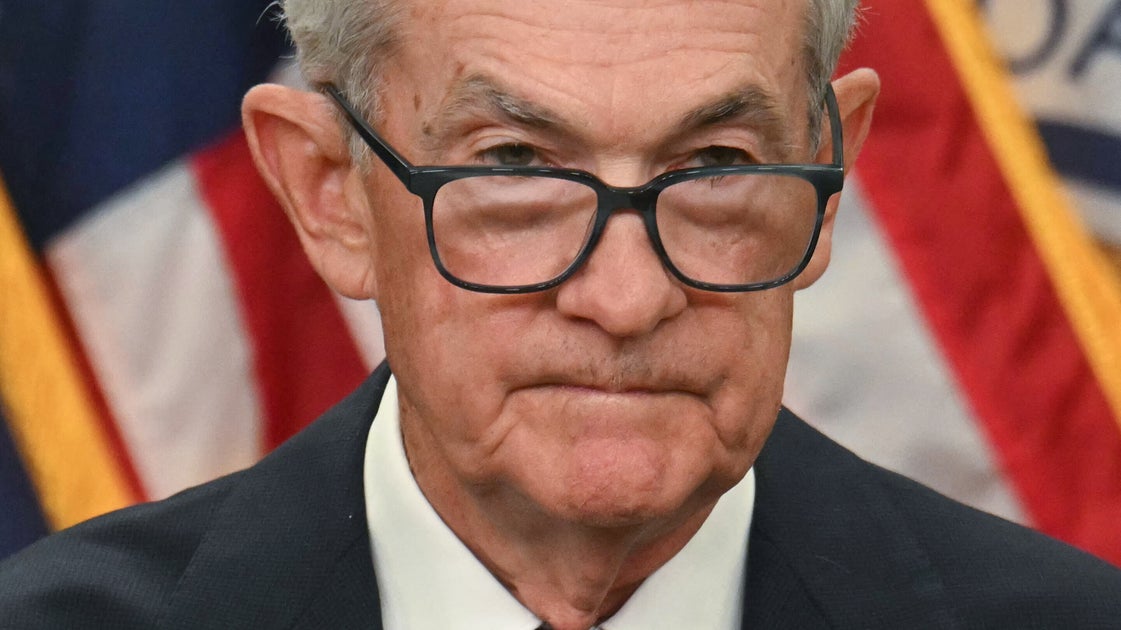

So by now you’ve heard the news. On Wednesday, the Federal Reserve announced a quarter-percentage-point cut to its benchmark interest rate, lowering it to a range of 4% to 4.25%. Federal Reserve Chairman Jerome Powell referred to the interest rate drop as a “risk-management cut,” due to shaky unemployment numbers.
So, for the foreseeable future, borrowing money should be a little cheaper for the public.
And what does this mean for you? The interest rate cut will bring some changes to the economy, ranging from welcome news to not-so-welcome. How will you fare? Check out our “what this all means for you Fed rate interest cut” guide and our unscientific excitement meter, ranging from a lackluster 1 to a thrilling 10.
People Selling And Buying Homes
Why this isn’t a big deal: “Normally, the Fed reducing interest rates is good news for the housing market,” said Mac Clouse, a professor of finance at the Daniels College of Business at the University of Denver. “Lower mortgage rates help the buyers’ ability to afford the house and provide more potential buyers for the seller.”
What’s different this time?
“This rate reduction was highly anticipated by the market, and mortgage rates may have already been reduced. We may not see more immediate reduction,” Clouse said.
That said, mortgage rates could fall down the road, perhaps after the holidays. That’s because the Fed has hinted that more rate cuts may be in the offing.
“If bond markets think that the Fed will do more rate cuts by the end of the year, mortgage rates should fall over the next six months,” said Nicole Simpson, a professor of economics at Colgate University in Hamilton, New York.
“That may encourage new homebuyers to enter the market,” she said.

JIM WATSON via Getty Images
People Just Living Their Lives In Their Homes
Why this isn’t a big deal: Most homeowners won’t see their mortgage payments change, said Daniel Burnside, clinical professor of finance at the University of Rochester’s Simon Business School in New York. One exception: If you have an adjustable-rate mortgage, your mortgage payment could fall.
“Homeowners with fixed-rate mortgages — which is most borrowers in the U.S. — won’t see their rates change,” Burnside said.

He added that the one way a homeowner could see their mortgage payment drop is if mortgage rates go down, and then you refinance, “which comes with costs and only makes sense if the rate drop is significant.”
Still, in several months, if rates do drop, maybe refinancing will be something that some homeowners will want to do.
People Looking For A Job
Why this isn’t a big deal: It isn’t that it’s nothing. In a news conference, Powell referred to the current employment situation as a “softer labor market.” The cut is designed to keep the labor market from getting worse.
That said, Harvey said that the cut would have to be steeper to really positively affect the unemployment situation.
“Personally, I am more worried about the impact on employment of the tariffs and the DOGE government spending cuts, which are currently making themselves felt,” Harvey said.
Investors
The excitement meter: 10 for some, and 1 (or 0) for others.
Why this is a big deal — and why it isn’t: How you should feel about the interest rate cut depends whether you’re investing in stocks or savings.
“There are two sides to the coin when the Federal Reserve cuts interest rates,” said Bruce Maginn, advisor at Solomon Financial in Carmel, Indiana. “It’s often good for growth-focused investors and borrowers, but challenging for conservative savers and retirees who depend on interest income.”
So if you if you have a lot of money in the stock market, the interest rate may be just what you need to see your investments climb higher, but if you’ve put a lot of money into a savings account or certificates of deposit, both of which are more profitable when interest rates stay high, you probably are sweating a little more.
Retirees
Why this is unnerving news: “For retirees, lower interest rates are usually negative,” Maginn said. “Interest income from savings, CDs and bonds drop, making it harder to generate reliable income without taking more risks. Fixed-income retirees may find their dollars not going as far, especially if inflation rises alongside rate cuts.”
Of course, plenty of retirees do invest in the stock market, and for those households, this interest rate could be a boon. So it’s a little hard to generalize here.
In fact, Wheeler Pulliam, a certified financial planner and financial consultant at Xponify Financial in Hickory Creek, Texas, said that if you’re planning on retiring soon, “you might want to shift more than you historically would into stocks versus bonds.”
Pulliam said, “I tell my clients now that in order to maintain their portfolio growth with lowering interest rates, they have to take on slightly more risk by being more in stocks right now than bonds.”
People Borrowing Money
The excitement meter: 10, or in the spirit of the recent ”Spinal Tap” sequel, an 11
Why this is a big deal: “Bottom line is that anything you have to borrow to buy — house, car, washer or dryer — will be cheaper,” said John Harvey, an economics professor at Texas Christian University, which is in Fort Worth.
But don’t run to the bank tomorrow, assuming you’re going to find cheap loans, cautioned Amy Crews Cutts, a certified business economist and a consultant to Primerica, a financial services company based in Duluth, Georgia.
“Loans tied to the prime rate — from credit cards to home equity lines — will move down if the Fed continues cutting, but those changes don’t happen overnight,” Cutts said. “That means consumers will need to watch closely for when the savings actually show up in their monthly bills, and look for opportunities, like a no-cost refinance or a lower-rate credit card offer, that put money back in their pockets.”
Simpson said that homeowners might eventually see cheaper home equity loans, and maybe that’ll convince them to invest in home improvements. That, too, may help the economy.
“Firms will also find it easier to finance projects,” said Harvey. That would be another significant boost to the economy. If firms are investing more in projects, they’re usually buying things, which tends to mean more jobs for the people making what companies are purchasing.
“But the caveat is that interest rate costs, while not trivial, are typically secondary,” Harvey said.
Many companies will borrow and invest more, but will typical American shoppers? And will enough start borrowing and buying in a way that helps the economy?
The American shoppers who are unemployed or underemployed aren’t likely to be putting more on their credit cards, based on the interest rate cut, according to Harvey.
“What really makes a difference to whether or not you get that big-screen TV is your employment situation and salary,” Harvey said. “That’s far more important, and interest rate cuts are unlikely to have the stimulative effect that the administration hopes. I’m not against the cuts, but I don’t think they are going to do what they hope.”
Still, if you’re buried in debt right now, the interest rate cut may not convince you to borrow more, but at least you may end up paying less on the load you’re carrying right now.
“Auto loans, student loans and credit card interest may become cheaper, freeing up room in tight budgets,” Maginn said.
Which means that maybe you can afford to buy a unicorn after all, or at least another streaming service.