
It was a rare beautiful afternoon in Seattle in the spring of 2002, and I was throwing a football around with the guys at work. I probably shouldn’t have been doing so in a skirt and heels, because I wound up with a fractured finger, sprained wrist and damaged rotator cuff.
After the cast was removed, the doctor told me to wash my hands. The last thing I remember was going to the sink — and then everything went black.
I had momentarily passed out from the pain I experienced just washing my hands.
I was diagnosed with complex regional pain syndrome, a poorly understood form of pain that is severe, chronic and debilitating. “Although most cases are triggered by an injury, the resulting pain is much more severe and long-lasting than normal,” notes the U.K.’s National Health Services. “The skin of the affected body part can become so sensitive that a slight touch, bump or even a change in temperature can cause intense pain. Affected areas can also become swollen, stiff or undergo fluctuating changes in color or temperature.”
CRPS makes my skin feel like it’s on fire on the inside yet freezing cold on the outside. My bones feel like they are broken, and my skin is so sensitive, it’s difficult to wear clothes or shoes. My skin swells and turns reddish-purple. The simplest touch can feel like being stabbed with a red-hot poker. The condition can show up weeks, months or even years after an injury or surgery, but — and I often think this is the cruelest detail of all — it’s not fatal.
Though CRPS typically affects the body part or region that was injured, mine has progressed to encompass my entire body. The left side of my face feels like Mike Tyson is using my cheekbone as a punching bag 24/7. My arms are so sensitive I can’t wear long sleeves, even on the coldest days. My feet feel like their bones have been ground to dust and their skin has been doused with liquid nitrogen, so when I walk, it feels like I’m walking on shards of broken glass. This is my baseline — every minute of every day. It never gets better. I’ve had to learn how to tolerate the pain enough to get out of bed and just do one small task a day.
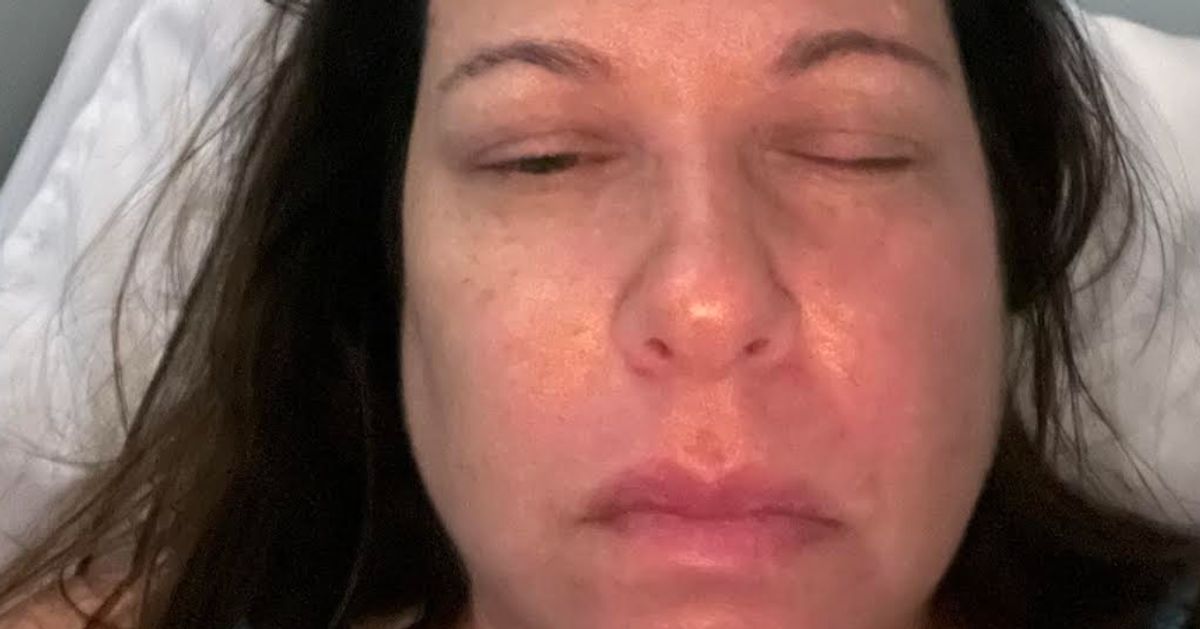
About twice a month — usually when there’s a change in the weather or if I have overexerted myself the day before — my pain will flare. My face will swell, often to the point I can’t see or eat. Kisses from my pug feel like someone is running an industrial sander across my skin. The pain in my feet becomes so excruciating I can barely make the 20 steps from my bed to the bathroom.
An estimated 200,000 Americans are struggling with this condition, which The McGill Pain Index lists as the most painful condition known to medicine. It is considered more painful than fibromyalgia or giving birth — even more painful than amputating a finger without anesthesia.
There is no cure for CRPS. Even worse, doctors can’t seem to agree on what causes it. I’ve been told it’s anti-inflammatory or autoimmune. I’ve heard that it’s due to my autonomous nervous system being stuck in “fight or flight” mode because of childhood trauma. Or that it’s because my original injury was immobilized. But the worst thing that doctors have said to me — and many other poor souls with CRPS — is that it’s because our brains are broken. Or they think we’re crazy. Or that we’re just opioid-seeking addicts.
“Being in pain is a lonely place to be, especially when you’re being blocked in your recovery at every turn.”
Ironically, because of the opioid crisis, I can’t get pain medications. I’m taking nine other types of prescription medicine right now, but none of them are for pain, and none of them really help. Instead, I tell my kids that I can’t do things with them because I’m in too much agony. I stay in bed on beautiful days when I’d rather be gardening. I stay home instead of hiking or going to Seahawks games because even with a cane, I can only walk so far. I had to abandon my dream of publishing an upscale comfort food blog because I’m in too much pain to cook. Many days, it’s too painful even to move my fingers across a keyboard.
When the pain gets so bad I can’t bear it, which is about three times a day, I can soften it some with cannabis. However, this means I don’t dare venture into a state where the drug isn’t legal, which also forces me to miss vacations, girls’ trips, and Christmas celebrations away from home.
When I have an especially awful pain flare, which is about twice a month, I stay home and in bed, sometimes for as long as two weeks. I miss my kids’ activities. I cancel on people so often they no longer ask if I’m available to do something together. Being in pain is a lonely place to be, especially when you’re being blocked in your recovery at every turn by doctors and insurance companies.
You might be thinking to yourself, “Well, I bet she hasn’t tried this…” Yes, I have. I’ve been on Lyrica, gabapentin, naltrexone, PTSD medication, and every SSRI on the market. I’ve tried stellate ganglion blocks, spinal cord stimulators, lidocaine infusions and ketamine. I’ve done physical therapy, trauma therapy, psychotherapy, massage, acupuncture, reiki, essential oils and grief retreats. My medical records resemble ”War and Peace” — just as long and confusing, with too many in its cast of characters to keep straight. I’ve seen over 20 doctors in four states.

Last year was a “good year” because we “only” paid $10,000 out of pocket for my medical appointments, prescriptions and one round of ketamine infusions. I spent an additional $5,200 on medical cannabis.
My CRPS has gone into remission three times. The first two times were when my pain was mainly in my left arm. My doctor implanted a spinal cord stimulator, a pacemaker-type device that was embedded in my lower right hip. Wires are connected to the affected nerves at the base of my brain and a cord about the size and texture of a stereo cable runs down my spinal column to the pacemaker. The stimulator works by “interrupting” the pain signal from my brain and sending a buzzing sensation to the affected nerves. I’ve had six surgeries to replace the stimulator and the wires, including two during the two months before my wedding.
The third time I went into remission after receiving multiple high-dose ketamine infusions over the course of four days.
Unfortunately, even with those treatments, my CRPS eventually returned. Now that I have had CRPS for over 20 years, my doctors have told me that it will probably never go back into remission. They frequently retitrate my prescriptions, but it’s like they’re rearranging deck chairs on the Titanic. They tell me to tell my brain that I’m not in pain. They tell me to exercise, and then look at me blankly when I point to my cane and ask what exercise I should do when just managing the stairs in my home is a major feat.

Courtesy of Alex Hankin Hart
The pain is so bad that many CRPS patients would gladly sacrifice one or more body parts to be rid of it, but we’re told that amputating the affected limb(s) could just leave us with phantom pain. And amputation won’t help when CRPS starts attacking you inside your body.
I’ve plunged into the deepest depths of depression and anxiety. The exhaustion alone is debilitating. It has also caused me to have gastropareses, which means my body doesn’t digest food correctly, so I experience constant nausea, cramps and bathroom experiences that are just too horrific to detail. I also get “fake heart attacks,” where it feels like a sword is repeatedly being stabbed through my chest. The list of symptoms goes on and on and on.
Thankfully, many people with CRPS do go into remission months or years after being diagnosed, and up to 80% of individuals who do physical therapy can achieve some pain reduction. However, in my case, PT failed and the pain spread to other parts of my body.
From my experience and in discussions with other CRPS warriors, it seems like only two treatments work for those of us struggling with chronic, long-term CRPS: repeated high-dose ketamine infusions and Calmare biofeedback. Both of these treatments work to reset our brains so our sympathetic nervous systems stop giving out incorrect pain signals. However, both are provided at only a few places and neither are covered by my insurance.
CRPS is known as “the suicide disease” because of the severity and longevity of the pain it causes, and because there is no known treatment guaranteed to work, let alone a cure for it. Our disability makes working nearly impossible. We’re a burden to our families. And the difficulty of obtaining pain medication makes our lives even harder.
When I was first diagnosed, my doctors prescribed opioids, which allowed me to continue to hold a high-pressure job in technical marketing. But now, I’m not allowed a single oxy or hydrocodone pill, even though I have no history of abusing my prescriptions and have offered to take regular drug tests.
It’s not just CRPS patients who are regularly affected by pain. According to a recent CDC study, an estimated 20.9% of U.S. adults had chronic pain lasting more than three months in 2021, while 6.9% of Americans had high-impact chronic pain that limited their daily activities. Despite this, the medical community, currently grappling with an opioid crisis, sticks their heads in the sand every time anyone even dares utter the word “pain.”
So what needs to change? Nursing and medical schools need better education for their students on pain management and how to deal with patients who are experiencing chronic pain. CRPS patients’ lives are hard enough as it is, but we face even more challenges because, too often, we’re dealing with medical professionals who don’t know enough about pain, won’t listen to us, and don’t seem to have any compassion for us.
There also needs to be better education and research on opioids and other pain medications. My dream is that a pharmaceutical company will discover a non-addictive painkiller that will be covered by insurance, Medicare and Medicaid. But until that happens, we need better options and better access to them, including ketamine infusions and Calmare biofeedback that are available at more hospitals without costing patients their life savings. We also need cannabis legalized in all 50 states.
As I write this, I’m finishing a five-week intensive outpatient program which, instead of doling out treatments one by one, combines all that modern medicine and pain psychology have to offer. In addition to receiving ketamine infusions, physical therapy, occupational therapy and medicine management, I’m also learning about neurobiology. For example, I had no idea that physical and emotional pain are processed similarly by the brain and that addressing one kind of pain can be crucial to alleviating another.
To do that, I’m learning how to incorporate multiple forms of psychotherapy, such as acceptance and commitment therapy (ACT), cognitive behavioral therapy (CBT) and dialectical behavioral therapy (DBT), into my life. Most importantly, I’ve found my tribe — a group of people who have also suffered from severe chronic pain in isolation for far too long — and their support means the world to me.
Support Free Journalism
Already contributed? Log in to hide these messages.
I’m also learning to grieve the loss of my former life. I’ve realized that I’ll probably never check hiking to the top of Mount Si off my bucket list or wear my 4-inch python Louboutin heels again, and while that is devastating, it’s also OK. I’m learning to find and love the new me — a person whose life isn’t solely centered around my CRPS. There is only so much I can control, and I don’t know what’s ahead for me. I will most likely always have CRPS, but I refuse to let my condition write my entire story. I want to do whatever I can to live my life as fully as I can, and I want to help others with similar challenges do the same.
Alex Hankin Hart lives in the Seattle suburbs with her amazing husband and son, and a pug named Banshee. She is a die-hard Seahawks fan, and in better times, enjoyed cooking, yoga and gardening. Alex is currently working on her first novel, “Wolves in Cashmere Clothing.”
Do you have a compelling personal story you’d like to see published on HuffPost? Find out what we’re looking for here and send us a pitch at [email protected].
Support Free Journalism
Already contributed? Log in to hide these messages.