
No need to sugarcoat it, the history of Android tablets is rough. There are some exceptions. Samsung, for one, has managed to carve out a nice market for itself in the space, courtesy of nice hardware and heavy Android customization. The Galaxy maker has secured a consistent No. 2 behind Apple – accounting for nearly a quarter of all shipments in Q1 2023, per IDC.
Things drop off precipitously from there. Huawei is actually in third at around 7% of the market. That’s not surprising on the basis of hardware quality, but the company’s much-publicized struggles with the U.S. government have left it in a lurch. They’ve also pushed the company off its Android dependence into its homebrew, HarmonyOS.
Lenovo is the other major Android tablet maker in the top five; Amazon is in fifth, but Fire OS doesn’t really qualify by most measures. The company excels in good, innovative hardware, while its tablets are split between three operating systems: Android, Windows and Chrome.
We won’t relitigate why the operating system has struggled to catch on with tablets the same way it has handsets – but we can definitely say it’s not for lack of trying. After an initial reluctance around hardware makers porting the mobile OS to a larger form factor, Google began trying its own hand at Android tablets a little over a decade ago.
In 2012, the company partnered with Asus on the Nexus 7 and Samsung for the Nexus 10. An HTC-built Nexus 9 arrived in 2014. The Pixel C was released the following year, amid a shift to first-party hardware after years of partnerships. A Pixel Slate arrived in 2018, with a shift to Chrome as Google’s preferred tablet operating system. Much like its predecessors, that didn’t last long.
When the Pixel Tablet was first teased in 2022, one major question loomed over the rest: Why should this time be any different? In addition to standard adoption problems, Google’s approach to the tablet category has been defined by intense indecision, above all. Consumer electronics adoption is often a slow burn, one that requires commitment. Over the years, one has the unshakable sense that the Google hardware team was throwing up its hands in frustration after each subsequent swing.
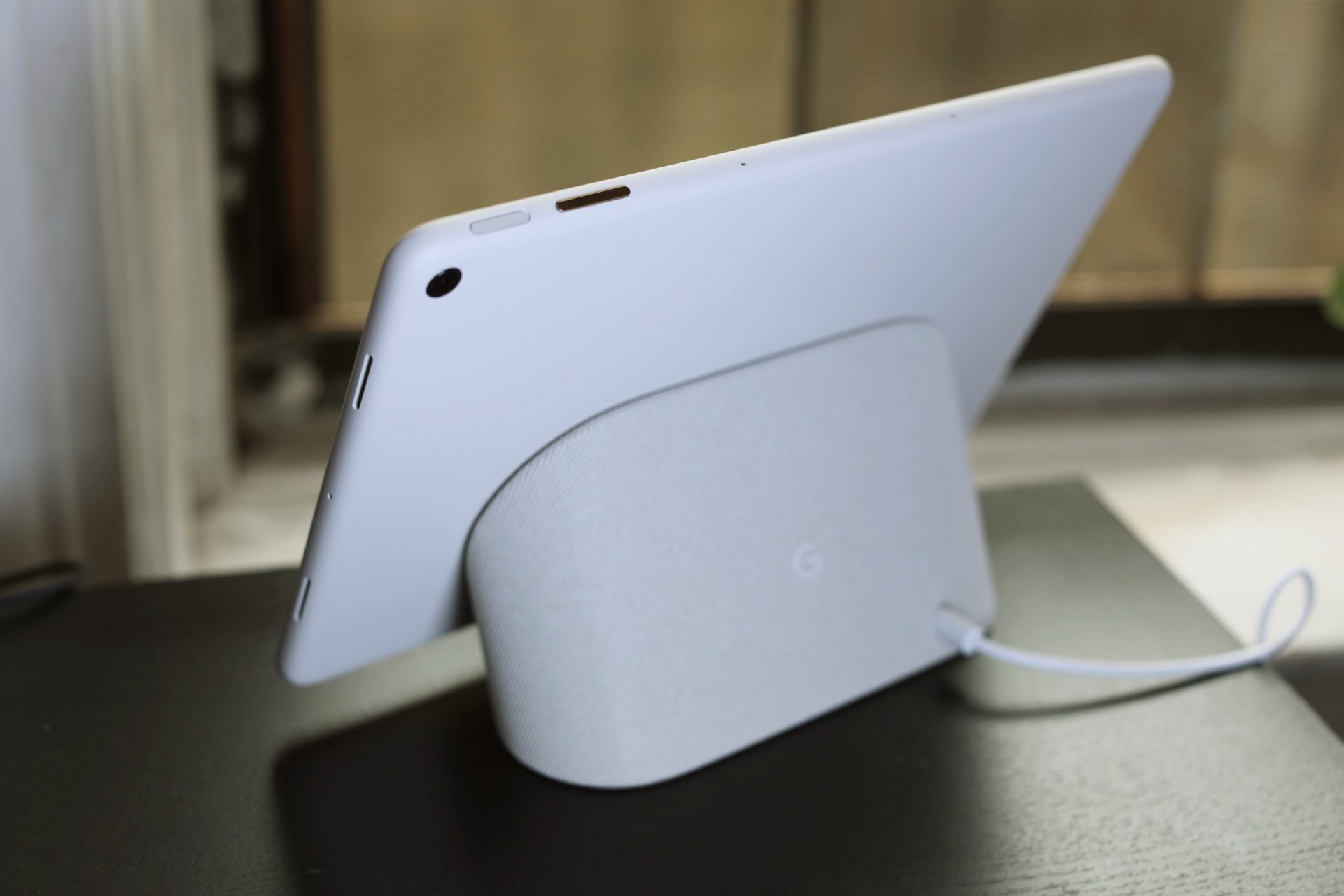
Image Credits: Brian Heater
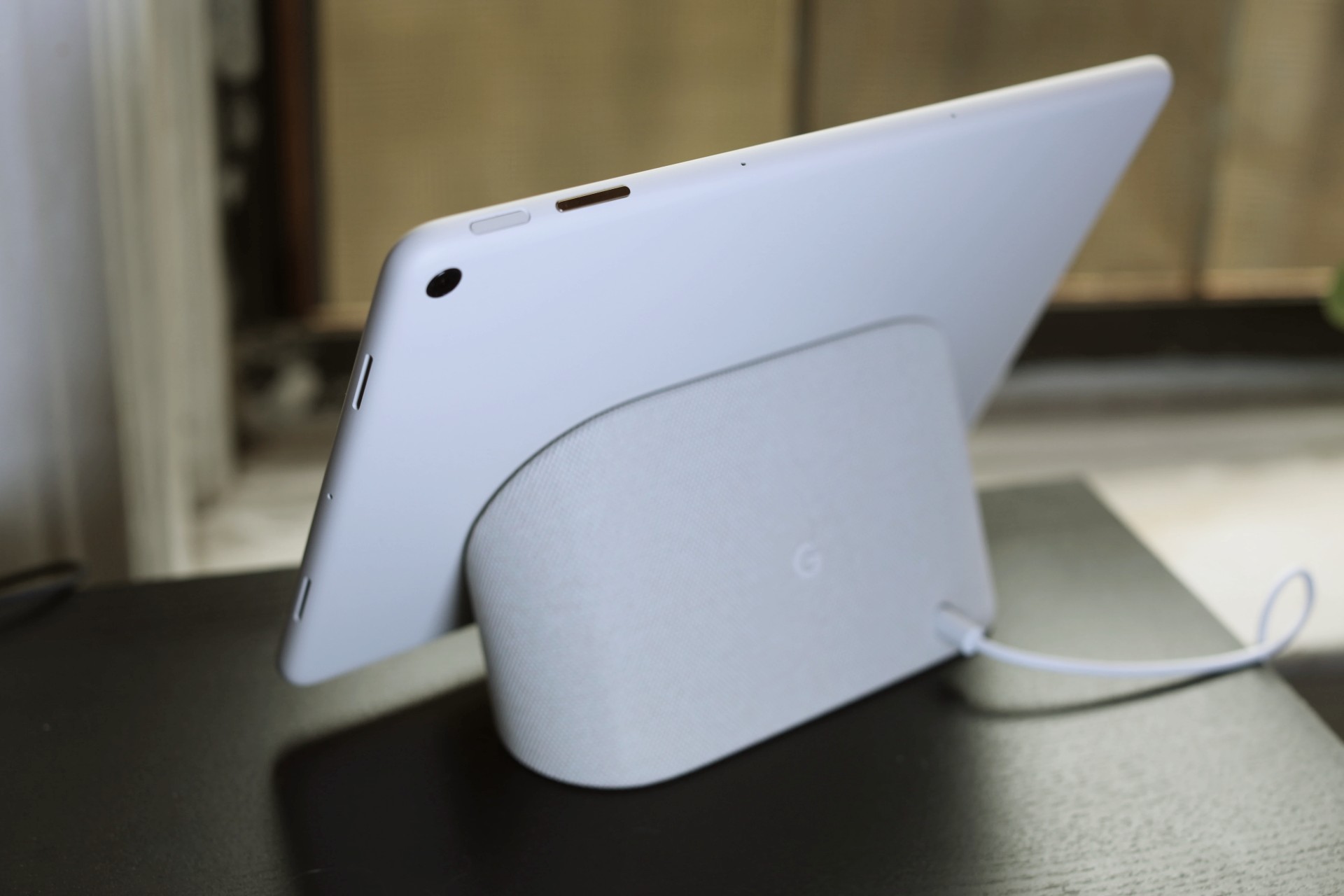
When the Pixel Tablet was fully unveiled at I/O, the answer seemed to be: this time will be different because the approach is different. The dock is the thing. Make no mistake. The dock is what makes the Pixel Tablet interesting. In fact, I’m more inclined to refer to it as a Nest Home with a detachable screen than a Pixel Tablet with a dock – though I’m sure Google wouldn’t be thrilled with that particular classification.
To be fair, when the Home Hub launched initially, I wrote, “From a design standpoint, the product is best described as a seven-inch tablet resting atop a speaker at ~ a 25 to 30 degree angle.” More than any other smart screen on the market at the time, Google’s resembled a small tablet grafted onto a speaker base. I can’t be the only one who felt momentarily compelled to see if I could remove it.
The Pixel Tablet is the clear logical extension of that design. Whether it’s ultimately a tablet or smart screen first is ultimately in the eye of the user. What I will say is that Google made a canny decision bundling the two together. In fact, at present, the tablet can only be purchased as a bundle. Perhaps at some point down the road users will want to buy the slate separately, but it’s currently difficult to get excited about the device as a standalone.
It’s a solid piece of hardware. The device feels premium enough, and it bests the standard iPad on multiple accounts. The display is 10.95 inches with a 2650 x 1600 resolution – vs. the 10th gen iPad’s 10.9 inch, 2360 x 1640 screen (the Pixel has a slightly higher pixel density). Its battery is rated at 12 hours, to the iPad’s 10. It ships with 8GB of RAM and 128GB of storage, to the iPad’s 4GB and 64GB, respectively. The front- and rear-facing cameras are both eight megapixels, down from 12-megapixels on the iPad.
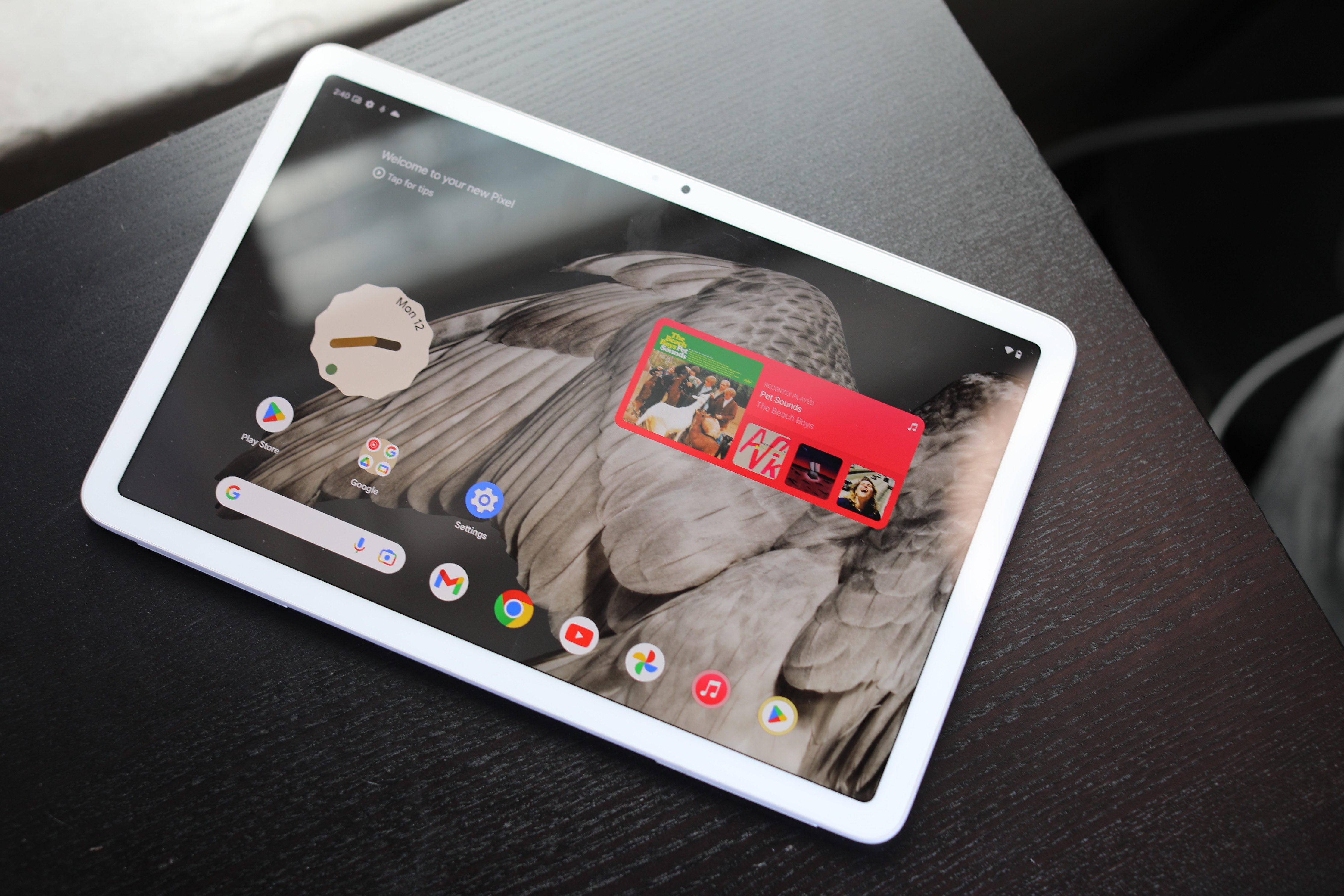
Image Credits: Brian Heater
In many ways, the Pixel Tablet is best understood as Google’s equivalent to the base-level iPad. It’s a flash-free utilitarian device that will do the things you need a tablet to do. It’s a product that Google could have hypothetically started producing a decade or so back, rather than waffling in its approach to the space and letting hardware partners like Samsung, Huawei and Lenovo eat its lunch.

But, then, the Google of the past always seemed to have an uneasy relationship with the notion of first-party hardware. It preferred letting existing hardware firms do the heavy lifting. When it released its own device, it generally lacked follow-through. But a few key things have happened in the meantime:
1. Google bought Nest for $3.2 billion in 2014, and has spent the intervening years building out its smart home offering, including various Home Hub devices.
2. The company went scorched earth on the Pixel division, bought a chunk of HTC IP and rebuilt from the ground up.
3. The company developed Android L, a variation of the operating system for larger screens – not unlike iPadOS
That last one is, in some ways, the most essential. The company wasn’t entirely clear with messaging when it dropped in late 2021 (as evidenced by the clear befuddlement in this post by my exceptionally rational colleague, Frederic). Android 12L was introduced, in part, to embrace growing interest around foldables. It also gives developers a native way to bring Android to a tablet. It was quickly embraced by the likes of Samsung, Lenovo and Microsoft.
It brings some key features, like a multi-tasking split screen accessible through the taskbar. With that enabled, you can more easily drag and drop media from Google Photos into apps.
Showcasing new software features has always been a fundamental underpinning of Google’s consumer hardware play, and there’s no reason to believe the Pixel Tablet isn’t a direct outgrowth of that philosophy.
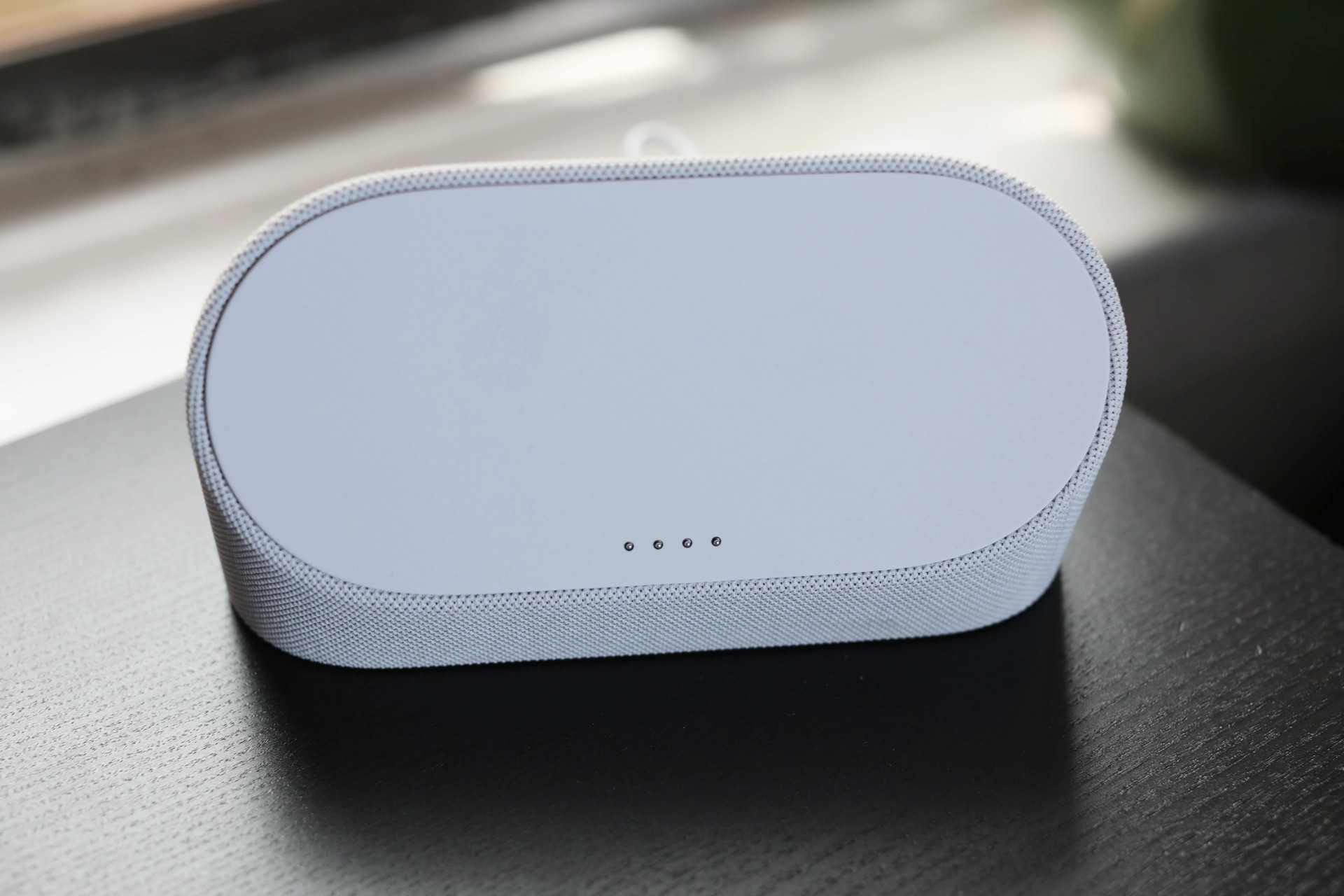
Image Credits: Brian Heater
But coming out with a fine – if largely unexceptional – tablet in 2023 isn’t going to be the magic bullet that finally reverses a decade of attempting to establish yourself in the category. A combination tablet/smart display/home hub, on the other hand, is a compelling proposition. Same goes for the price. Offering the Pixel Tablet alone for $499 would have been a hard sell, as well. Unless you’re Samsung, you need to price your system far more aggressive than Apples (the standard iPad starts at $449). Adding the speaker dock and Nest Home Hub functionality, on the other hand, sweetens the deal significantly.
Suddenly you’ve got a device that straddles Google’s two primary consumer hardware divisions (Pixel, Nest) quite nicely. Google’s not the first to try this, of course. Amazon is probably the best example, with Fire docks that double as Echo devices courtesy of “Show Mode” for FireOS. Google’s equivalent is Hub mode.
By default, the system shows a rotating gallery of wallpapers. Once connected to the rest of your smart home devices, you can access a panel that centralizes monitoring and controls over lights, thermostats and the like. This can all be done without unlocking the device, though more sensitive things like security cameras still require the unlock.
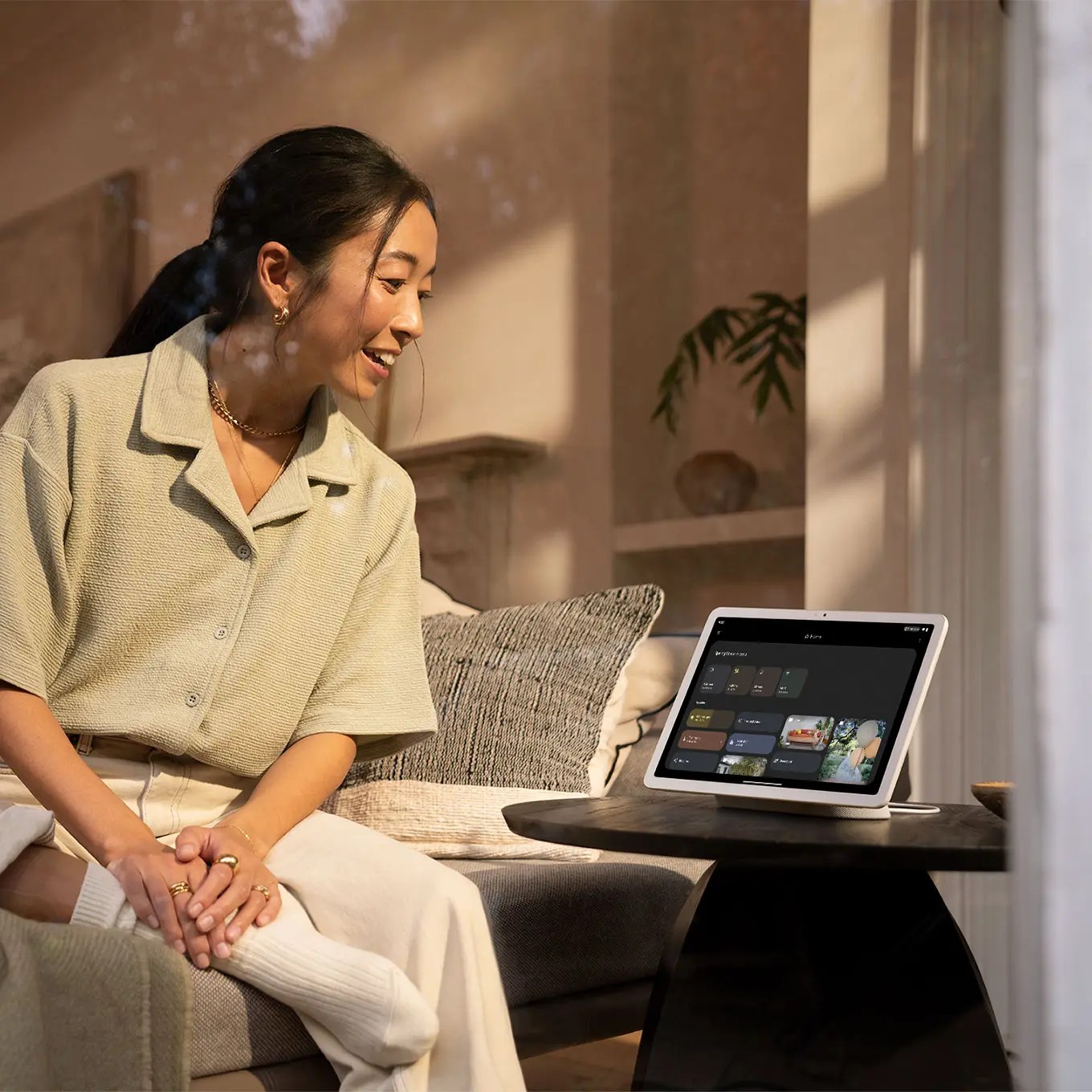
Image Credits: Google
Hub Mode automatically turns on when you dock the system, magnetically snapping it in place, so the charging pins line up (the system can also be charged via USB-C when the dock isn’t on hand). You’ll see a brief animation letting you know it’s working as planned. If you’re playing music on the tablet, the song will then be transferred to the dock’s speakers, which are significantly fuller than what you get with the slate. As with the Nest Hub, it’s a nice way to watch quick things like YouTube videos.
I certainly wouldn’t make it my primary movie watching or music listening device, but I’ve always found Nest hubs to be a great companion to better smart speakers like the Google Home Max (RIP?). It’s a great little visual media control for the music as it plays. You can use it with a variety of services, including Spotify and Apple Music.
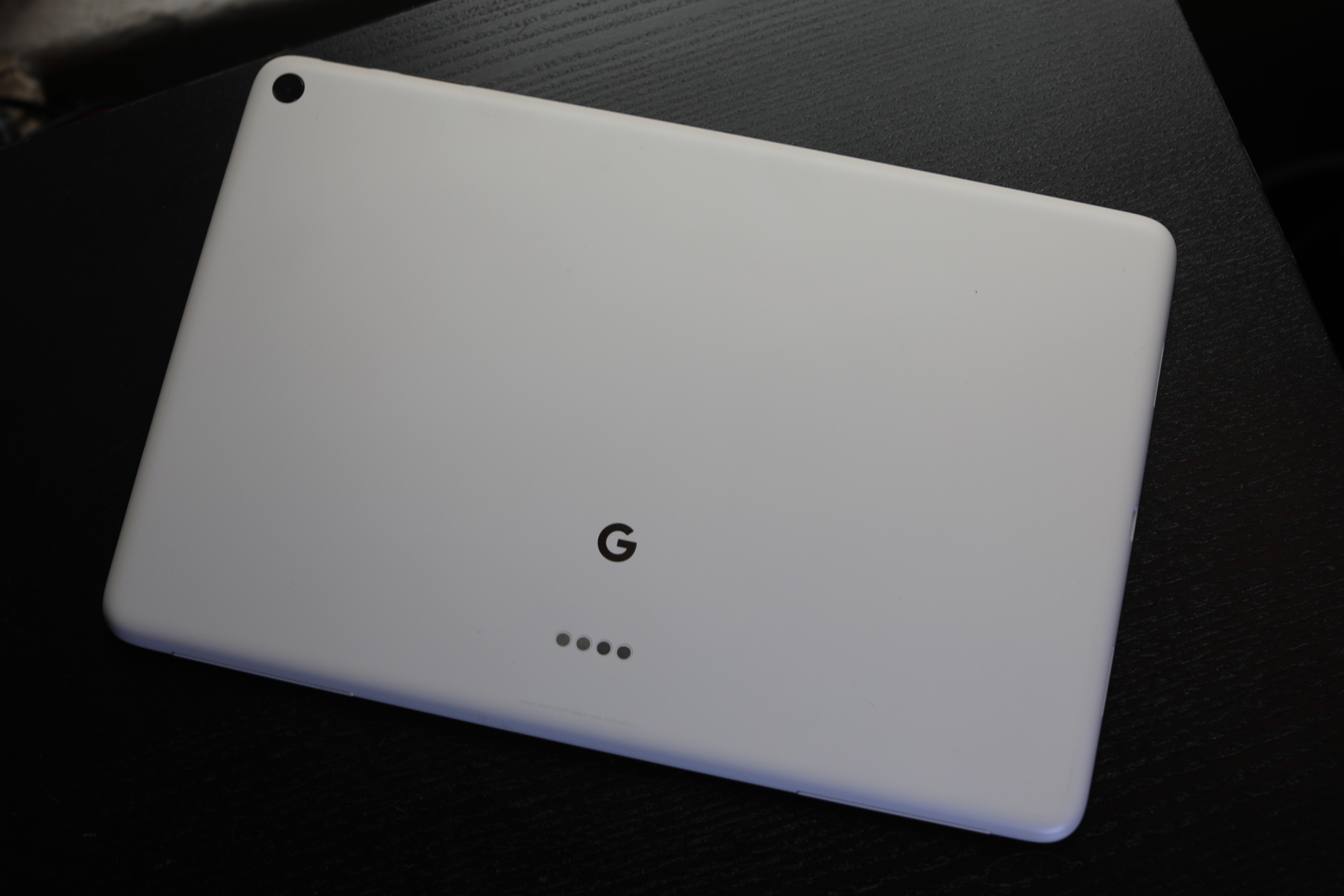
Image Credits: Brian Heater
That’s one of the nice things about using an Android tablet versus a smart display: access to a huge app library. That means the docked tablet also services as a handy little teleconferencing device for things like Google Meet and Zoom. The front-facing camera and speakers are more than enough to get the job done.
When it came to launching a new tablet in 2023, Google had an intensely difficult task ahead of it. It’s an extremely mature category with established players. Much like smartphones, tablets have largely improved to the point of being a bit boring, frankly. Convertibles have made a somewhat compelling case for continued creative, but the slates themselves have fallen into a similar iterative spec race. For the first time, however, Google understood the assignment. Any new hardware it was going to introduce had to be more than just a tablet. The Pixel isn’t the first tablet to feature smart home docking functionality, but it’s the first where that functionality feels more primary than afterthought.
The Pixel Tablet isn’t going to set the world on fire, but in some ways, Google has done the impossible: made a standard, entry-level slate interesting in the year of our lord, 2023.
Google Pixel Tablet review: It’s all about the dock by Brian Heater originally published on TechCrunch
Originally published at techcrunch.com